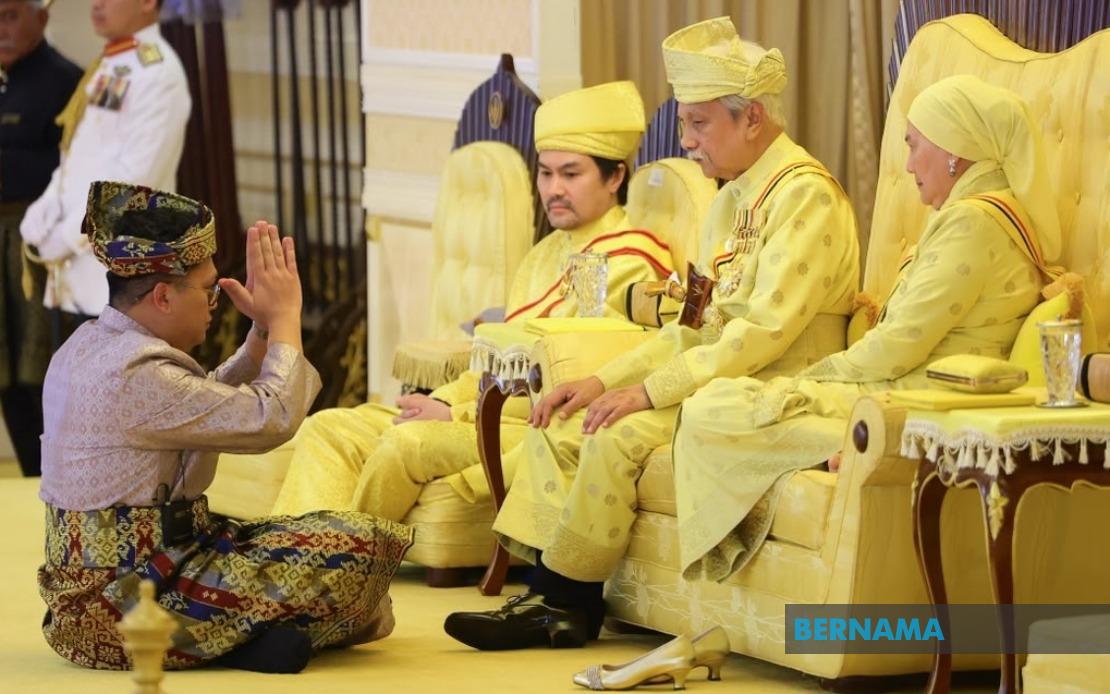
Negeri Sembilan's paramount ruler has formally anointed Muhammad Faris Johari to the position of 11th Undang of Luak Sungei Ujong, marking an important transition in the state's traditional leadership structure. The investiture took place at Istana Besar Seri Menanti on the morning of June 27, with Yang Dipertuan Besar Tuanku Muhriz Tuanku Munawir presiding over the ceremonial proceedings in Kuala Pilah. The appointment represents continuity in Negeri Sembilan's distinctive system of customary governance, which has governed the state's traditional territories, known as luaks, for centuries.
The installation ceremony adhered to long-established protocols, beginning with the Orang Empat Istana—the four pillars of the palace—seeking formal permission from Tuanku Muhriz to commence the ritual. This procedural step underscores the constitutional relationship between the traditional leadership and the reigning monarch, ensuring that all appointments maintain hierarchical legitimacy and royal sanction. Following this preliminary stage, the newly appointed Undang performed the customary oath of allegiance, pledging his fidelity to the Yang Dipertuan Besar and commitment to his duties representing the Sungei Ujong territory.
Upon completion of these formalities, Tuanku Muhriz bestowed upon Muhammad Faris the formal title Datuk Klana Petra, conferring with it the ceremonial authority and social standing associated with the Undang position. This nomenclature carries historical significance, linking the modern officeholder to centuries of tradition and the lineage of leaders who have preceded him in this role. The conferment of the title represents not merely an administrative appointment but rather an elevation within Negeri Sembilan's social and cultural hierarchy, acknowledging the appointee's responsibility to safeguard the interests and customs of his constituents.
In his address to the assembled dignitaries and officials, Tuanku Muhriz emphasised the importance of translating ceremonial pledges into substantive action. The ruler stressed that sincerity, integrity, and an unwavering sense of responsibility must animate the duties undertaken by traditional leaders. His remarks carried particular weight given ongoing debates about the relevance of customary institutions in contemporary Malaysian governance. Tuanku Muhriz's emphasis on these virtues suggests an expectation that traditional leadership should remain morally anchored and responsive to community needs, rather than devolving into purely ceremonial roles.
The ruler also addressed the broader cohort of Orang Kaya—the chieftains and nobles of Negeri Sembilan—reminding them of their collective obligation to maintain loyalty to the institution of the Yang Dipertuan Besar. This reinforcement of institutional loyalty appears designed to strengthen the constitutional monarchy's standing and to reaffirm the interdependence between the ruler and the traditional aristocracy. Furthermore, Tuanku Muhriz called for cultivation of respectful relationships between the traditional leadership and the palace, suggesting a desire to prevent fragmentation or rivalry that might undermine the state's social cohesion.
The ceremony drew attendance from senior members of Negeri Sembilan's royal household, including Tunku Ampuan Besar Tuanku Aishah Rohani Tengku Besar Mahmud, Tunku Besar Seri Menanti Tunku Ali Redhauddin Tuanku Muhriz, and Tunku Panglima Besar Tunku Zain Al-'Abidin. State Menteri Besar Datuk Seri Aminuddin Harun also witnessed the proceedings, indicating the event's significance within the state administration's calendar. The presence of heads of state government departments further underscored the interplay between traditional authority and modern bureaucratic structures, a hallmark of Negeri Sembilan's governance model.
Tuanku Muhriz used the platform to elaborate on the philosophical foundations sustaining Negeri Sembilan's institutional order. The ruler contended that relationships grounded in mutual respect, trust, and consensus constitute essential pillars for preserving the constitutional monarchy, maintaining customary traditions, and ensuring the state's continued prosperity. This formulation positions traditional leadership not as an anachronistic remnant but as a contemporary force capable of contributing meaningfully to modern governance when properly exercised. The emphasis on consensus-building particularly resonates with Adat Perpatih—the customary law system governing Negeri Sembilan—which traditionally emphasises collective deliberation over unilateral decision-making.
Tuanku Muhriz also called upon the broader citizenry to collaborate actively with customary leadership in fulfilling public responsibilities. Simultaneously, he urged the preservation and transmission of Adat Perpatih values across generational lines. This dual exhortation reflects tension inherent in modernising societies: how to maintain cultural continuity while adapting to contemporary demands. For Negeri Sembilan, the answer appears to lie in reinforcing the relevance of traditional institutions through active engagement with the general population rather than allowing them to languish as museum pieces.
Muhammad Faris brings to the position a background markedly different from many traditional leaders of previous generations. Born on October 30, 1997, he represents a younger demographic entering these custodial roles. His educational credentials—a bachelor's degree in accountancy from Universiti Teknologi MARA coupled with professional qualification through the Association of Chartered Certified Accountants programme, obtained in 2022—suggest he may bring technical expertise to governance questions traditionally approached through customary wisdom. At 28 years old, he represents a potential bridge between traditional authority and contemporary administrative practice.
The appointment of Muhammad Faris occurs within the broader context of Negeri Sembilan's distinctive constitutional arrangement. Unlike other Malaysian states where appointed or hereditary rulers exercise executive authority, Negeri Sembilan features an elective monarchy where the Yang Dipertuan Besar is selected from among the four major traditional leaders of the Luaks—Sungei Ujong, Rembau, Jelebu, and Tampin. This system creates multiple power centres and has historically required negotiation and consensus-building among the leadership. The installation of new Undangs thus carries implications extending beyond their specific territories to the broader political economy of the state.
Muhammad Faris is married to Sharifah Amirah Syed Ismail Ash-Shahab, whose family background may bring its own networks and social capital to the position. His marital alliance potentially strengthens connections between different segments of Negeri Sembilan's traditional and contemporary elite. The coupling of personal qualities, professional credentials, and social positioning suggests that Muhammad Faris enters the Undang role with multiple forms of legitimacy—traditional investiture, educational qualification, and social integration.
The ceremony was not the sole focus of the day's royal proceedings. Tuanku Muhriz was scheduled to conduct another installation later, formalising the appointment of the 22nd Undang of Luak Rembau. This back-to-back succession of installations suggests a period of renewal within Negeri Sembilan's traditional leadership structure. The coordination of these appointments may reflect planned succession management aimed at ensuring stability and continuity as experienced leaders transition, enabling the state to avoid potential vacancies that might disrupt governance or create uncertainty. Such orchestrated transitions speak to the sophistication of Negeri Sembilan's customary administrative framework.

