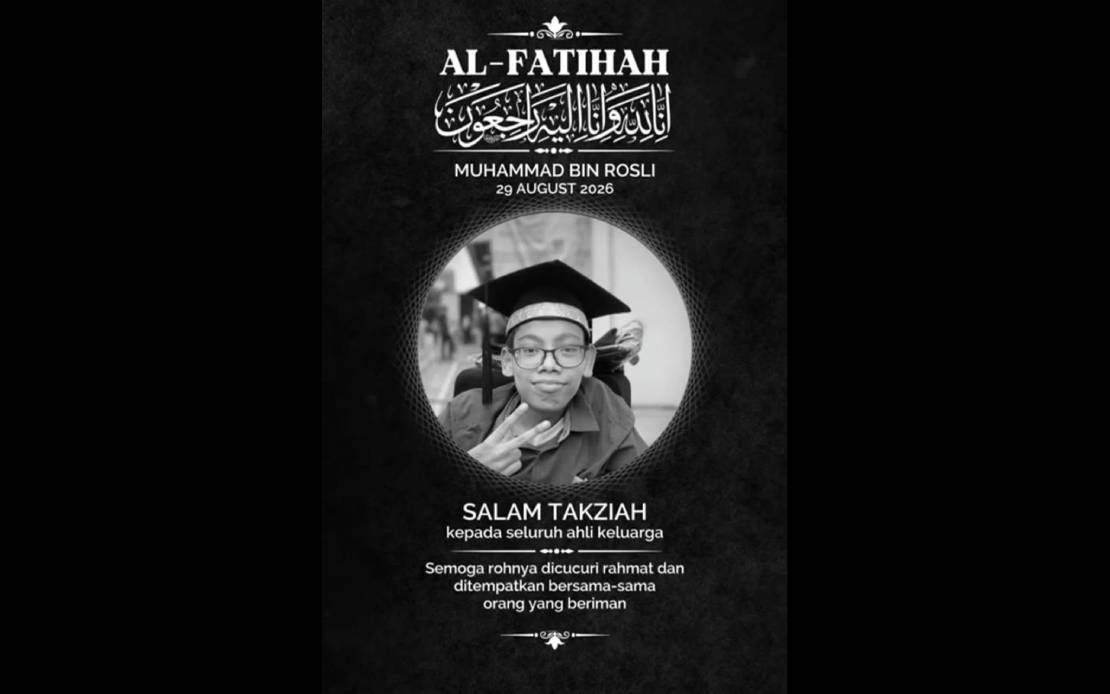
Muhammad Rosli, one half of a conjoined twin pair whose surgical separation in 2002 captured global medical attention, died this morning at Chancellor Tuanku Muhriz Hospital in Cheras, Kuala Lumpur. He was 44 years old. His twin brother Ahmad announced the passing through social media, expressing gratitude for the prayers and support extended to Muhammad throughout his prolonged illness. The announcement marked the end of a remarkable yet ultimately tragic chapter in Malaysian medical history that had gripped public imagination for nearly a quarter-century.
The deceased underwent treatment for bladder cancer at King Fahd National Guard Hospital in Riyadh, Saudi Arabia, beginning in July 2025. Medical staff at the Saudi facility conducted an intensive treatment regimen involving five separate surgical procedures and an equivalent number of chemotherapy sessions. Despite initial optimism following these interventions, Muhammad's condition took a sharp downturn in recent days. Ahmad revealed yesterday that his brother's health had deteriorated markedly, with elevated blood acid levels pushing him into a semi-conscious state from which he did not recover.
Muhammad's remains were committed to earth at USJ 22 Muslim Cemetery in Subang Jaya by early evening, concluding a medically extraordinary life that began under the most challenging of circumstances. The rapidity of arrangements reflected both Islamic burial customs and the family's evident desire for privacy following their long years in the international spotlight.
The twins' medical journey began decades earlier when they first captured Malaysian and regional media attention as conjoined infants sharing vital organs. In 2001, they underwent their initial surgical intervention at University Malaya Medical Centre, where preliminary procedures sought to separate shared liver tissue. The following year, on September 2002, an ambitious 22-hour and 45-minute surgical marathon at King Fahd National Guard Hospital achieved complete physical separation. That groundbreaking procedure represented a pinnacle of collaborative international medical expertise and demonstrated Malaysia's capacity to host world-class surgical interventions.
The separation surgery had been a culmination of meticulous planning involving surgical teams across multiple countries. The complexity of the operation lay not merely in the physical disconnection but in ensuring viable organ function for both individuals post-separation. Success meant that both brothers could anticipate normal lifespans and independent existence. For Malaysian medicine and the nation's international medical reputation, the operation symbolised technological sophistication and access to cutting-edge surgical capabilities.
Muhammad's death from bladder cancer represents a medical development entirely unrelated to his conjoined status or the separation procedure. Cancer diagnosis at relatively young ages remains tragically common across all demographic groups globally. The particular aggressive nature of his condition, reflected in the rapid progression requiring five surgical interventions and chemotherapy cycles, suggests a particularly virulent malignancy that ultimately exhausted available treatment options despite aggressive medical intervention.
The prolonged illness and ultimate death of one twin raises poignant medical and philosophical questions about outcomes following childhood conjoined twin separation. Long-term follow-up data on such cases remains limited globally due to the extreme rarity of these conditions and successful separations. Muhammad's case adds to that sparse literature and may inform future medical decision-making regarding such interventions.
For Ahmad, the surviving twin, this loss represents the passing of someone with whom he shared not only a remarkable medical journey but also the unique psychological burden of public fascination throughout childhood. The brothers had lived most of their adult lives away from media scrutiny, their lives normalised despite their extraordinary origins. Yet their case remained lodged in Malaysian collective memory as emblematic of medical achievement and national pride.
The succession of treatment locations across Malaysian and Saudi Arabian hospitals reflects the international nature of complex paediatric surgery and the willingness of families to access wherever expertise resided. King Fahd National Guard Hospital proved not merely the venue for separation but a place to which Muhammad returned when cancer emerged, suggesting lingering medical connections and trust in those earlier relationships.
The death of Muhammad Rosli concludes a story that has shaped Malaysian medical discourse for nearly 25 years. His separation from Ahmad represented hope, innovation, and the possibility of transforming what had seemed medically insurmountable into triumphant clinical achievement. That his life ultimately ended, as do all lives, underscores the unavoidable limits even of surgical excellence. His passing will likely prompt renewed interest in long-term outcomes following conjoined twin separation and reinforce the importance of comprehensive lifelong medical monitoring for such unique cases.

