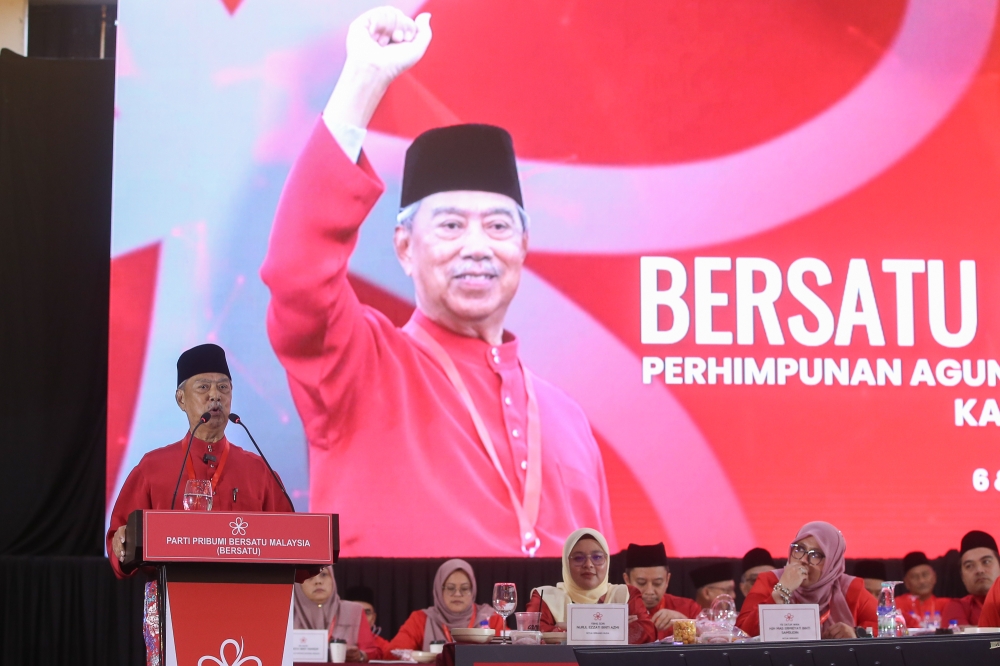
Tan Sri Muhyiddin Yassin, president of Parti Pribumi Bersatu Malaysia, launched a pointed critique of Perikatan Nasional's governance structure on July 17, contending that the coalition has systematically marginalised Bersatu despite its membership. The Bersatu leader's statement signals deepening fractures within the opposition pact that has positioned itself as an alternative to the ruling Pakatan Harapan government, raising questions about the sustainability of the alliance ahead of crucial state elections and potential federal-level political realignments.
Muhyiddin's grievance extends beyond organisational slights to a fundamental challenge to the ideological legitimacy of current Malaysian coalition politics. He asserted that the existing Umno-centred alliance cannot authentically claim to embody the interests and aspirations of Malays and Muslims across the peninsula, a cornerstone argument in Malaysian political discourse where appeals to communal unity typically carry significant electoral weight. This rhetorical repositioning suggests Bersatu may be preparing to chart an independent political course, or conversely, seeking leverage within Perikatan to secure greater prominence and policy influence.
The tension between Bersatu and other Perikatan members reflects a persistent structural weakness in the coalition that brings together ideologically diverse parties. While Perikatan formally includes Bersatu alongside Umno, PAS, and several smaller regional formations, decision-making authority appears concentrated within the dominant parties, particularly Umno, which holds the largest parliamentary contingent. Bersatu, despite retaining significant grassroots support in several states, has found its influence constrained within coalition structures historically dominated by older political establishments.
Muhyiddin's assertion regarding "genuine Malay unity" challenges a foundational claim made by Perikatan since its formation. The coalition positioned itself as the authentic guardian of Malay-Muslim interests, particularly following the 2022 elections when internal Umno turmoil created space for Perikatan to position itself as a stabilising force. However, if the party's own president questions whether this coalition genuinely reflects Malay consensus, the rhetorical foundation supporting the alliance becomes contested, potentially weakening its appeal among communal voters who might otherwise gravitate toward either Perikatan or Pakatan depending on which coalition they perceive as more credible.
The implications for Malaysian politics extend beyond internal coalition dynamics. Should Bersatu move toward greater independence or explore alternative arrangements, the balance of parliamentary mathematics shifts considerably. Bersatu's roughly 30 parliamentary representatives could prove decisive in future federal configurations, particularly if no coalition commands overwhelming majorities. This reality gives Muhyiddin substantial leverage in any negotiation, yet his public criticism also risks alienating potential allies who might view such forthright complaints as indicative of an unreliable partner unwilling to compromise within coalition structures.
For Malaysian voters and observers tracking political developments, Muhyiddin's comments underscore a persistent challenge facing opposition coalitions seeking to unseat incumbents. Maintaining unity among parties with divergent ideological foundations, competing leadership ambitions, and different regional strongholds requires constant negotiation and demonstrated commitment to collective interests. When senior party leaders publicly question their coalition's legitimacy, it signals that internal accommodations have broken down, and tactical recalculations are underway. This pattern has characterised Malaysian politics throughout the democratic period, where coalitions frequently restructure in response to perceived imbalances in power distribution or benefits allocation.
The question of what constitutes "genuine Malay unity" carries particular weight in Malaysian political culture. Both Perikatan and Pakatan have invoked this concept while pointing to opposing coalitions as having betrayed communal interests through excessive accommodation of non-Malay parties or ideological compromise. Muhyiddin's framing suggests he may be attempting to reposition Bersatu as potentially capable of embodying such unity on its own terms, perhaps by appealing to younger, urban Malay voters disillusioned with both Perikatan's internal hierarchies and Pakatan's multi-communal orientation. This middle position, if Bersatu attempts to occupy it, would represent a significant strategic recalibration in Malaysian opposition politics.
Regionally, the statements also reflect broader patterns in Southeast Asian coalition politics, where opposition alliances frequently struggle with internal coherence once the immediate electoral goal recedes. Bersatu's experiences mirror challenges faced by opposition groupings in Indonesia, Thailand, and the Philippines, where ideological and organisational differences between coalition partners generate continual tensions that periodically erupt into public dispute. These dynamics typically become more pronounced as political uncertainty increases, creating both opportunities and risks for individual parties seeking to maximise their advantage in fluid political environments.
Looking forward, Muhyiddin's remarks establish negotiating positions should Perikatan seek to retain Bersatu through enhanced power-sharing arrangements, or alternatively provide rhetorical cover should Bersatu pivot toward greater political independence. The statement also serves notice to Pakatan that Bersatu remains open to discussions about alternative political arrangements, though Muhyiddin's past conflicts with Pakatan leaders complicate any straightforward reconciliation. Malaysian political observers will likely interpret these comments as a signal that coalition arrangements remain unsettled, and significant realignments affecting parliamentary dynamics remain possible depending on how current grievances are addressed.

