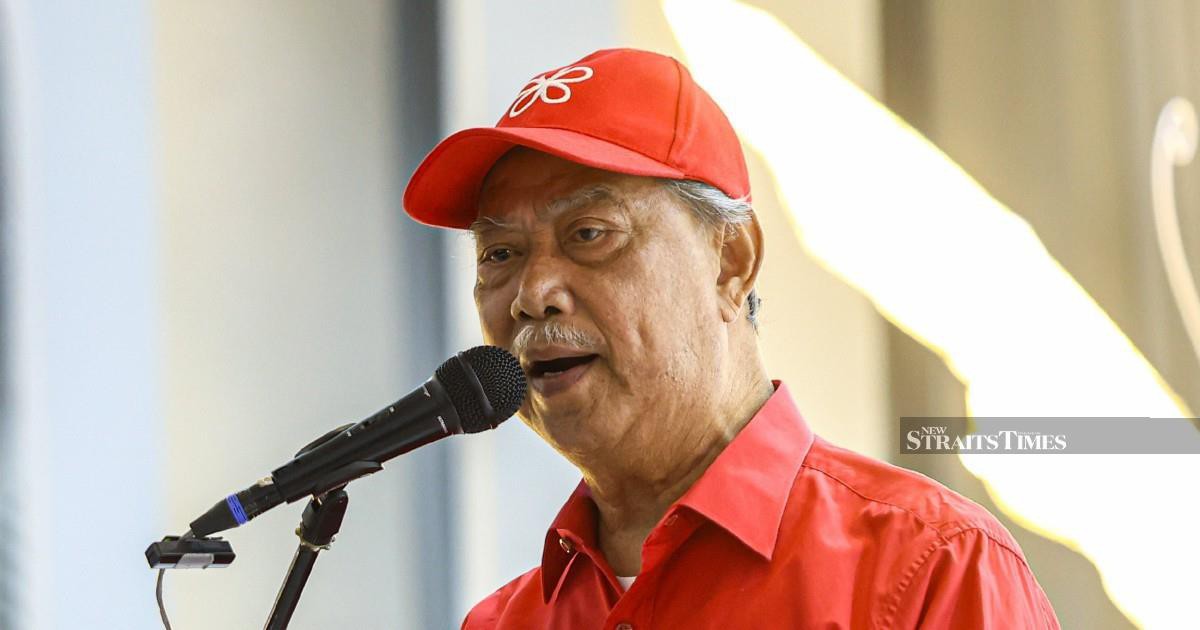
Bersatu president Tan Sri Muhyiddin Yassin has emerged from silence to confront mounting allegations over the party's internal leadership turmoil, directly accusing former deputy president Datuk Seri Hamzah Zainudin of orchestrating a concerted effort to unseat him from the top position.
The allegations mark a significant escalation in the protracted dispute that has consumed Malaysia's Islamic-oriented political party since mid-2023, when factional tensions between Muhyiddin's faction and a rival camp led by Hamzah began to crystallize into open conflict. Muhyiddin's public commentary represents a departure from his earlier measured approach, suggesting that internal attempts at reconciliation have reached an impasse and factional hardening within the party has become increasingly pronounced.
The Bersatu leadership dispute carries implications beyond the party itself, given its pivotal role in Malaysia's current political architecture. As a coalition partner within the Pakatan Harapan government and holder of significant ministerial positions, the party's internal instability reverberates through the broader government structure. Parliamentary arithmetic remains tight, and any further fracturing of Bersatu could reshape the delicate balance of power in the Dewan Rakyat, potentially triggering wider political realignments.
Muhyiddin's intervention in the public discourse around party matters suggests that behind-the-scenes negotiations have stalled and that the leadership faction believes it must appeal directly to party members and the broader public to consolidate support and counter narratives being promoted by opposing factions. This shift towards confrontational public positioning indicates that the dispute has transcended internal party mechanisms and entered the realm of external political messaging and reputation management.
The accusation targeting Hamzah gains significance when contextualized within Bersatu's organizational history. Hamzah, who previously served as deputy president, represented a potential alternative power center within the party hierarchy. The alleged plot to remove Muhyiddin would constitute a direct challenge to the existing leadership structure and raises questions about whether organizational mechanisms exist within Bersatu to peacefully resolve such disputes or whether factionalism has simply overwhelmed institutional safeguards designed to maintain party cohesion.
For Malaysian political observers, the Bersatu crisis underscores broader vulnerabilities in coalition-based governance structures. When constituent parties experience internal instability, coalition stability becomes compromised, government effectiveness suffers, and policy implementation faces disruption. The repeated nature of leadership crises within coalition partners since Malaysia's 2018 political transition demonstrates that institutional weaknesses in party management and leadership succession planning remain unresolved across the country's political landscape.
The implications for Bersatu members themselves warrant consideration. Party members find themselves navigating a confusing factional landscape where competing narratives emanate from different leadership camps, making it difficult to discern genuine organizational interests from personal political ambitions. This information asymmetry within the party membership creates an environment where disaffiliation becomes increasingly likely, particularly among members seeking clarity and principled political engagement.
Muhyiddin's public statements also merit examination for what they reveal about the current strength of his position. Leaders typically resort to public appeals when internal support bases require reinforcement or when they perceive external actors as undercutting their authority. The decision to speak publicly suggests Muhyiddin believes the narrative landscape requires correction and that existing party structures have become insufficiently responsive to his faction's interests.
The temporal dimension of this crisis also deserves attention. Disputes sustained over extended periods typically indicate deep-seated organizational dysfunction rather than temporary leadership disagreements. The protracted nature of Bersatu's turmoil suggests that fundamental questions about party direction, governance structures, and leadership succession remain fundamentally unresolved, hinting at structural problems that may require extensive organizational reform rather than simple leadership adjustments.
Southeast Asian political analysts have noted that Malaysian parties frequently experience factionalism rooted in personality-driven politics rather than ideological divergence. The Bersatu situation exemplifies this pattern, where leadership disputes appear driven by competing individual ambitions rather than substantive policy disagreements or competing visions for the party's strategic direction. This orientation towards personalistic politics potentially weakens parties' institutional resilience and increases vulnerability to factional fragmentation.
The accusation against Hamzah requires scrutiny within the context of Bersatu's complicated relationship with the broader political establishment. Bersatu entered into coalition arrangements that both enhanced and constrained its autonomy. Leadership disputes within such dependent parties often involve jockeying for position within larger coalition structures, suggesting that Hamzah's alleged plotting may have involved courting support from other coalition partners or alternative political alignments.
Moving forward, Bersatu faces critical decisions about its organizational future. The party must determine whether its institutional mechanisms can facilitate reconciliation between competing factions or whether structural divisions have become irremediable. External political pressure from coalition partners and opposition forces will likely intensify, as other actors seek to capitalize on Bersatu's internal vulnerabilities. The resolution or continued deterioration of this crisis will substantially influence Malaysia's political trajectory in coming months.

