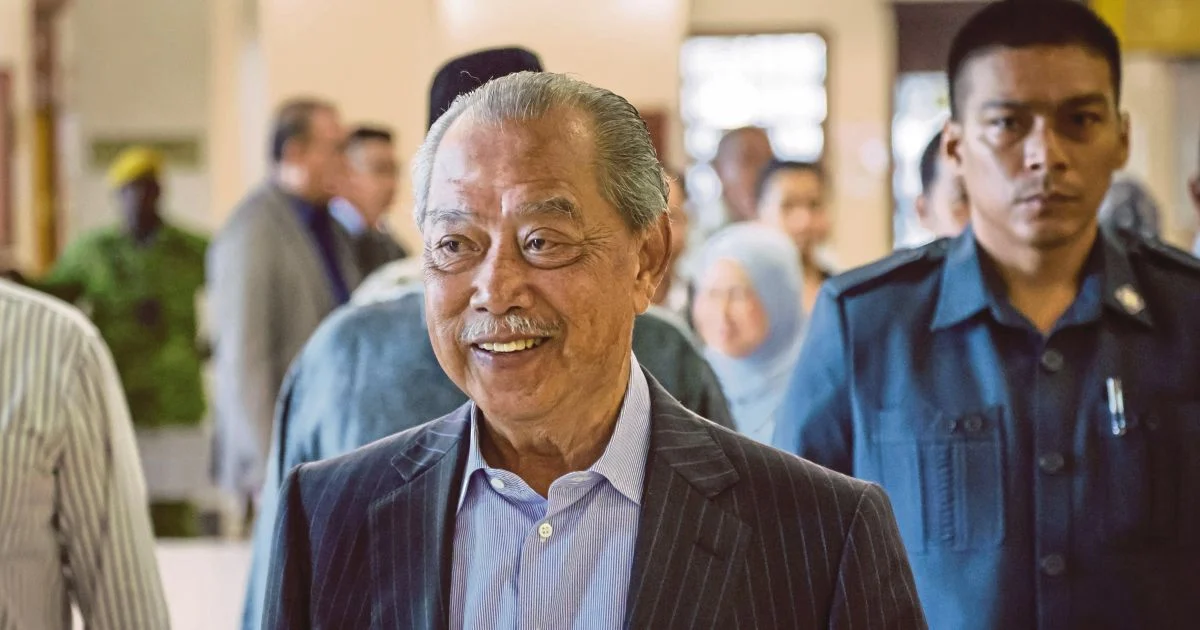
Perikatan Nasional still harbours genuine prospects of taking control of the Johor state government, according to Bersatu president Tan Sri Muhyiddin Yassin, who dismissed suggestions that the coalition's limited seat participation automatically places it at a disadvantage. Speaking in Pagoh, Muhyiddin outlined his reasoning for maintaining optimism despite PN's decision to contest only 33 seats in the state assembly election, a figure substantially below the 56-seat total in the chamber.
The confidence expressed by the Bersatu leader reflects a broader strategic calculation within opposition ranks regarding how to maximise electoral effectiveness when faced with resource constraints and internal coalition dynamics. While contesting fewer than two-thirds of available seats might appear to undermine PN's competitive position, Muhyiddin's assessment suggests that careful targeting of winnable constituencies could yield sufficient representation to form a government. This approach mirrors similar strategies employed by opposition alliances in other Asian democracies where seat selection has proven as consequential as campaign intensity.
For Malaysian political observers, PN's selective approach to seat allocation carries significant implications beyond Johor itself. The coalition's decision-making process reveals how opposition formations navigate the tension between maintaining unity among member parties and fielding candidates strategically. Bersatu, PAS, and other PN components must balance internal expectations and territorial aspirations whilst acknowledging electoral realities and available organisational capacity. How these negotiations conclude often determines whether coalitions can actually translate reduced seat numbers into meaningful legislative strength.
Johor remains one of Malaysia's most pivotal states, both economically and politically. The southern state has historically served as a barometer for national political sentiment, and control of its government influences resource allocation, development priorities, and the broader regional balance of power within federal politics. Any successful opposition government in Johor would represent a significant shift in the country's political landscape, as the state has long been associated with stronger support for governing coalitions, whether UMNO-led or otherwise.
Muhyiddin's public optimism also functions as a morale-building mechanism within PN's rank and file. Opposition activists and supporters often require confidence signals from senior leadership to maintain momentum during campaigns, particularly when facing better-resourced incumbent governments. By projecting belief in PN's viability despite apparent numerical disadvantages, Muhyiddin attempts to frame the contest as winnable rather than a foregone conclusion. This psychological dimension of electoral politics frequently influences volunteer recruitment, fundraising success, and voter turnout among opposition sympathisers.
The question of seat allocation within PN itself illuminates deeper coalition tensions that observers should monitor. When multiple parties must share a limited pie of contested seats, disagreements inevitably emerge over territorial claims, party representation, and the credibility of individual candidates. How equitably PN has distributed the 33 seats among Bersatu, PAS, and other members will indicate whether internal harmony will hold through the campaign period. Coalition breakdown during elections has historically damaged opposition prospects, making internal management as critical as external messaging.
Johor voters will ultimately determine whether PN's strategic calculations translate into actual electoral gains. The electorate's receptiveness to opposition messaging, satisfaction with current state administration, and assessment of competing candidate quality will supersede leadership declarations about governmental possibilities. Muhyiddin's confidence may prove justified if voters align with PN's vision, but the coalition cannot afford complacency. Contested elections in neighbouring states have demonstrated that opposition coalitions require disciplined organisation and clear policy differentiation to overcome incumbent advantages.
The timing of PN's seat-contest announcement and Muhyiddin's confidence statement suggests that the coalition has completed internal negotiations and settled on a candidate slate. This clarity provides advantages for early campaign mobilisation, allowing party machinery across the 33 constituencies to commence ground-level activities before competing campaigns fully accelerate. However, the remaining 23 uncontested seats represent territory where PN effectively cedes the field, potentially allowing government-backing candidates to claim mandate without meaningful opposition scrutiny.
For Malaysian voters more broadly, the Johor election carries implications extending beyond state-level governance. Johor results will provide crucial data about shifting electoral preferences, the viability of opposition coalitions in major states, and the sustainability of current national governing arrangements. A strong PN showing would energise opposition supporters nationwide and possibly reshape calculations about upcoming state elections elsewhere. Conversely, a decisive government victory would reinforce assumptions about opposition weakness and incumbent resilience in states where they traditionally held sway.
Muhyiddin's statement must also be read within the context of PN's recent political travails and leadership questions. By demonstrating confidence in the coalition's electoral prospects, the Bersatu president reinforces his credibility as PN's leader and attempts to position himself as a viable alternative to current federal authorities. Opposition leaders worldwide routinely emphasise electoral feasibility to maintain faction unity and attract undecided voters who hesitate to support candidates they believe cannot win. Muhyiddin's Johor commentary thus functions simultaneously as campaign rhetoric and internal coalition management.
The weeks ahead will reveal whether PN's selective strategy represents astute political mathematics or overly optimistic calculation. Voter surveys, constituency-level feedback, and campaign developments will provide clearer indications of whether 33 contested seats genuinely suffice to secure government formation. Until then, Muhyiddin's confidence stands as a declaration of intent rather than a prediction, signalling that PN remains committed to serious competition despite the numbers that might superficially suggest otherwise.

