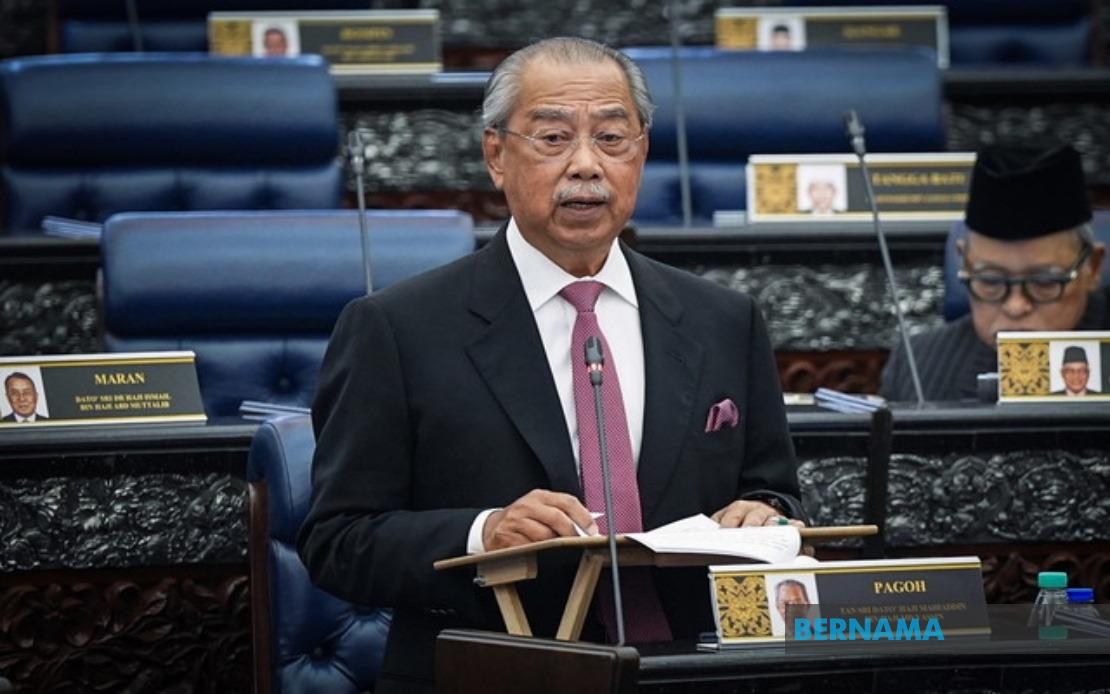
The call for rigorous financial investigation of Lembaga Tabung Haji intensified in Parliament when Tan Sri Muhyiddin Yassin, the former prime minister and Bersatu president, publicly urged the government to undertake a comprehensive and transparent forensic audit of the institution's fund management. Speaking during parliamentary debate on the Royal Commission of Inquiry report released on July 29, Muhyiddin stressed that such a probe must be completed within twelve months and that anyone culpable for losses must face justice.
The timing of this demand reflects growing political pressure to address a damaging institutional failure. The RCI report, which examined Tabung Haji's operations between 2014 and 2020, documented estimated cumulative losses ranging from RM10 billion to RM12.6 billion—a staggering figure that has shaken public confidence in an institution entrusted with pilgrimage funds from millions of Malaysian Muslims. Muhyiddin framed the forensic audit as an essential mechanism to trace fund flows, pinpoint fraudulent activity, identify abuses of authority, and detect instances of negligence. His insistence that findings be treated with seriousness and followed by decisive, uncompromised action signals that Parliament is no longer willing to tolerate delays in accountability.
The former premier's position resonates with broader concerns about governance failures that permitted such extensive losses to accumulate unchecked. The RCI's disclosures have placed Tabung Haji's management practices under intense scrutiny, exposing systemic weaknesses that allowed questionable investments and decisions to proceed without adequate oversight. Muhyiddin's call for an independent forensic audit—rather than relying solely on internal reviews—underscores recognition that external expertise and impartiality are necessary to restore institutional credibility and public trust.
Parallel initiatives emerged during the special parliamentary sitting, with Syed Saddiq Syed Abdul Rahman, the MUDA member for Muar, proposing the establishment of a Multi-Agency Task Force to investigate fourteen specific problematic investments identified in the RCI findings. Syed Saddiq's proposal reflects a sophisticated understanding of the scope required: involving the Malaysian Anti-Corruption Commission, the Royal Malaysian Police, and the Inland Revenue Board ensures that investigations proceed comprehensively rather than in isolated departmental silos. This coordinated approach could prevent the fragmentation that has sometimes hampered previous institutional inquiries in Malaysia.
Crucially, Syed Saddiq expanded the investigative scope beyond Tabung Haji itself, proposing that the task force extend its examination to Felda, FGV, and Eagle High—entities that share similar governance structures and fund management challenges. This widened remit acknowledges that the problems identified at Tabung Haji may be symptomatic of deeper systemic issues affecting multiple government-linked institutions managing substantial public assets. By examining patterns across several entities, investigators could identify common vulnerabilities and root causes rather than treating each institution's troubles as isolated incidents.
The fourteen investments singled out for investigation reportedly constitute the most egregious failures within Tabung Haji's portfolio. Syed Saddiq's recommendation that forensic audits be conducted specifically on these problematic holdings would provide granular detail on how decisions were made, who authorized dubious transactions, and what mechanisms failed to prevent losses. The emphasis on establishing causation—determining who was responsible and quantifying resulting damage—provides a framework for potential criminal or civil proceedings.
Datak Seri Hasni Mohammad, representing Simpang Renggam for the Barisan Nasional coalition, added another practical dimension by proposing that the MACC, police, and other enforcement agencies provide regular, scheduled updates on investigations arising from RCI findings. This mechanism of enforced transparency and accountability—with clearly defined reporting timelines—would prevent investigations from languishing in bureaucratic channels or disappearing from public view. Hasni's emphasis on institutional oversight suggests recognition that sustained parliamentary attention is necessary to maintain momentum.
Hasni also proposed that the special sitting establish a precedent for continuous, cross-party parliamentary oversight of Tabung Haji's implementation of RCI recommendations. This bipartisan, institution-based approach would create formal mechanisms for monitoring progress and holding the government accountable for follow-through. Rather than treating the RCI report as a discrete event concluding with its release, Hasni envisages ongoing parliamentary scrutiny as an embedded governance practice. Such an arrangement reflects international best practice in institutional reform, where oversight bodies maintain engagement throughout implementation phases.
The RCI report itself documented 25 recommendations for improvement, with Tabung Haji having implemented 75 percent of these recommendations by July 30—a pace that suggests accelerating corrective action. However, the distinction between formal implementation and effective reform remains crucial. The institution's adoption of procedural changes does not necessarily guarantee that underlying governance cultures or accountability frameworks have genuinely transformed. This gap between nominal compliance and substantive change underscores why external forensic audits and enforced reporting mechanisms are essential complements to internal reforms.
The parliamentary debate reflects a significant political consensus around the necessity for accountability, cutting across party lines. From Bersatu's Muhyiddin to MUDA's Syed Saddiq to Barisan Nasional's Hasni, the rhetoric emphasizes justice for affected depositors, deterrence against future misconduct, and systemic improvement. This alignment suggests that Tabung Haji reform has transcended partisan positioning to become a matter of institutional legitimacy and public interest.
For Malaysian Muslims who have contributed to Tabung Haji's funds over decades—often with expectations that these savings would support their hajj pilgrimage—the losses represent not merely a financial betrayal but also a breach of religious trust. The institution holds special significance in Malaysian Islamic practice, and governance failures have implications for public confidence in religiously-affiliated financial institutions more broadly. The comprehensive audit and multi-agency investigation now being demanded in Parliament respond to this dimension of the crisis.
The follow-through on these parliamentary calls will provide a crucial test of Malaysia's commitment to institutional accountability. Whether the government establishes the proposed task force promptly, completes the forensic audit within the prescribed timeframe, and sustains parliamentary oversight throughout will determine whether the Tabung Haji crisis becomes a catalyst for genuine systemic reform or another episode of institutional failure followed by inadequate redress.

