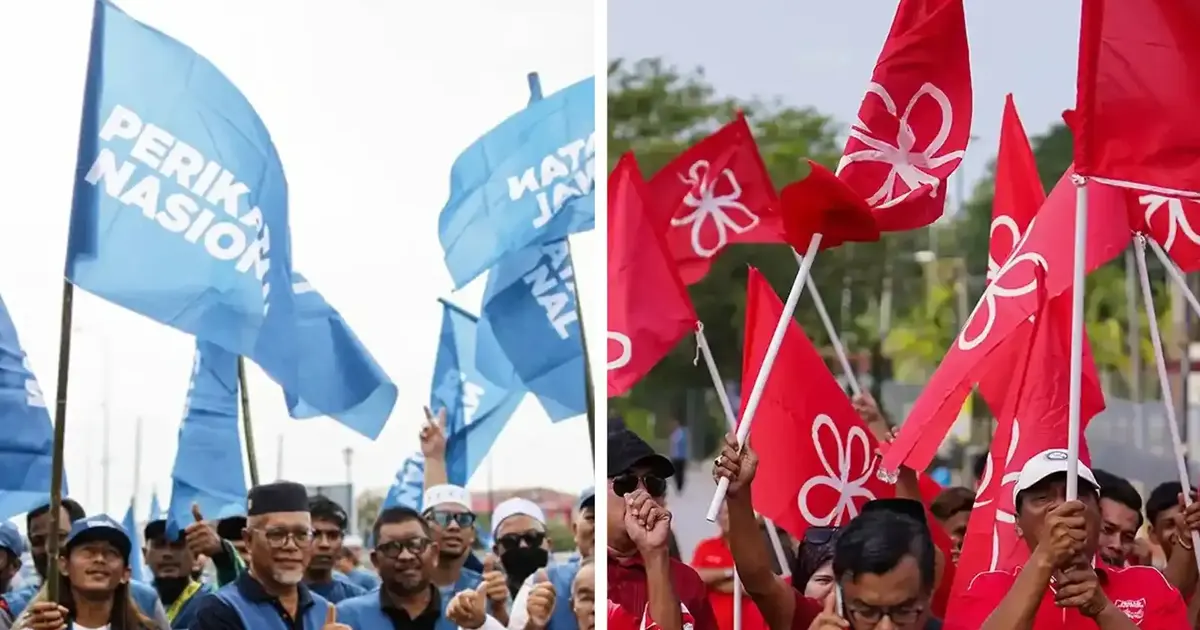
Bersatu president Muhyiddin Yassin has firmly rejected the notion that any single individual, including himself, possesses the authority to expel member parties from the Perikatan Nasional political coalition, emphasising that such consequential decisions require the collective consent of all participating organisations.
This clarification addresses persistent speculation within Malaysian political circles about the stability of the PN alliance and the extent of executive power within the coalition structure. The statement underscores a fundamental principle of coalition governance—that major structural decisions affecting party membership cannot rest with one person, regardless of their titular position.
The Bersatu leader's remarks reflect broader concerns about internal tensions within PN, which comprises multiple parties with distinct interests and constituencies. By explicitly stating that individual authority does not extend to expulsion decisions, Muhyiddin has sought to reassure coalition partners about the democratic foundations of their alliance. This move appears designed to counter any perception that the coalition operates under centralised, autocratic decision-making.
Understanding the mechanics of PN's governance structure proves essential for Malaysian observers. The coalition, which includes Bersatu, PAS, and other component parties, functions as a federal arrangement where major decisions theoretically demand cross-party agreement. However, the distinction between formal structures and practical power dynamics has long been a source of tension in Malaysian coalition politics, where informal influence often supersedes written bylaws.
Muhyiddin's intervention suggests awareness that allegations of unilateral authority could undermine confidence in PN's institutional legitimacy, particularly among smaller coalition members who might fear arbitrary treatment. By asserting that no individual—himself included—can make such decisions alone, he attempts to reinforce the notion of power-sharing within the alliance.
The timing of these remarks carries significance within the context of Malaysian politics' perpetual coalition instability. Recent years have witnessed frequent realignments, party-hopping, and dramatic shifts in alliance composition. PN itself emerged from the dissolution of the previous Barisan Nasional-led federal government, making questions about party loyalty and coalition stability particularly resonant.
For Malaysian voters and political observers, this statement raises important questions about governance accountability. If expulsion decisions require consensus among all parties, this could theoretically empower smaller coalition members with blocking power, as any single party could prevent the removal of another. Conversely, such arrangements might paralyse coalition action on disciplinary matters, leaving problematic members effectively protected from consequences.
The regional implications also warrant consideration. Southeast Asian political coalitions frequently grapple with similar questions about centralised versus distributed authority. Malaysia's experience demonstrates how coalition governance structures can significantly impact political stability and policy coherence across a broader region where multi-party coalitions remain commonplace.
Muhyiddin's statement may also function as a preemptive response to hypothetical scenarios where particular parties or individuals might face removal pressure. By establishing that such actions demand unanimous approval, he creates a protective mechanism that could theoretically shield any coalition member—including Bersatu itself—from coordinated expulsion attempts.
However, the practical application of this principle remains uncertain. Malaysian political history reveals numerous instances where formal rules encounter considerable flexibility when serious disputes arise. Determining whether consensus-based expulsion mechanisms would genuinely constrain powerful individuals during genuine coalition crises presents an unresolved question.
The Bersatu president's emphasis on collective decision-making also reflects contemporary concerns about leadership legitimacy and democratic governance within political organisations. In an era where party members increasingly scrutinise internal procedures, leaders must publicly validate institutional processes rather than relying on accumulated personal authority.
Looking forward, Muhyiddin's clarification establishes an important formal position that may influence future coalition disputes. Should tensions within PN escalate to the point where member removal becomes genuinely contemplated, his statement will likely become a reference point for coalition members arguing about procedural requirements and legitimacy. Whether this declaration will meaningfully constrain actual political behaviour remains contingent on each coalition party's willingness to honour shared governance principles when serious conflict emerges.

