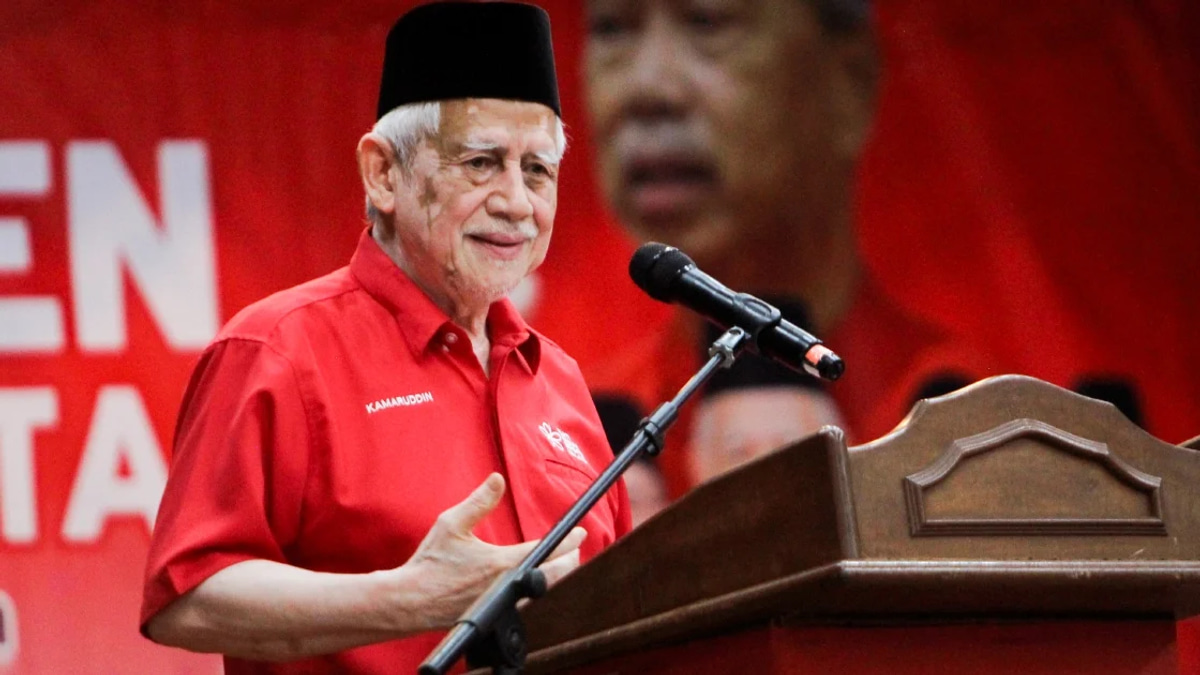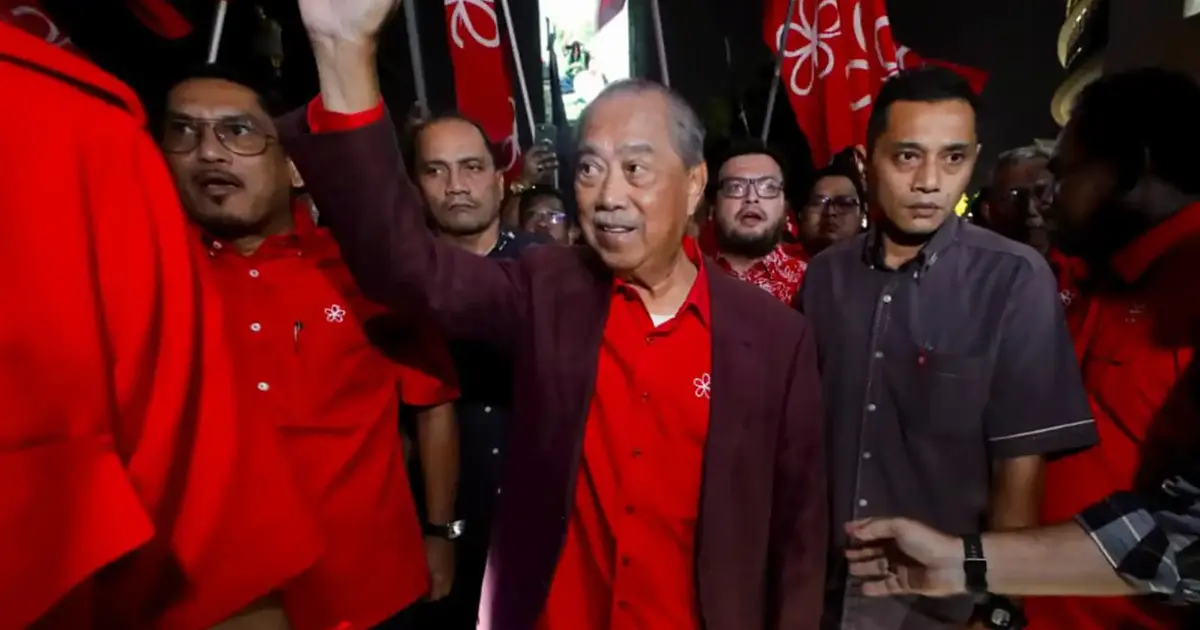
Datuk Seri Muhyiddin Yassin has mobilised substantial grassroots support, with over 200 party members and backers gathering to demonstrate their commitment ahead of a significant Bersatu meeting that will chart the party's strategic direction. The show of numbers reflects the continuing struggle within Bersatu for control of the narrative as Malaysia's political landscape shifts toward critical state-level contests.
The forthcoming assembly is anticipated to focus on three interconnected challenges that will define Bersatu's relevance in Malaysian politics over the coming months. Foremost among these is the need to prepare systematically for the Johor state election, a contest that carries disproportionate political weight given the state's size, economic importance, and historical role as a power base for major political movements. The second electoral challenge involves Negeri Sembilan, where Bersatu will need to navigate complex dynamics to maintain or expand its footprint. These state-level campaigns serve as crucial testing grounds for the coalition's viability ahead of any future general election.
Equally significant is the question of Bersatu's partnership with Pas, the Islamic party that has become central to the coalition's ideological and electoral positioning. The relationship between the two parties reflects broader tensions within the Malay-Muslim political sphere, where questions of conservative Islamic governance, racial identity, and governance philosophy create both common ground and persistent friction. How Bersatu and Pas navigate their cooperation will substantially influence whether they can present a coherent governing alternative to Pakatan Harapan in key constituencies.
Muhyiddin's ability to rally supporters at this juncture carries symbolic importance beyond the raw headcount. It demonstrates that despite the considerable turbulence that has characterised Bersatu's trajectory since its formation, the party retains a cadre of committed activists willing to publicly associate themselves with his leadership. In Malaysian politics, where party loyalty is often contingent and shifting alliances the norm, maintaining visible support serves both a morale function and a signal to rivals and potential partners about the depth of backing for particular leaders.
The rally also occurs within a broader context of intra-coalition jostling. The partnership between Bersatu, Pas, and other coalition partners remains a delicate equilibrium, with questions perpetually arising about power-sharing arrangements, candidate selection, and ideological direction. State elections provide opportunities for either strengthening or testing these relationships, depending on how campaigns are conducted and results interpreted.
For Johor specifically, the stakes are particularly acute. The state has been a foundation of political power for multiple ruling coalitions across Malaysia's history, and control of its state government carries implications that extend well beyond its borders. How Bersatu positions itself in this contest—whether as a dominant force, a junior partner, or something in between—will be closely watched by observers assessing the broader viability of the current coalition arrangement.
Negeri Sembilan, though smaller and less economically dominant, presents its own complications. The state's political dynamics are less predictable than Johor's, and success there would demonstrate that Bersatu possesses genuine electoral appeal beyond a narrow base. Conversely, disappointing performance would raise questions about whether the party's support is broadly distributed or concentrated in particular demographic or geographic segments.
The emphasis on the relationship with Pas signals recognition that Bersatu cannot succeed in either state election without effective coordination. This coordination extends beyond purely mechanical vote-sharing arrangements to encompass campaign messaging, candidate credibility, and the ability to present a unified vision of governance. Tensions between an ostensibly moderate Bersatu and a more explicitly Islamist Pas create potential complications in diverse, urban constituencies, while potentially strengthening appeal in more conservative areas.
Muhyiddin's gathering represents an attempt to consolidate party unity heading into what is clearly perceived as a consequential period. In Malaysian politics, visible shows of support serve multiple audiences simultaneously: they reassure the party base that their leader retains backing, they signal to potential defectors that leaving would mean joining the losing side, and they communicate to external observers the current balance of forces within the party. The fact that more than 200 people turned out suggests that whatever internal tensions exist within Bersatu, they have not yet translated into wholesale defections or organisational collapse.
The nature of these upcoming discussions will likely influence not only the electoral strategies for Johor and Negeri Sembilan but also longer-term questions about Bersatu's viability as a political force. Whether the party can emerge from state elections with strengthened legitimacy and clearer direction, or whether disappointing results might prompt further internal reckonings, remains an open question that Malaysian political observers will be monitoring closely.