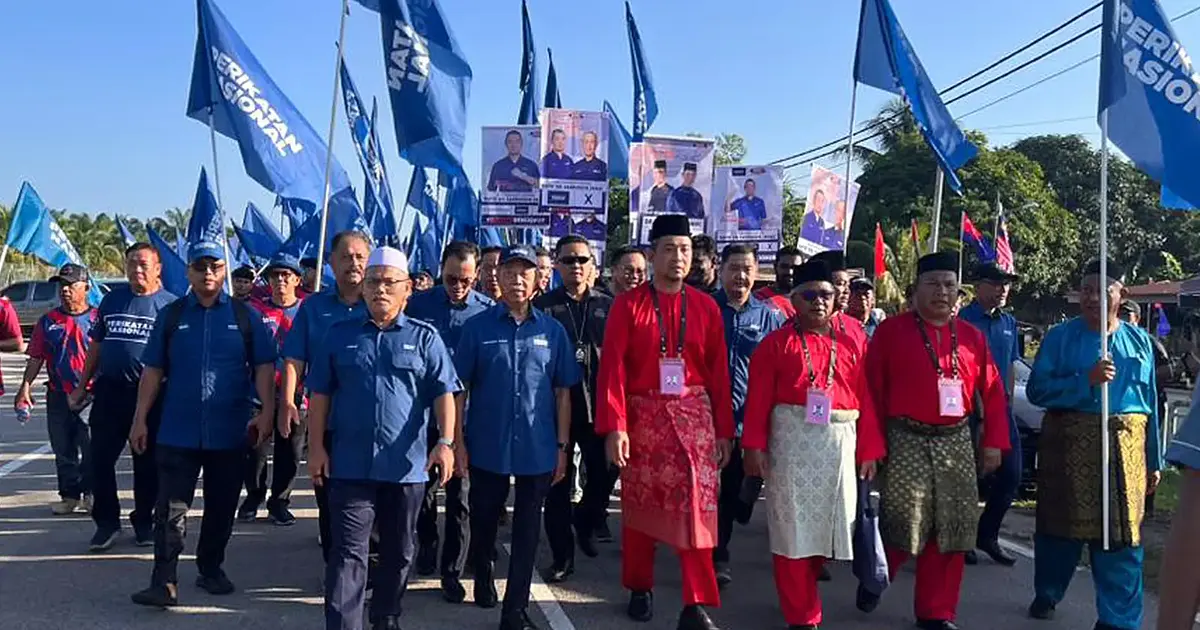
Tan Sri Muhyiddin Yassin demonstrated Perikatan Nasional's continued mobilisation capabilities when he appeared alongside hundreds of party supporters to back Dr Sahruddin Jamal's campaign for the Bukit Kepong seat. The high-profile show of force underscores the coalition's determination to retain influence across Malaysia's political landscape, particularly in constituencies where its component parties hold or seek electoral advantage.
Dr Sahruddin Jamal, representing Bersatu in the contest, brings institutional credibility as a two-term assemblyman already familiar with the demands of the office he seeks to retain. His incumbency status typically provides organisational advantages, including established constituent relationships and demonstrated constituency service records that voters can evaluate based on prior performance. The backing of Muhyiddin, who remains a significant figure within PN despite his party's fluctuating electoral fortunes, signals that Bersatu views this particular contest as strategically important for maintaining parliamentary or state assembly representation.
The mobilisation of such substantial numbers reflects PN's broader strategy of demonstrating grassroots energy and organisational strength in targeted constituencies. In Malaysian electoral politics, visual displays of supporter turnout often communicate candidate viability to undecided voters and reinforce morale within party machinery. The presence of a senior coalition figure like Muhyiddin amplifies this signalling effect, suggesting that party leadership views the constituency as winnable and worthy of senior-level attention during what is likely a general election campaign period.
For Bersatu specifically, maintaining representation in seats like Bukit Kepong carries significance beyond individual electoral outcomes. The party has navigated substantial political turbulence in recent years, including shifts in coalition alignments and internal leadership questions. Securing incumbent seats therefore becomes crucial for demonstrating that the party retains voter support despite the volatility that has characterised Malaysian politics since 2020. Each retained seat reinforces claims of continued electoral relevance heading into future contests.
The Perikatan Nasional coalition itself remains in transition regarding its political positioning. Originally formed as an opposition alliance, PN has at various points attempted to negotiate governing arrangements with other political forces. The continued emphasis on grassroots campaigning in specific constituencies suggests the coalition is preparing for electoral competition where traditional advantage cannot be assumed. This reflects the reality that Malaysian voters increasingly vote on localized rather than purely national considerations, making constituent-level campaigning expenditures more critical than in previous decades.
Dr Sahruddin's previous assemblyman terms indicate he has navigated the constituency's particular concerns successfully enough to achieve re-election. The nature of these prior victories—whether based on personal popularity, party loyalty, or responsive constituency service—will likely determine whether his current campaign can again persuade voters to return him to office. Bukit Kepong voters will assess whether his prior parliamentary or state assembly record addresses their most pressing concerns, from economic opportunity to infrastructure development to access to government services.
The campaign dynamics evident in Bukit Kepong reflect broader patterns unfolding across Malaysia's electoral arena. Different coalitions are testing their organisational capacity and voter appeal in constituencies ranging from urban centres to semi-rural areas. The appearance of senior leaders at campaign events serves both tactical and symbolic purposes—mobilising volunteers while signalling that leadership takes the contest seriously. For PN, such visible support for Dr Sahruddin demonstrates that the coalition intends to compete vigorously rather than cede seats to rivals without determined campaigns.
Muhyiddin's involvement carries particular weight given his prominence within PN and his experience as a former Prime Minister. His presence legitimises Dr Sahruddin as a credible candidate meriting senior endorsement and suggests party confidence in the candidate's ability to perform effectively if elected. Such high-level campaign participation typically concentrates on constituencies assessed as either genuinely competitive or strategically valuable for coalition positioning. The decision to deploy Muhyiddin rather than lower-ranking figures indicates PN strategists view this seat as falling into one or both categories.
The hundreds of supporters accompanying Muhyiddin and Dr Sahruddin on the campaign trail represent the human infrastructure through which elections are ultimately contested. These volunteers distribute materials, communicate with voters, organise events, and generate the grassroots enthusiasm that converts candidate viability into actual votes cast. The sheer number mobilised suggests Bersatu's local party machinery in Bukit Kepong remains substantially operational, contrary to periodic claims that the party has deteriorated organisationally since 2020. Whether this on-ground strength translates to electoral victory depends ultimately on whether local voters find Dr Sahruddin and his party's platform sufficiently compelling to warrant support in what may prove a closely contested race.

