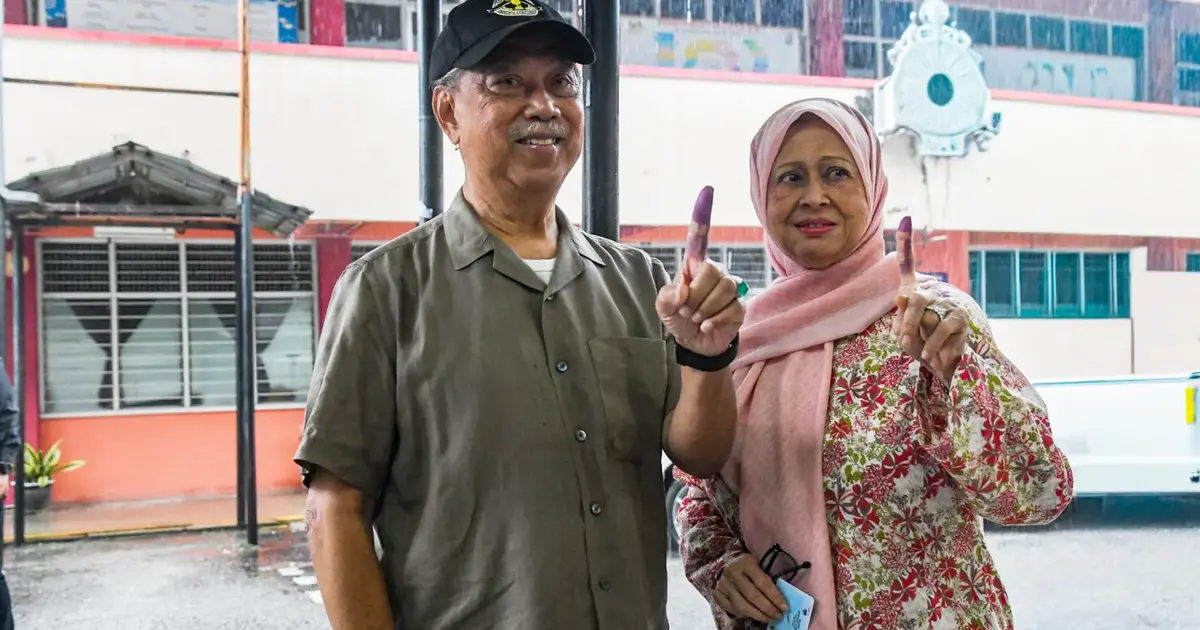
Bersatu president Muhyiddin Yassin has sought to minimize the significance of the Perlis Menteri Besar and state executive council members stepping down from the party's Supreme Council, signalling that the party leadership intends to handle the matter through internal channels rather than allow it to escalate into a public dispute.
The departure of senior Perlis figures from the supreme decision-making body represents a notable development within Bersatu's organizational structure, particularly given the state's importance within the broader coalition politics of northern Malaysia. Muhyiddin's measured response suggests the party leadership is keen to avoid further fragmentation or the perception of internal conflict that could weaken Bersatu's standing ahead of potential electoral challenges or coalition negotiations.
The Bersatu president indicated he is still gathering comprehensive information about the circumstances surrounding the resignations. This deliberate approach of awaiting details before making public statements allows the party leadership breathing room to assess the underlying grievances and determine whether the issue stems from procedural disagreements, policy differences, or personal political considerations. The emphasis on securing a complete picture before proceeding demonstrates a preference for managing the situation quietly.
Muhyiddin's insistence that the issue will be resolved within party structures reflects a broader strategy to contain potential damage to Bersatu's cohesion. In Malaysia's fluid political landscape, where coalition arrangements depend heavily on maintaining stable party structures and preventing defections, any public handling of internal disputes risks emboldening other members to voice grievances or consider their own positions within the organization. By confidently asserting internal resolution, Muhyiddin is signalling to other party members and potential allies that Bersatu's leadership remains firmly in control.
Perlis occupies a distinctive position within Malaysia's political framework as one of the smaller states with significant historical and cultural importance. The state's political dynamics have long been complex, with various parties competing for influence and support among both the royal establishment and the general electorate. Any fractures within Bersatu's Perlis apparatus could have implications for how the party mobilizes support in northern Malaysia and maintains its presence in state governance structures.
The resignation of the Menteri Besar from the Supreme Council is particularly noteworthy because it suggests disagreement at the most senior level of Bersatu's state operations. A Menteri Besar typically represents the apex of a party's state structure, commanding significant resources and political capital. Their decision to step away from the Supreme Council indicates either a fundamental difference of opinion regarding the party's direction or frustration with the decision-making processes at the highest levels. The fact that executive council members followed suit suggests the disagreement is not isolated but rather reflects broader sentiment within the state leadership.
For observers of Malaysian politics, this development occurs against a backdrop of broader realignments and shifts in coalition dynamics. Bersatu has undergone various transformations since its formation, and maintaining unity across geographically dispersed state structures with distinct local political challenges has proven consistently difficult. The Perlis situation, while being downplayed publicly, may reflect deeper tensions about resource allocation, representation on key party bodies, or disagreements about coalition partnerships at the state level.
Muhyiddin's approach also reflects the realities of Malaysian coalition politics, where public disputes between allied parties or within party structures can quickly become leverage points for opposition groups or rival factions. By emphasizing his intention to resolve matters privately, he is protecting both Bersatu's image and potentially the broader coalition arrangement that Bersatu participates in, whether at federal or state level. This calculus of maintaining face while addressing internal concerns is a recurring feature of Malaysian political management.
The emphasis on awaiting a full report suggests that Muhyiddin has not yet been briefed in detail by the relevant parties, or alternatively, that he is creating a window during which negotiations can occur behind the scenes. This interim period allows intermediaries or senior party figures to potentially facilitate discussions aimed at persuading the resignees to reconsider their positions or, if that proves impossible, to ensure their departure does not trigger broader defections or embarrassing public statements.
The international context of Malaysian politics—where stability and strong state institutions are valued both domestically and by observers abroad—also influences how party leaders handle internal crises. Public factional disputes can be interpreted as signs of weakness or poor management, potentially affecting a party's bargaining position in coalition talks or its ability to attract members and donors. Muhyiddin's calm, confident demeanor in downplaying the issue is partly aimed at reassuring stakeholders that Bersatu's leadership remains stable and capable.
Looking ahead, the resolution of the Perlis situation will offer insights into how deeply the disagreements run and what structural or procedural changes Bersatu may need to implement. Whether the resignations prove to be an isolated incident or herald broader dissatisfaction within the party machinery will become clearer in the coming weeks. For now, Muhyiddin's measured response serves the dual purpose of buying time for internal resolution while maintaining the outward appearance of a party leadership in full command of its organization.

