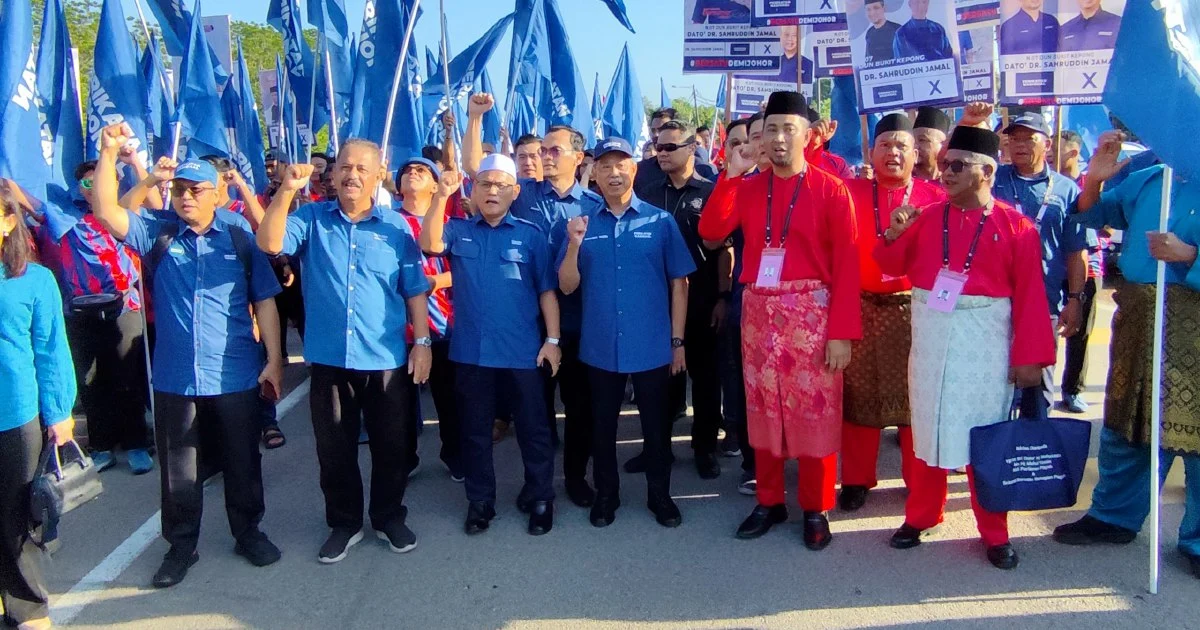
Tan Sri Muhyiddin Yassin, president of Bersatu, made a notable appearance at the Pagoh Sports Complex Hall early yesterday morning to accompany Sahruddin during the crucial nomination filing process for the Bukit Kepong state constituency. The timing of Muhyiddin's presence underscores the significance Bersatu places on its campaign efforts in Johor, a state that remains politically competitive and strategically important for the coalition landscape. Arriving at 8.45 am, Muhyiddin's attendance signals the party's determination to mount a serious challenge in the constituency and demonstrates internal party solidarity heading into what is expected to be a hard-fought electoral contest.
The symbolic weight of a party president's attendance at a candidate's nomination represents more than mere procedural participation. In Malaysian politics, such public displays of support serve multiple purposes—they energize grassroots machinery, send clear signals to rival camps about resource allocation and strategic priorities, and provide media coverage that amplifies campaign messaging. For Bersatu, which has undergone significant transformations since its founding and merger dynamics within the political coalition, every opportunity to demonstrate organizational cohesion carries operational importance. The presence of Muhyiddin alongside Sahruddin reflects the party's intention to leverage its leadership profile to amplify the candidate's profile and generate momentum among party members and sympathetic voters.
Johor's electoral dynamics remain complex, with competition typically threeway or multifaceted depending on the constituency. The Bukit Kepong seat, like many state constituencies across the peninsula, reflects broader patterns of electoral competition between Pakatan Harapan, Barisan Nasional, and parties like Bersatu that operate at the intersection of these coalitional arrangements. Bersatu's trajectory in state-level politics has been variable, with performance fluctuating based on local political conditions, internal factional alignments, and broader coalition negotiations. The decision to field and actively support Sahruddin represents a calculated investment in maintaining Bersatu's electoral footprint at the state level, where grassroots organization and local credibility remain crucial determinants of electoral success.
The nomination process itself constitutes a critical juncture in any election campaign. Candidates must meet deadlines, present required documentation, and ensure all procedural requirements are satisfied to proceed to polling day. For party leadership, accompanying candidates through this process communicates confidence in the nomination's acceptance and likelihood of proceeding smoothly. It also provides an opportunity for senior figures to interact with electoral officials, observe procedural fairness, and ensure compliance with all requirements. Muhyiddin's early morning attendance demonstrates hands-on engagement with the electoral machinery rather than remote delegation of responsibility.
From a broader coalition perspective, Bersatu's contested electoral positioning merits consideration. The party has navigated multiple political realignments, transitioning through different coalition partners and political contexts. Its participation in Johor elections reflects ongoing efforts to maintain relevance and electoral credibility at the state level, even as its national profile and coalition roles have shifted. Ensuring that fielded candidates successfully complete nomination procedures and proceed to polling represents a fundamental prerequisite for converting electoral candidatures into actual representation. The investment in Sahruddin's campaign thus reflects Bersatu's commitment to maintaining electoral viability beyond federal-level politics.
Local factors in Bukit Kepong constituency likely shaped Bersatu's decision to contest the seat. Constituencies vary enormously in demographic composition, voter registration patterns, incumbent advantage, local historical dynamics, and community preoccupations. Bersatu's nomination of Sahruddin suggests that internal party assessment identified viable electoral opportunities in this particular constituency based on factors such as prior performance, polling data, demographic trends, or local organizational strength. The specific context of Bukit Kepong's electoral history and voter composition would provide important context for understanding why Bersatu allocated scarce campaign resources to this particular race.
Muhyiddin's political role and personal standing within Bersatu carry implications for how party supporters and potential voters interpret the leadership's commitment to particular candidates. As party president and a figure with significant recent political history, Muhyiddin's endorsement carries symbolic weight beyond that of ordinary party officials. His appearance at Sahruddin's nomination acknowledges the candidate's status within party hierarchy and signals that senior leadership views this race as worthy of personal attention and support. Such gestures influence internal party morale and suggest to the broader political environment that Bersatu intends to compete seriously for the seat.
The timing of Johor state elections within broader electoral cycles also merits consideration. State elections in Malaysia occur at intervals determined by the state legislature's dissolution, which can vary considerably from federal elections. Johor's electoral calendar creates distinct windows for campaign activity that operate independently of federal-level electoral contests. Bersatu's electoral preparation in Johor reflects the party's need to maintain organizational capacity and credibility across multiple electoral arenas simultaneously, even while managing coalition relationships and factional dynamics at higher levels of government.
Moving forward, Sahruddin's campaign will require sustained effort and resource mobilization to convert the nomination and Muhyiddin's early endorsement into actual electoral victory. The presence of Bersatu's president at the nomination centre provided important symbolic support and generated initial campaign momentum, but electoral success ultimately depends on voter persuasion, ground organization, community engagement, and ability to mobilize supporters on polling day. The early public commitment by party leadership does, however, signal Bersatu's intention to invest in the campaign's success and maintain its electoral presence in Johor politics.

