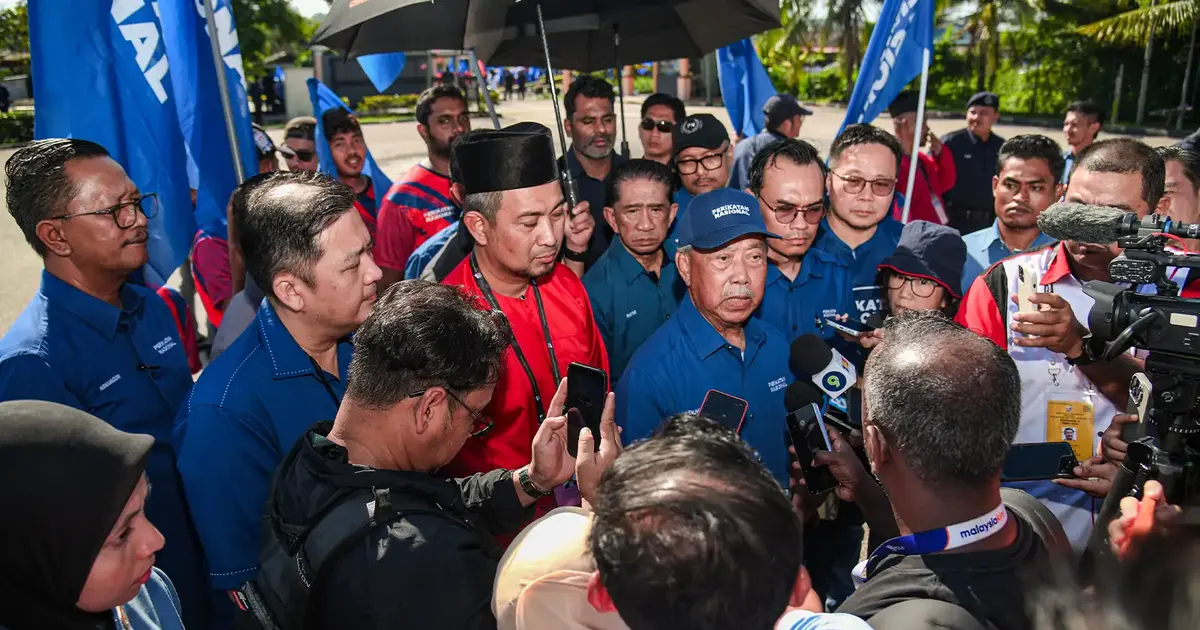
Bersatu president Muhyiddin Yassin has expressed confidence that Perikatan Nasional (PN) holds genuine potential to form the government in future state elections, a position that underscores the coalition's continuing efforts to strengthen its political standing across Malaysia's peninsular states. Speaking publicly about the coalition's electoral prospects, Muhyiddin emphasized that PN's capacity extends beyond its formal membership, bolstered by a network of sympathetic parties and individual politicians who remain outside the formal coalition structure.
The confidence expressed by the Bersatu leader reflects PN's shifting political landscape following the 2022 general election and subsequent state polls. Since losing federal power in the 2022 vote, Perikatan Nasional has repositioned itself as an alternative governing coalition, particularly in states where traditional powerhouses Barisan Nasional and Pakatan Harapan face internal divisions or electoral fatigue. The coalition comprises PAS, Bersatu, and several smaller component parties, each bringing distinct electoral support bases and organizational networks to the table.
Crucially, Muhyiddin's remarks highlighted Muda as a significant potential partner, a move that signals PN's recognition of the younger party's growing relevance in contemporary Malaysian politics. Muda, founded relatively recently by former PKR politician Syed Sairuddin Syed Harun, has carved out a niche appealing to younger, urban voters dissatisfied with established political players. The explicit mention of Muda as a coalition-building prospect suggests PN strategists view the party as a potential bridge to electoral demographics that have previously proven elusive for the coalition.
This outreach to parties outside PN's formal structure indicates a pragmatic approach to coalition mathematics. Malaysian state elections operate under a first-past-the-post system where securing a simple majority of state seats determines government formation. In many states, no single coalition possesses a clear majority, creating scenarios where post-election negotiations determine which grouping commands the numbers to form government. PN's emphasis on external allies suggests the coalition is preparing for precisely such scenarios, where flexible partnerships become decisive.
The political context underlying Muhyiddin's statement reflects broader realignments across Malaysian politics. The 2023 state elections saw mixed results for major coalitions, with some states witnessing unexpected outcomes or hung assemblies requiring post-poll negotiations. Simultaneously, voter fragmentation has become more pronounced, with smaller parties and independent candidates polling stronger support than during previous electoral cycles. This fragmentation potentially benefits PN's coalition-building strategy, as smaller parties gain increased negotiating leverage and may find PN's terms more palatable than those offered by alternative governing combinations.
Geographically, PN's prospects vary considerably across Malaysia's peninsular states. The coalition maintains strongholds in certain regions, particularly where PAS commands strong support among rural and religious-conservative constituencies. However, in urban centers and states with diverse demographics, PN faces steeper challenges competing against Pakatan Harapan and incumbent Barisan Nasional governments. The coalition's ability to form future state governments will depend significantly on its performance in these mixed constituencies, where partnerships with urban-friendly parties like Muda become strategically important.
Muhyiddin's emphasis on PN's potential to govern also carries implications for his personal political leadership. The Bersatu president has previously articulated ambitions regarding federal-level influence, and demonstrating coalition capacity to win state governments strengthens his hand in any future negotiations over prime ministerial positions or coalition leadership hierarchies. Success in state elections would provide tangible evidence of PN's electoral viability and organizational capacity, arguments Muhyiddin would likely leverage in broader coalition negotiations.
The inclusion of Muda in Muhyiddin's vision signals recognition that contemporary Malaysian politics rewards coalitions capable of appealing across generational and demographic lines. Muda's support base, concentrated among younger professionals and urban voters, complements rather than directly overlaps with PN's existing constituency strengths. Such complementary support bases theoretically allow broader electoral coalitions to achieve majority positions without excessive internal friction over policy or ministerial appointments.
However, PN's coalition-building efforts face complications inherent to Malaysian political dynamics. Previous attempts to build stable, long-term coalition arrangements have frequently fractured due to seat-sharing disputes, ministerial allocation disagreements, or sudden defections. The historical record suggests that Malaysian coalitions often suffer from fragility once established in government, as individual parties prioritize parochial interests over coalition cohesion. Muhyiddin's confidence in PN's potential will face practical tests when state elections materialize and post-poll negotiations commence.
Looking forward, the significance of Muhyiddin's remarks extends beyond immediate electoral calculations to reflect broader organizational and strategic assessments within PN. The coalition's willingness to cultivate partnerships with external players, rather than insisting on formal merger or absorption, suggests political pragmatism about the diverse interests PN encompasses. This flexible approach may prove more durable than rigid coalition structures, though it simultaneously introduces unpredictability regarding which parties might ultimately align with PN when government formation becomes possible.
For Malaysian voters and observers tracking the nation's political trajectory, Muhyiddin's statements underscore that competition for state power remains genuinely contested. Rather than any coalition assuming inevitable electoral dominance, multiple political combinations continue jockeying for position. This competition may ultimately benefit Malaysian democracy by maintaining pressure on all political players to articulate clear policy platforms and governance visions. Whether PN's coalition-building vision translates into actual state government formations will depend substantially on electoral results and the coalition's capacity to maintain unity once power becomes tangible.

