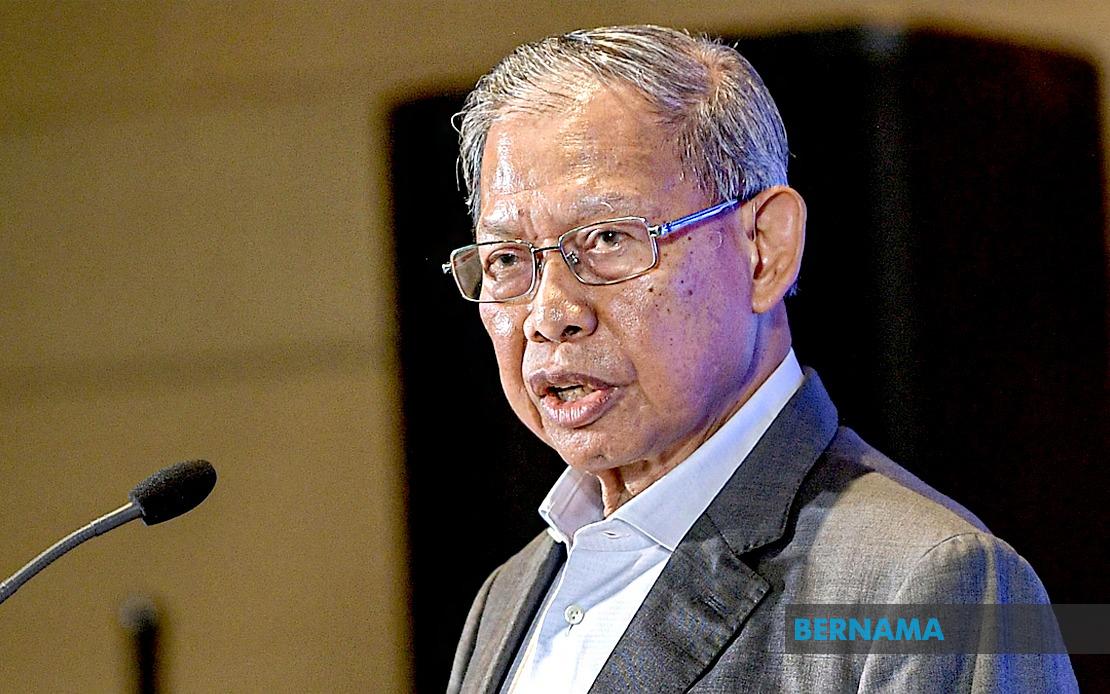
Datuk Seri Mustapa Mohamed, the former Member of Parliament for Jeli, has definitively closed the door on a return to electoral politics, reaffirming his decision to step aside from the 16th General Election race and creating space for a fresh generation of leaders to assume the mantle of governance. Speaking at a "Welcome Home" event held in his honour alongside Independence Month celebrations organised by the Council of Former Kelantan Elected Representatives in Pasir Mas, the 76-year-old politician articulated a considered perspective on political succession that reflects broader tensions within Malaysian politics regarding generational change and the concentration of power among senior figures.
The timing of Mustapa's declaration carries particular significance given the ongoing discourse surrounding leadership renewal in UMNO and the broader Malay-Muslim political establishment. At an age when many peers remain entrenched in senior party positions, his explicit acknowledgement that physical capacity and generational fairness demand his withdrawal from active electoral contestation stands in marked contrast to the pattern of incumbency that has long characterised Malaysian political life. This positioning also underscores a growing recognition within mainstream parties that demographic realities and voter expectations increasingly demand the elevation of younger, more dynamic figures to positions of electoral prominence.
Mustapa's reentry into UMNO in June following his departure in September 2018, when he joined the now-dissolved Bersatu party, marks a significant chapter in his political odyssey. His return to the party that formed the foundation of his career trajectory demonstrates the complex loyalties and shifting allegiances that have characterised Malaysian party politics over the past several years. However, rather than leveraging his renewed membership as a platform for fresh candidacy, Mustapa has instead articulated a vision of elder statesman influence, one predicated on mentorship, strategic counsel, and institutional knowledge transfer rather than direct electoral participation.
The former Minister of International Trade and Industry framed his withdrawal not as a diminishment of contribution but as a recalibration toward forms of engagement that align more authentically with contemporary capabilities and broader party interests. He emphasised that his commitment to UMNO remains substantive, extending beyond ceremonial affiliation to encompass substantive advisory functions that could benefit younger candidates and party strategists navigating an increasingly complex electoral landscape. This articulation of continued relevance through non-electoral channels reflects a sophisticated understanding of how senior politicians can maintain influence and relevance without monopolising candidacies that might otherwise advance generational transitions.
Mustapa's stated intention to remain active within academic spheres, particularly through engagement with public and private higher education institutions, signals an emerging trend within Malaysian politics whereby retired or semi-retired politicians transition into educational mentorship roles. This pathway enables sustained intellectual contribution and the transmission of institutional knowledge to emerging generations of thinkers, policymakers, and potential future political leaders. In the Malaysian context, where political education and formal training programmes for future leaders remain relatively underdeveloped, such academic engagement represents a valuable mechanism for strengthening the intellectual foundations of political discourse and governance capability.
The politician's candid acknowledgement of physical limitations—stating that his gait is no longer steady and that age has diminished his physical capability—reflects a refreshing honesty often absent from Malaysian political discourse, where senior figures frequently maintain claims of vigour and fitness regardless of observable reality. This directness challenges prevailing cultural norms that equate political authority with physical presence and youthful dynamism, instead asserting that experienced guidance and strategic thinking remain valuable even when detached from frontline electoral competition. Such candour potentially legitimises discussions about succession planning and generational transitions that political establishments often prefer to avoid.
For UMNO specifically, Mustapa's position on generational renewal carries implications for how the party positions itself as a modernising force capable of attracting younger voters. The party has faced sustained criticism regarding its perceived entrenchment among older demographics and its difficulty in cultivating compelling young leadership. By positioning his withdrawal as enabling rather than obstructive, Mustapa creates space for the party to actively promote younger candidates without the optics of generational conflict or the appearance of sidelining senior figures. This approach offers a potential template for managing succession dynamics in ways that preserve institutional stability whilst accommodating legitimate demands for renewal.
The broader Malaysian political context suggests that generational transition, whilst rhetorically embraced across parties, remains difficult to execute in practice. The concentration of power among senior figures, entrenched patronage networks, and the prestige associated with electoral candidacy continue to disadvantage emerging leaders regardless of party affiliation. Mustapa's explicit commitment to facilitating youth advancement thus represents a counterweight to these structural impediments, offering mentorship and credibility to younger politicians whilst deliberately vacating the electoral space they require for advancement.
Looking toward GE16, Mustapa's position also carries implications for UMNO's electoral strategy and positioning within the broader Barisan Nasional coalition. The question of how the party regenerates its candidate roster whilst retaining experienced leadership remains strategically consequential. Mustapa's approach—combining non-candidacy with continued substantive engagement—offers one viable resolution to this challenge, though its effectiveness ultimately depends on younger party members successfully translating such mentorship into enhanced electoral performance and broader public confidence.
The former trade minister's declaration ultimately reflects an emerging consciousness within Malaysian politics that sustained organisational vitality depends upon managed generational transitions rather than indefinite incumbent retention. Whether other senior figures across the political spectrum will embrace similar approaches remains uncertain, but Mustapa's positioning at least establishes an alternative norm, one that reframes political contribution beyond electoral candidacy and suggests that meaningful participation in governance and nation-building need not depend upon maintaining parliamentary constituencies or ministerial portfolios indefinitely.

