Penang's ambitious Mutiara Line Light Rail Transit project has reached a critical inflection point with the appointment of Malaysia Rapid Transit Corporation Sdn Bhd (MRT Corp) announcing the RM3.028 billion System Turnkey Contract (STC) award to the Malaysian Resources Corporation Berhad (MRCB) and Theta Edge Berhad Joint Venture. This development represents a significant step forward in one of Malaysia's largest infrastructure endeavours, enabling the project to accelerate from its planning phase into simultaneous detailed engineering and construction delivery across multiple workstreams.
The strategic value of this contract lies in its timing and scope. By appointing the systems integrator now, rather than waiting for civil construction completion, MRT Corp can ensure that railway infrastructure design remains synchronised with the building of stations, viaducts, and track beds. This parallel approach has become standard practice in modern transit projects across Asia, compressing overall delivery timelines and reducing coordination risks that typically emerge when systems design lags behind physical construction. For Malaysia's transport sector, this reflects growing sophistication in project management methodologies and an understanding that transit development success depends on integrated planning from inception.
The systems contract encompasses seven major components that collectively form the backbone of any modern automated transit network. These include the procurement and integration of electric trains alongside the associated depot equipment where vehicles will be serviced and stored. The signalling and train control system, paired with automatic platform screen doors, ensures passenger safety and operational precision—technology increasingly standardised across Southeast Asian metros. The contract additionally covers trackwork specifications, conductor rails that power the vehicles, and the maintenance vehicle fleet required for ongoing asset upkeep. Power supply and distribution systems will be designed to handle peak demand across the network's eventual operating hours.
Beyond the visible infrastructure, the contract extends to the digital nervous systems that will operate the line. A railway Supervisory Control and Data Acquisition (SCADA) system will monitor real-time performance across all subsystems, while a computerised maintenance management system will schedule preventive work and track asset condition. Telecommunications and information technology infrastructure will enable communication between control centres, stations, and trains, while the automatic fare collection system will process millions of passenger transactions seamlessly. These technical components remain largely invisible to commuters but represent the true complexity of modern transit operations.
Parallel progress on civil construction demonstrates the project's momentum. The Civil Main Contract 1 (CMC1), covering the Silicon Island to Komtar alignment, has already achieved construction of 45 pile caps and 32 pier columns across 14 of the 19 planned construction sections. This foundation work is essential; pile caps distribute the weight of elevated viaducts deep into Penang's soil, while pier columns create the structural skeleton upon which track and stations will sit. For Malaysian readers familiar with the rapid development of Kuala Lumpur's urban landscape, this construction method mirrors the techniques used in building the Klang Valley's elevated highways and earlier LRT lines, proven reliable over decades of operation.
Land acquisition, often a bottleneck in Malaysian infrastructure projects, has progressed remarkably well. MRT Corp reports that 93 percent of required land for the CMC1 package has been made available, a testament to coordination between federal and Penang state governments and relevant agencies. This success is notable given Malaysia's complex land tenure systems and the need to negotiate with multiple private landowners. By comparison, earlier transit projects in the Klang Valley faced protracted delays from land disputes; the Mutiara Line's progress suggests lessons have been learned and institutional mechanisms improved.
The extension section from Komtar to Penang Sentral, designated as Civil Main Contract 2 (CMC2), remains on schedule with tender evaluations currently underway. MRT Corp targets contract award in November 2026, suggesting that physical construction on this extension segment could commence in early 2027. This phased approach allows the initial Silicon Island to Komtar section to advance toward completion while planning for the eventual expansion, a pragmatic strategy that manages both risk and cash flow for the project's financiers.
Bumiputera participation has exceeded 20 percent of the CMC1 contract value, reflecting government policy objectives to develop local industry capacity through major infrastructure projects. This figure is significant because it indicates that Malaysian contractors and suppliers are capturing genuine value from the project, not merely token participation. For the broader economy, Mutiara Line's procurement approach sends a signal to smaller Malaysian firms that major state-backed infrastructure offers accessible opportunities, potentially catalysing capability development in the construction and systems integration sectors.
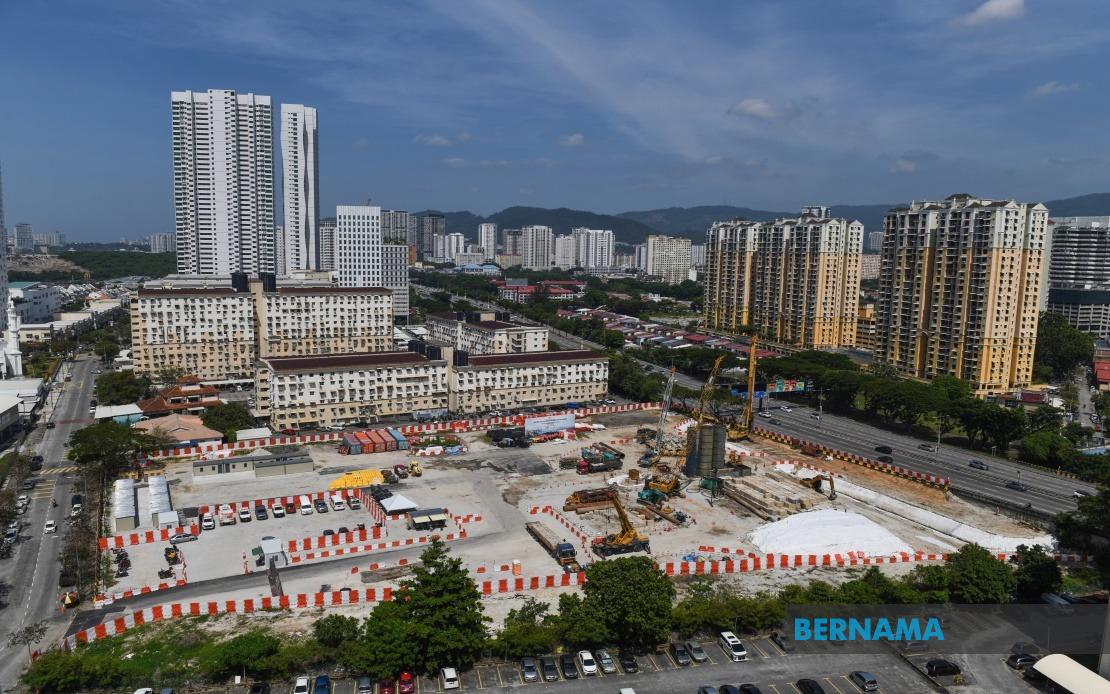
The depot facility at Silicon Island represents another crucial milestone now underway. MRT Corp has commenced soil investigation at the site to understand ground conditions and design appropriate foundations for this facility-intensive location. Depots are where trains are maintained, cleaned, and stored overnight; they typically occupy substantial land areas and must be positioned accessibly to the main line. The Penang State Government's handover of the Tapak Pesta site in April 2026 enabled removal of existing structures, and site preparation work is now complete. Construction can commence imminently, adding another visible symbol of progress for Penang residents who have anticipated this project for years.
For Malaysia's broader infrastructure narrative, the Mutiara Line represents a maturation of the nation's transit ambitions. Unlike first-generation projects that faced construction delays and cost overruns, this initiative demonstrates integrated planning, realistic timelines, and stakeholder coordination. The RM3.028 billion systems contract award, coupled with civil construction advancing across 14 sections simultaneously, suggests the project could achieve operational readiness within its declared schedule. For Penang, successful delivery would position the state as a genuine metropolitan centre with modern connectivity, potentially influencing investment and talent attraction patterns across the northern region.
The project also offers instructive lessons for other Malaysian states considering transit development. The parallel design-and-build methodology employed here, the structured approach to Bumiputera participation, and the institutional coordination between federal and state authorities establish a template that could accelerate transit expansion elsewhere. As Malaysia aims to reduce traffic congestion and support urban sustainability, the Mutiara Line's execution approach may become a blueprint for future initiatives, whether in Johor, Sarawak, or elsewhere. The contract award thus carries significance far beyond Penang's borders, potentially influencing how Malaysia approaches major infrastructure for the next decade.

