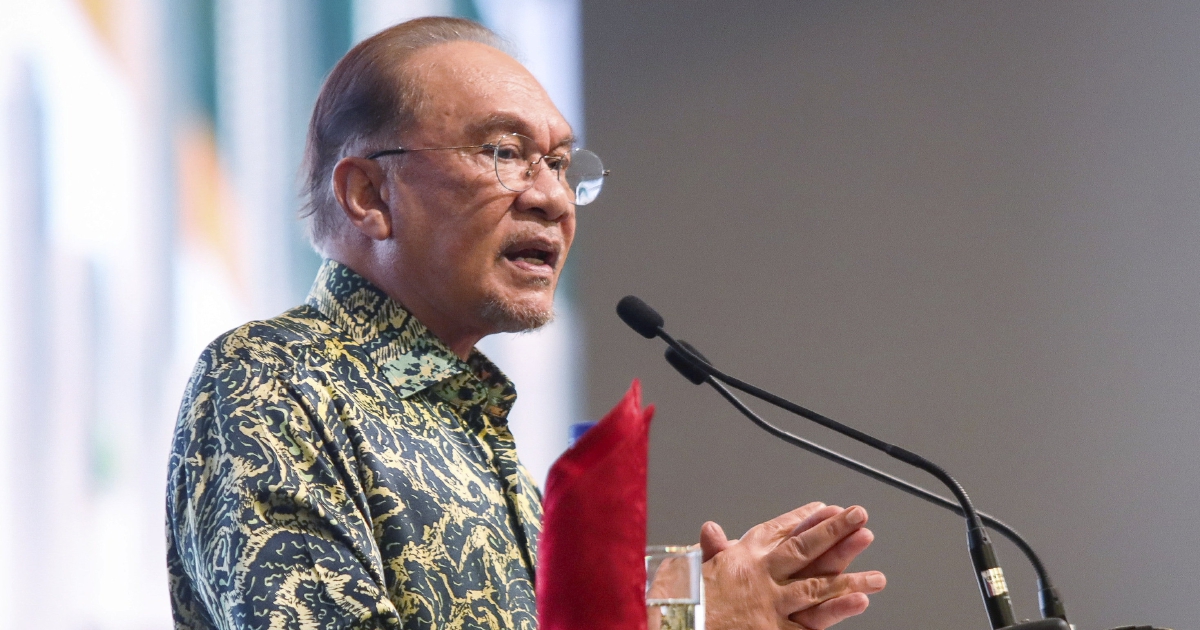
Prime Minister Datuk Seri Anwar Ibrahim announced a significant breakthrough in regional efforts to address the Rohingya crisis, revealing that Myanmar has formally agreed to take back approximately 5,000 Rohingya from Malaysia as an initial tranche. The agreement emerged from diplomatic discussions between the Malaysian and Myanmar governments, marking a potential step toward resolving one of Southeast Asia's most intractable humanitarian challenges.
The repatriation arrangement represents the culmination of negotiations that reflect both nations' desire to address the presence of Rohingya populations in Malaysia, where approximately 180,000 refugees are currently registered with the United Nations High Commissioner for Refugees. For Malaysia, which has long shouldered disproportionate responsibility in hosting stateless Rohingya populations, the agreement signals potential relief from the mounting pressures on infrastructure, employment, and social services. The country's decision to engage in formal repatriation discussions, rather than continuing indefinite hosting, underscores the real constraints facing a middle-income nation confronted with prolonged refugee populations.
Myanmar's acceptance of this initial cohort carries substantial international implications, particularly given the country's history of reluctance toward large-scale repatriation schemes. The military-led government in Naypyidaw has previously expressed skepticism about receiving Rohingya returnees, citing security concerns and disputes over citizenship verification. This reversal in stance may indicate shifting calculations within Myanmar's leadership regarding international pressure, Bangladesh's successful mediation role, or strategic interests in improving diplomatic ties with regional partners.
The specificity of the 5,000-figure employed by Prime Minister Anwar suggests a carefully calibrated diplomatic arrangement rather than a comprehensive solution. By framing this as an initial group, both governments appear to have adopted a phased approach that allows for assessment of reintegration capacity and management of logistics before commencing larger movements. This methodical strategy reflects lessons learned from previous repatriation attempts in the region, which have frequently encountered obstacles related to documentation, identity verification, and coordination between source and receiving countries.
For Malaysia, the broader context involves mounting domestic pressures regarding the Rohingya presence. The refugee population has faced increasing restrictions on movement, employment access, and educational opportunities in recent years, even as Malaysian civil society organizations have advocated for more humane approaches. The government's willingness to pursue structured repatriation rather than forced deportation demonstrates a commitment to maintaining international humanitarian standards while addressing legitimate national concerns about resource allocation and social cohesion.
The repatriation agreement also carries implications for Bangladesh, which currently hosts the world's largest refugee population—nearly 900,000 Rohingya in camps in Cox's Bazar. Malaysia's successful negotiation of returns to Myanmar could establish a precedent encouraging Bangladesh to pursue similar arrangements, potentially easing the extraordinary burden on the border region. Conversely, Bangladesh's government has expressed concerns that inadequate conditions in Myanmar could jeopardize returnees, and the multi-country repatriation dynamic requires careful coordination to prevent renewed displacement.
International humanitarian organizations have consistently raised concerns about conditions in Myanmar's Rakhine State, where Rohingya communities previously resided before the 2017 military campaign that triggered mass exodus. Documentation from human rights groups indicates ongoing restrictions on freedom of movement, limited access to livelihoods, and security vulnerabilities for returned populations. These realities suggest that any repatriation process must incorporate robust monitoring mechanisms and safeguards to ensure returnees face neither persecution nor preventable hardship.
The diplomatic channel between Malaysia and Myanmar also reflects broader regional institution-building within ASEAN, the Association of Southeast Asian Nations. Thailand, Indonesia, and other member states have increasingly recognized that managing displacement and statelessness requires coordinated approaches beyond bilateral arrangements. Prime Minister Anwar's involvement in this negotiation demonstrates Malaysia's assertion of regional leadership in addressing complex humanitarian crises through structured diplomacy rather than unilateral action.
From a practical standpoint, the repatriation framework will require establishment of reception mechanisms in Myanmar, verification procedures for individuals selected for return, and coordination of transport logistics between the two countries. Malaysia's government will need to develop transparent criteria for determining which individuals constitute the initial 5,000, balancing considerations such as duration of residence, family circumstances, and individual preferences regarding return. The process inevitably creates difficult choices for Rohingya populations facing uncertainty about conditions in Myanmar against the prospect of improved legal status and access to services through repatriation.
The announcement also reflects international diplomatic engagement, with ASEAN dialogue partners and global humanitarian bodies having invested considerable effort in facilitating regional responses to the Rohingya crisis. The agreement validates multilateral approaches while acknowledging that bilateral arrangements between immediate neighbors remain essential for practical implementation. Success in this initial phase could influence subsequent agreements and establish protocols that other receiving countries might emulate in addressing comparable refugee situations throughout the region and beyond.

