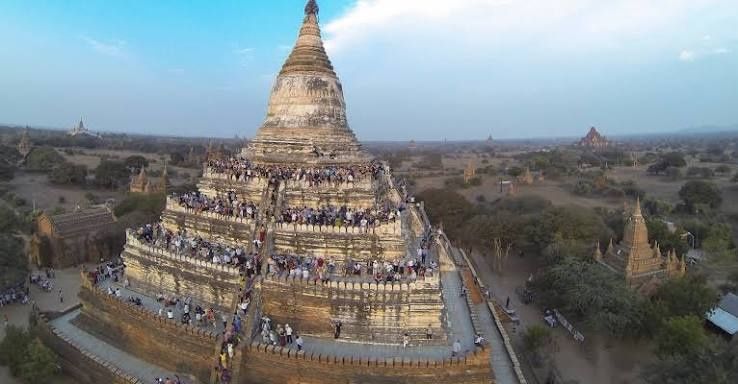
Myanmar is banking on its rich Buddhist heritage and architectural treasures to signal an economic turnaround, with the country's military leadership now prioritising tourism as a gateway to broader recovery. After receiving nearly one million international visitors in 2025, officials are pushing to almost double that figure to 1.8 million this year, marking an ambitious rebound from the economic and reputational damage inflicted by the 2021 military coup. The government believes success in the tourism sector will demonstrate to both investors and the international community that stability is returning to parts of the country and that business opportunities are worth exploring.
The strategy hinges on recapturing visitors from Myanmar's immediate neighbours, particularly China and Thailand, which represent the most accessible and economically viable markets. Officials at the Ministry of Hotels, Tourism and Culture have identified these two countries as the primary drivers of projected growth, with relaxed visa-on-arrival arrangements already implemented for Chinese citizens alongside travellers from India, Japan, and South Korea. Citizens from Russia and most Southeast Asian nations already enjoy visa-free entry, giving the government considerable flexibility in its approach. Through May this year, Myanmar recorded 448,205 international arrivals, representing a modest five percent increase compared to the same period last year, leaving officials with a steep climb to reach their annual target.
Chinese travellers continue to form the backbone of Myanmar's inbound tourism, followed by Thai and South Korean visitors. Data from the first five months of 2024 reveals Chinese arrivals climbed 12 percent year-on-year, whilst Thai numbers increased seven percent. This regional focus reflects both practical realities—proximity, existing economic ties, and established travel infrastructure—and pragmatic acknowledgment of Myanmar's current isolation from Western markets. Despite US State Department travel advisories warning against visits due to armed conflict and unrest, arrivals from America still increased 17 percent through May, suggesting that some international interest persists even amid headline concerns about security.
The tourism recovery must overcome substantial headwinds. Myanmar's pre-2021 tourism landscape was dramatically different; the country welcomed roughly 4.7 million international visitors in 2015 after initially opening to the world following decades of isolation under military rule. Even achieving the 1.8 million target this year would represent only about 38 percent of those peak numbers. Thailand, by comparison, attracted approximately 33 million tourists last year and is targeting similar volumes again, illustrating the vast gap between Myanmar's ambitions and the regional reality. This disparity underscores how far Myanmar must travel to restore its position as a Southeast Asian destination, particularly given the physical and psychological damage from years of civil conflict.
The five principal destinations anchoring Myanmar's tourism strategy remain Yangon, Mandalay, Bagan, Inle Lake, and the Golden Rock Pagoda, each offering distinct attractions from urban sophistication and colonial heritage to ancient temple complexes and natural landscapes. Aung Aye Han, director general of the Directorate of Hotels and Tourism, has emphasised that the government's approach prioritises trust-building rather than aggressive expansion. This measured rhetoric acknowledges that confidence in Myanmar's stability cannot be manufactured through marketing alone; it must be earned through demonstrable improvements in security and governance. The involvement of high-profile Thai travel influencers, including Farose and Bas of Go Went Go, in recently filming content from Yangon signals an emerging shift in how Myanmar is being portrayed in the digital sphere after years of near-total absence from regional travel discourse.
Minister-level diplomatic engagement has begun paving ground for tourism expansion. Since President Min Aung Hlaing assumed office in April, Myanmar has conducted state visits to China and India whilst seeking normalisation of ties with Southeast Asian neighbours. Thai Foreign Minister Sihasak Phuangketkeow's April visit to Myanmar represented an important symbolic step, reflecting renewed bilateral engagement after years of strained relations. Such high-level contact creates political space for tourism promotion and signals to regional capitals that Myanmar is actively attempting to rebuild its international standing, a prerequisite for generating confidence among both travellers and tour operators.
Luxury hotel operators are detecting genuine, if fragile, signs of revival. Occupancy rates at upscale properties in Yangon have climbed approximately 10 percent since the recent election, according to May Myat Mon Win, general manager of Chatrium Hotel Royal Lake and adviser to the Myanmar Tourism Federation. Notably, the composition of guests has shifted; business travellers, religious pilgrimage groups, and those exploring investment opportunities now predominate over traditional leisure tourists. This pattern reflects Myanmar's particular moment: the country lacks the leisure travel infrastructure and confidence to attract recreational visitors in volume, but it is successfully attracting purpose-driven travellers whose visits carry economic value beyond accommodation spending. Japanese business interest and investment-related travel is expected to accelerate, creating a diverse revenue stream that reduces dependence on any single market.
The industry recovery occurs against an uncomfortable backdrop of persistent security concerns and documented human trafficking linked to scam operations. Official visitor statistics, which track legal arrivals, deliberately exclude the thousands of individuals trafficked into compounded scam facilities across Myanmar—a phenomenon that has prompted coordinated regional crackdowns. These illegal operations have resulted in the repatriation of thousands of Chinese nationals and represent a profound reputational risk to Myanmar's tourism brand in key source markets. The government's focus on trust-building reflects awareness that reputation damage from such scandals could easily offset gains achieved through visa liberalisation and marketing campaigns. The challenge therefore extends beyond conventional tourism promotion to encompassing border security, labour trafficking prevention, and criminal network disruption.
International tour operators report genuinely surprising levels of enquiry from Western markets despite limited flight connectivity and government travel warnings. Thet Lwin Toh, managing director of Myanmar Voyages International Tourism Co., notes that inquiries from Europe, the United States, and India have increased even without major improvements in international air capacity, suggesting substantial latent demand amongst adventurous and well-informed travellers. These visitors tend to be older, more experienced international travellers less influenced by mainstream news coverage and more willing to form independent assessments of safety and accessibility. The case of Liam Martinez, a 34-year-old Texan who visited Yangon despite advisory warnings, exemplifies this dynamic; younger digital-native travellers increasingly rely on YouTube content and personal networks rather than official government warnings when making travel decisions.
Myanmar's tourism gambit represents more than merely economic calculation; it constitutes a deliberate strategy to normalise perceptions of the country and create space for broader international re-engagement. The government understands that tourism serves as both tangible revenue source and symbolic marker of stability. Success in reaching 1.8 million visitors would demonstrate that the worst period of instability has passed and that significant regions of Myanmar are accessible to international travellers. This messaging matters enormously to international investors, development agencies, and regional governments contemplating deeper engagement. Conversely, failure to achieve these targets would reinforce narratives of persistent chaos and international isolation.
The coming months will prove revealing about both Myanmar's capacity to improve ground conditions for tourism and its ability to market itself effectively across Asia. Current trajectory suggests the 1.8 million target remains ambitious but potentially achievable if the second half of the year demonstrates dramatic improvement over first-half numbers. Success will depend on sustained visa liberalisation, visible improvements in international flight availability, consistent security conditions, and effective regional marketing that positions Myanmar as sufficiently safe for leisure travel. For Malaysian travellers and businesses, Myanmar's tourism recovery carries particular significance; as a fellow Southeast Asian nation, Malaysia represents both a cultural and geographic bridge between Myanmar and more distant markets. Malaysian tour operators and hospitality investors therefore have distinctive opportunities to participate in Myanmar's tourism infrastructure revival during this formative recovery period.

