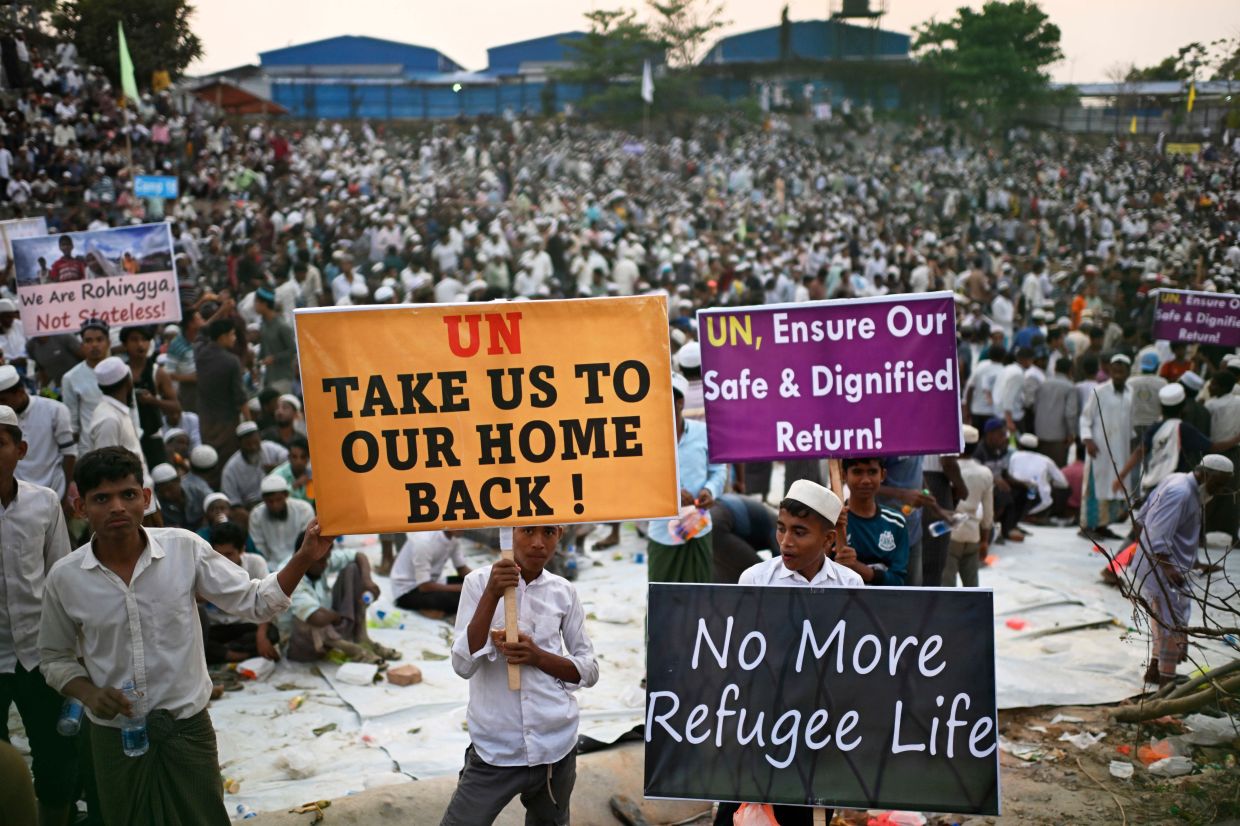
Myanmar's military-backed administration announced over the weekend that it has verified more than 300,000 Rohingya refugees currently sheltering in Bangladeshi camps, declaring them eligible for eventual repatriation to western Rakhine state. The Foreign Ministry statement marks an incremental step in a humanitarian crisis that has now stretched across nine years, with hundreds of thousands of displaced people still confined to sprawling refugee settlements just across Myanmar's border. Despite the government's verification claims, fundamental obstacles to any large-scale return remain firmly in place, with Naypyidaw conditioning acceptance on security improvements that analysts view as unlikely in the near term.
The origins of this crisis trace back to August 2017, when Myanmar's military initiated a devastating crackdown in Rakhine state following armed attacks by Rohingya insurgent groups targeting military installations. The campaign displaced more than 700,000 people in just a matter of weeks, adding to hundreds of thousands of Rohingya who had already fled Myanmar during previous episodes of intercommunal violence stretching back decades. International observers documented mass killings, sexual violence, and systematic destruction of villages during the operation, prompting genocide and ethnic cleansing accusations from the United Nations and numerous governments. Myanmar's refusal to acknowledge the Rohingya as a distinct ethnic group—instead labeling them as "Bengalis" to suggest foreign origin—has complicated all subsequent diplomatic efforts toward resolution.
According to Myanmar's assessment, of 828,824 refugees listed by Bangladesh, government officials verified 426,545 individuals as of late July this year. Within that verified cohort, the government determined that 308,797 qualified as former Rakhine residents with legitimate claims to return. The remaining figures paint a starker picture: Myanmar stated that 113,507 people could not be verified through its documentation systems, whilst a further 4,241 individuals were flagged as participants in what the government characterizes as terrorist activities. These classifications suggest that substantial portions of the refugee population face significant hurdles to any future repatriation, regardless of humanitarian concerns or international pressure.
The durability of any repatriation framework appears questionable given Myanmar's internal instability. When Myanmar and Bangladesh initially agreed to a two-year repatriation program in 2018, neither anticipated the military coup of 2021 that toppled Aung San Suu Kyi's elected government and plunged the country into broader conflict. Armed resistance movements across multiple regions have fractured state authority, whilst in Rakhine specifically, the Arakan Army—an ethnic militia based in the region—has seized control of substantial territory from military forces. Recent clashes between these forces intensified in 2023, triggering fresh displacement flows toward Bangladesh and destabilizing the very region where returning refugees would theoretically resettle. Such conditions render Myanmar's security assurances essentially hollow.
The deteriorating situation has produced desperation among Rohingya populations without immediate prospect of return. Constrained by inadequate camp conditions, shrinking international aid contributions, and bleak long-term prospects within Bangladesh, growing numbers of refugees have undertaken perilous maritime journeys toward Malaysia and Indonesia aboard unseaworthy vessels. These ocean crossings, frequently organized by smuggling networks, expose passengers to drowning, disease, and human trafficking. Malaysia has emerged as a primary destination, currently hosting substantial Rohingya populations despite lacking formal refugee status frameworks. The irregular maritime migration route represents an indictment of the stalled diplomatic process and the human costs of prolonged displacement.
Malaysian Prime Minister Anwar Ibrahim introduced complexity into regional calculations when he announced in late July that Myanmar had consented to accept 5,000 Rohingya refugees residing in Malaysia as part of a structured repatriation initiative. This statement appeared to signal diplomatic progress and a coordinated regional response to the population movement crisis. However, Myanmar's Foreign Ministry rapidly contradicted this narrative, with official Han Win Aung clarifying that any repatriation arrangement applied exclusively to verified Myanmar nationals held in Malaysian detention facilities. The ministry explicitly rejected characterizations suggesting broader Rohingya acceptance, effectively narrowing the scope of any bilateral arrangement to a comparatively negligible population segment.
The contradiction between Malaysian and Myanmar statements underscores the diplomatic fragility surrounding Rohingya repatriation. Regional governments face competing pressures: humanitarian obligations and public concern for displaced populations clash with sovereignty considerations, burden-sharing reluctance, and political sensitivities around ethnic and religious demographics. Malaysia's position as a middle-income country hosting irregular migrant populations places it in an awkward intermediary position, unable to unilaterally resolve displacement whilst bearing disproportionate social costs. Bangladesh, already straining under resource constraints from hosting the world's largest refugee settlement, has limited leverage to enforce compliance with international norms or agreements.
Myanmar's official position continues to dispute international estimates of displacement scale, contending that approximately 540,000 people crossed into Bangladesh following 2017 violence whilst over 200,000 remained in northern Rakhine. These figures diverge substantially from UN assessments and humanitarian documentation suggesting far larger displacement volumes. The discrepancy reflects competing narratives about the operation's scope and intention, with Myanmar's minimization serving to reduce apparent culpability whilst potentially justifying slower repatriation timelines. International investigations and documentation efforts have substantially contradicted governmental claims about the violence's limited extent and character.
For Malaysian and broader Southeast Asian observers, the Rohingya situation represents a critical test of regional mechanisms and commitments to human rights. ASEAN's traditional non-interference doctrine has constrained institutional responses, whilst bilateral relationships among member states diverge sharply on humanitarian priorities. Myanmar's internal fragmentation complicates diplomatic engagement, as the military administration lacks unified authority over Rakhine and faces armed challenges from multiple directions. The refugee populations themselves represent a barometer of regional stability and cooperation capacity, with their indefinite confinement suggesting systemic failures in conflict resolution and burden-sharing frameworks. Until Myanmar's political situation stabilizes and security conditions genuinely improve—developments unlikely in the immediate future—the prospects for meaningful repatriation remain substantially constrained despite governmental verification claims.

