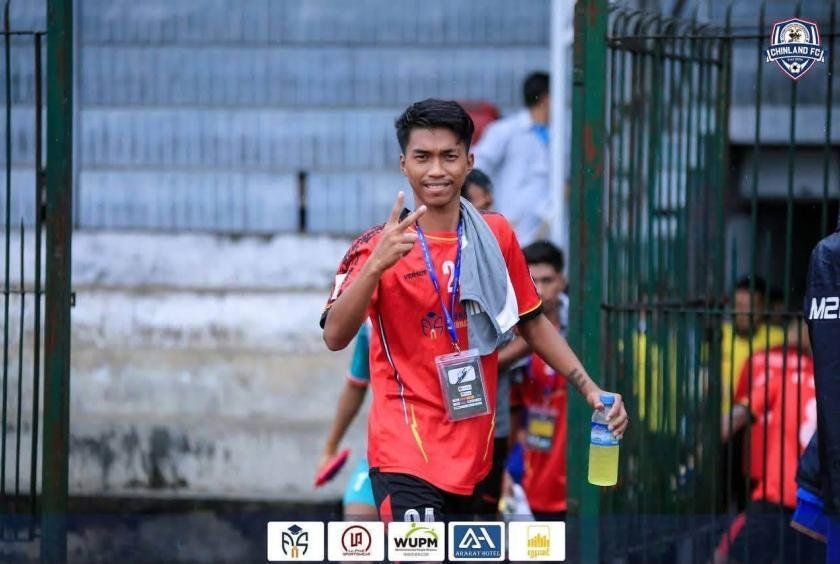
Chinland FC announced late on August 29 that its missing player Pa Lung had been found and safely returned to the team, ending a week-long search that had prompted the Myanmar football community to mobilise behind the effort to locate him. The footballer, whose sudden disappearance on August 22 had triggered widespread concern, had left his club without warning to deal with a serious family emergency.
According to a statement released by Chinland FC on social media, Pa Lung had departed urgently to his hometown after learning of his mother's critical health situation. The gravity of his mother's condition meant the player made an immediate decision to return home, a choice that left him unable to first communicate his departure to club officials. This sudden absence, combined with subsequent difficulties maintaining contact, set off alarm bells within the organisation and prompted an official response.
The communication breakdown that followed Pa Lung's departure compounded the initial concern. During his journey back to his hometown, the player's mobile phone battery drained completely, cutting off his primary means of staying in touch with Chinland FC and other contacts. Additionally, he encountered other obstacles that prevented him from reestablishing communication once he reached his destination. These technical and circumstantial factors transformed what might have been a straightforward family matter into a missing-person situation that required formal intervention.
Clinland FC's response demonstrated the serious approach Myanmar's football establishment takes toward player welfare. After five days of direct searching efforts and attempting to reach Pa Lung through various channels, club officials made the decision to escalate the matter by filing a formal missing-person report with the appropriate police authorities. The club's decision to involve law enforcement reflected genuine concern about the player's safety, particularly given the complete absence of contact and the inability to verify his wellbeing.
When internal search efforts and police involvement failed to yield results within the initial period, Chinland FC took the additional step of launching a public appeal for assistance. This move brought wider attention to the case and enlisted the support of the broader Myanmar community. The public appeal proved effective, as concerned citizens, media outlets, and various organisations began sharing information and actively assisting in the search for the missing athlete.
The successful conclusion came when Pa Lung was located and confirmed to be in safe condition. Upon being found, he made his way back to rejoin his team, bringing relief to everyone who had been involved in the search effort. The resolution validated the collaborative approach that had been undertaken, demonstrating the power of coordinated action across multiple institutions and the general public.
In its statement, Chinland FC expressed profound gratitude to the numerous parties that had contributed to locating Pa Lung. The club specifically acknowledged the Myanmar Football Federation and the Myanmar National League for their institutional support and coordination. Officials from relevant government authorities and the Myanmar Police Force received particular mention for their professionalism in handling the missing-person report and conducting their investigation.
Media organisations also featured prominently in the club's thanks, recognising their role in amplifying the search through news coverage that kept the case visible to the public. The statement extended appreciation to unnamed but crucial personnel from various organisations who had worked behind the scenes to gather and act on information leading to Pa Lung's discovery. Chinland FC also acknowledged the emotional support provided by countless individuals who had offered prayers, positive wishes, and shared relevant information during the anxious week.
The incident highlights several aspects of player welfare in professional sports environments. For Southeast Asian football, where communication infrastructure can be variable and family emergencies sometimes demand immediate, uncoordinated responses, the case underscores the importance of establishing clear protocols for player absence. It also demonstrates the value of having trusted channels through which athletes can quickly notify their clubs when genuine emergencies arise, potentially preventing unnecessary alarm and formal investigations.
Moreover, the episode reflects broader themes about the lives of professional footballers in developing sports markets. Players often maintain strong ties to their hometowns and families, and health crises in those settings can prompt immediate departures that test the boundaries between professional obligations and personal responsibility. The resolution in Pa Lung's case suggests that Myanmar's football community understands this tension and prioritises player wellbeing over rigid adherence to protocols.
For clubs and sporting bodies across Southeast Asia, the case offers practical lessons about crisis communication and inter-institutional cooperation. The coordinated response involving the Myanmar Football Federation, National League, police authorities, media, and the general public demonstrated that transparent communication and collaborative problem-solving can resolve potentially serious situations efficiently. This model may prove instructive for other organisations managing similar situations in the region, where multiple stakeholders and institutions must work together effectively.
The safe return of Pa Lung also underscores the role of the football community in supporting its members during difficult periods. Rather than treating his disappearance purely as a disciplinary matter, Chinland FC and the broader Myanmar football establishment treated it as a welfare concern requiring compassionate investigation and community solidarity. This approach strengthens institutional culture within professional sports and sends a message that personal crises are understood and responded to with appropriate gravity.

