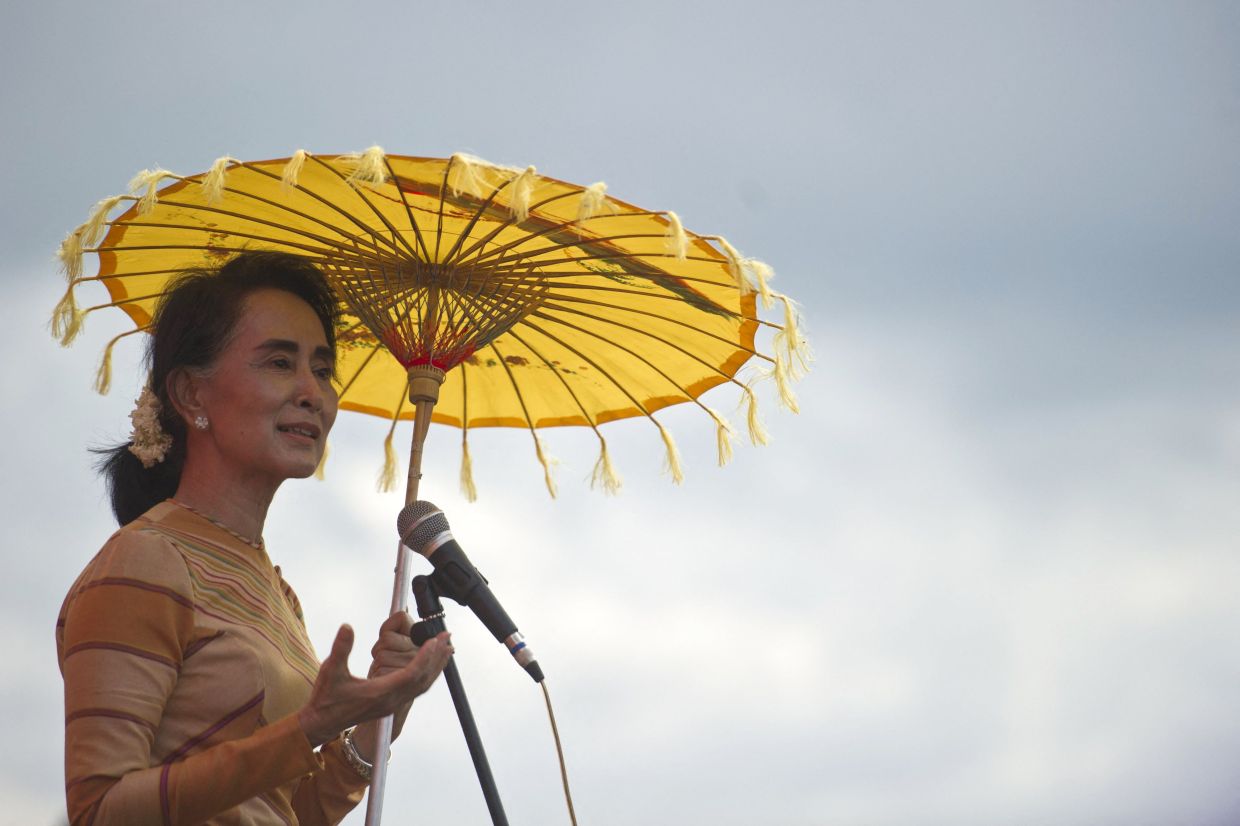
As Aung San Suu Kyi marked her 81st birthday recently, fresh appeals emerged for her release or, at minimum, permission for international representatives to visit the deposed Myanmar leader. Yet the military regime that seized power in February 2021 has systematically rebuffed these overtures, including a recent request from Asean member states. This calculated obstinacy reveals something far more consequential than mere intransigence: the Myanmar junta is sending a deliberate message to Southeast Asia that it neither requires nor respects the regional organisation's input on its internal political arrangements.
At the end of June, Myanmar's regime spokesperson Khaing Khaing Soe flatly dismissed the latest Asean initiative, declaring that Suu Kyi, having been prosecuted and convicted, is prohibited from receiving international visitors. This marked the second occasion that Philippines Foreign Secretary Maria Theresa Lazaro, acting as Asean chair, was unable to secure a meeting with the former democracy icon. Her initial attempt during a January visit to Naypyitaw also yielded nothing. The pattern is unmistakable and intentional. The junta understands the symbolic weight of Suu Kyi's imprisonment and detention, making access to her a form of political currency that it refuses to surrender under external pressure.
Analysts observing this dynamic from regional think-tanks have concluded that Myanmar's leadership, particularly General Min Aung Hlaing, has made a strategic calculation that Asean lacks sufficient leverage to compel compliance with regional norms. Hunter Marston of the Lowy Institute articulated this bluntly: the regime believes it needs Asean far less than Asean needs Myanmar. This asymmetry fundamentally undermines the regional bloc's capacity to influence the situation. When one member state perceives itself as indispensable—whether because of its strategic location, natural resources, or geopolitical significance—it can afford to ignore collective positions that lack enforcement mechanisms.
The selective access the junta has granted to foreign visitors reveals its true hierarchy of international relationships. Former Thai Foreign Minister Don Pramudwinai managed to meet Suu Kyi during a 2023 visit to Naypyitaw, while Chinese Foreign Minister Wang Yi reportedly secured an audience during his April journey to the capital. These exceptions illuminate who the Myanmar military genuinely trusts and values as strategic partners. The junta's willingness to accommodate Beijing and Bangkok while stonewalling Asean as a collective body demonstrates where its political and economic interests genuinely lie. Southeast Asian capitals concerned about growing Chinese influence in Myanmar have ample reason for anxiety.
By restricting access to its highest-profile political prisoner, the regime retains a powerful diplomatic card. Analysts characterise the Suu Kyi question as leverage Myanmar continues to hold, permitting the junta to signal strength and control over its internal affairs while simultaneously demonstrating its ability to defy regional consensus. The imprisonment itself serves multiple purposes for General Min Aung Hlaing: it eliminates the most formidable domestic political rival, prevents international scrutiny of conditions in detention, and enables the regime to project an image of maintaining order and lawful governance—however distorted that presentation may be.
Suu Kyi currently serves approximately 18 years in prison following successive sentence reductions from an original 33-year term. Her convictions, which included violations of Myanmar's official secrets legislation and corruption charges, have been widely condemned internationally as spurious and politically motivated. Since her incarceration, she has been held largely incommunicado, and following reports that the regime placed her under house arrest in April, independent observers have had no direct knowledge of her condition. Her son Kim Aris, now 48 years old, has been unable to visit or communicate with his mother for five years, though the regime routinely claims she remains in good health without substantiating such assertions.
The regime's intransigence extends beyond the Suu Kyi question to the broader question of implementing Asean's Five-Point Consensus, adopted after the 2021 coup to guide Myanmar toward political settlement. This framework calls for an immediate halt to violence, initiation of humanitarian assistance, dialogue among all parties, and visits by an Asean special envoy to all concerned stakeholders—manifestly including Suu Kyi. General Min Aung Hlaing, who relinquished his military chief position to assume the presidency in April after orchestrating what observers widely dismissed as a rigged election, has shown contempt for these regional expectations. Since the putsch, an estimated 100,000 people have died according to the Armed Conflict Location & Event Data project, an independent monitor of global conflicts. Myanmar remains mired in civil strife, yet the junta has resisted external pressure for resolution.
Myanmar's stance reflects a deeper philosophical disagreement about Asean's proper role. Scholar Phyo Win Latt characterises the regime's position as fundamentally rejecting any notion that Asean possesses legitimate supervisory authority over Myanmar's internal political settlement. The junta seeks regional recognition and acceptance, but explicitly refuses regional scrutiny. This distinction proves crucial. Myanmar's leaders view Asean's pressure on the Five-Point Consensus not as constructive regional guidance but as illegitimate external interference in domestic jurisdiction. The regime's reasoning—that Asean tolerates unresolved disputes between other member states, such as Thailand and Cambodia's territorial disagreement—leads it to conclude that Myanmar warrants identical non-intervention.
This argument contains uncomfortable truths about Asean's inconsistency and limitations as a diplomatic instrument. The regional organisation has historically prioritised non-interference and consensus-building over enforcement mechanisms or principled coercion. When Myanmar's military leadership discovered that Asean possessed no credible capacity to impose consequences for non-compliance, the calculation became straightforward. The indefinite suspension of General Min Aung Hlaing from attending leaders' summits, though symbolically significant, carries minimal substantive cost. The regime continues conducting its business, governing according to its preferences, and conducting relations with whichever international partners it deems valuable—predominantly China.
Amara Thiha of the Stimson Centre notes that Naypyitaw interprets Asean's invocation of the peace plan as selective enforcement amounting to unfair targeting. The junta perceives itself as subjected to standards other member states escape. This rhetorical positioning, though self-serving, resonates with nationalist constituencies in Myanmar and provides intellectual justification for defying regional consensus. Whether such arguments would persuade neutral observers matters less than their efficacy in sustaining the regime's domestic legitimacy and justifying its rejection of international pressure.
For Malaysian readers and broader Southeast Asian audiences, Myanmar's conduct carries uncomfortable implications. The situation demonstrates the severe limitations constraining Asean when confronted with a determined member state unwilling to submit to collective pressure. Malaysia, as a member advocating for regional solutions to regional problems, must grapple with a system that possesses insufficient mechanisms to compel compliance from determined actors. The Myanmar crisis exposes fundamental weaknesses in Asean's architecture—its reliance on consensus, its aversion to enforcement, and its vulnerability to states that calculate they benefit more from defection than from cooperation. As long as Myanmar's military government perceives China as a more valuable partner than the entire Asean framework, and as long as regional structures lack enforcement capacity, the junta will continue ignoring calls for Suu Kyi's release or even basic humanitarian access.

