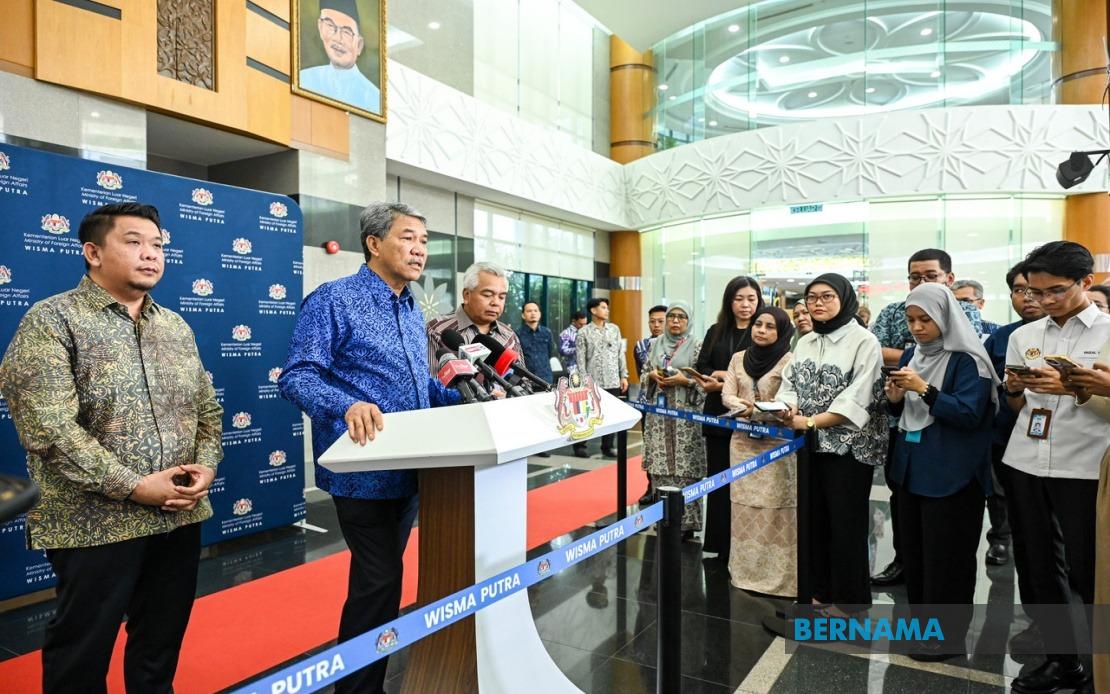
Myanmar has indicated it stands prepared to facilitate the maritime repatriation of 5,000 displaced persons currently sheltering in Malaysia, according to Foreign Minister Datuk Seri Mohamad Hasan. The Malaysian minister disclosed this development during a press conference held in Putrajaya on Monday, following the 59th ASEAN Day celebrations, noting that the pledge emerged during his dialogue with newly-appointed Myanmar Foreign Minister Tin Maung Swe.
The proposal to utilise shipping routes for returning these individuals represents a significant development in ongoing bilateral efforts to address Myanmar's refugee crisis. However, Mohamad Hasan underscored that any repatriation initiative must prioritise the welfare and security of those being relocated. He articulated concerns about the logistics and conditions of such a maritime operation, emphasising that Malaysia remains vigilant regarding potential risks to vulnerable populations during transit.
Malaysia has already completed the identification process for all 5,000 individuals earmarked for repatriation, representing a crucial administrative prerequisite for executing any organised return programme. While the two nations have not yet established a concrete timeline for commencing operations, Mohamad Hasan indicated that accelerating the repatriation schedule remains a priority objective. This advance preparation reflects the urgency with which both countries view resolving the displacement crisis that has strained Malaysia's resources and humanitarian infrastructure.
The Malaysian minister's remarks also served to broaden the regional perspective on Myanmar's refugee situation beyond the singular focus on Rohingya populations. He highlighted that multiple ethnic minorities, including the Chin and Karen communities, have similarly fled Myanmar and now constitute significant refugee populations across Southeast Asia. This clarification underscores the complexity of Myanmar's internal displacement crisis, which extends far beyond the internationally prominent Rohingya humanitarian emergency to encompass widespread conflict affecting diverse communities.
Within ASEAN's framework, Myanmar's refugee challenge has emerged as a collective concern demanding coordinated multilateral responses rather than bilateral management alone. Mohamad Hasan stressed that ASEAN member states must approach this crisis with unified resolve and shared responsibility. The association's engagement reflects recognition that displacement pressures affect multiple nations across the region and therefore warrant regional-level solutions transcending individual country capacities.
Central to ASEAN's approach remains the Five-Point Consensus established to guide regional strategies regarding Myanmar's broader political and humanitarian crises. Mohamad Hasan emphasised the necessity of maintaining this foundational framework as the cornerstone of ASEAN's institutional response. He reiterated that the consensus, originally endorsed by Myanmar's leadership alongside all member states, should continue directing diplomatic engagement and humanitarian initiatives.
The minister further stressed that any modifications to the Five-Point Consensus framework must return to the negotiating table for deliberation among ASEAN leaders, preventing unilateral alterations that might undermine the agreement's legitimacy or effectiveness. This position reflects ASEAN's commitment to consensus-based decision-making and resistance to external pressure that might compromise the association's collective standing. By anchoring discussions to the established framework, Malaysia and other ASEAN members seek to maintain their diplomatic leverage while encouraging Myanmar's government to fulfil the aspirations articulated by regional leaders.
The repatriation proposal emerges within a complex geopolitical landscape where Myanmar continues experiencing internal conflict and political instability. The country's military administration faces resistance from multiple opposition forces, complicating efforts to establish stable governance structures capable of receiving and reintegrating large refugee populations. These underlying instabilities inform Malaysia's careful approach to repatriation, reflecting legitimate concerns about whether returnees would encounter safe conditions upon arrival.
For Malaysia, which hosts one of the world's largest displaced populations relative to its national resources, advancing repatriation efforts holds significant implications. The country has borne substantial economic and social costs accommodating hundreds of thousands of refugees, straining housing, healthcare, and educational services. Successful repatriation of even modest numbers would provide measurable relief while demonstrating tangible progress in addressing regional displacement challenges.
The maritime repatriation approach offers particular advantages over alternative methods, potentially enabling the organised, dignified return of larger cohorts while minimising security risks associated with overland routes. However, maritime operations require substantial logistical coordination, including vessel procurement, security arrangements, and port coordination between nations. These operational complexities explain why no definitive timeline has yet materialised despite Myanmar's expressed willingness.
International humanitarian organisations will likely scrutinise any repatriation initiative to ensure compliance with established principles governing the voluntary, safe, and dignified return of displaced persons. The involvement of ASEAN as a regional body lends credibility to such efforts, though observers remain watchful regarding whether returned individuals receive adequate post-arrival support and security guarantees. Myanmar's internal situation will ultimately determine whether repatriation proves sustainable or merely temporary.
Longer-term resolution of Myanmar's refugee crisis fundamentally depends on achieving political stability and peace within the country itself. Until governance structures stabilise and communal tensions diminish, large-scale repatriation remains constrained. Nevertheless, the recent expressions of willingness from Myanmar's new Foreign Minister suggest potential diplomatic openings that ASEAN and Malaysia continue exploring through patient, sustained engagement. Malaysia's role as ASEAN chair during this period positions it strategically to advance regional consensus-building around both repatriation initiatives and broader Myanmar-related concerns.

