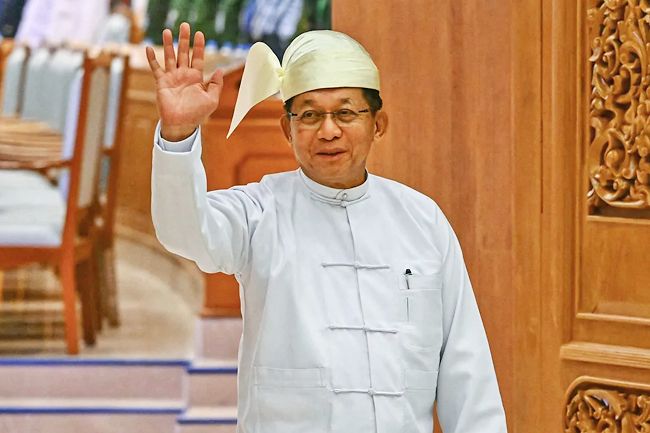
Myanmar's military leader Min Aung Hlaing is set to visit Bangkok on August 6 and 7 for high-level discussions with Thai Prime Minister Anutin Charnvirakul, according to Thailand's Foreign Minister Sihasak Phuangketkeow. The announcement comes as regional powers grapple with how to handle the country's isolation following the 2021 coup that ousted democratically elected leader Aung San Suu Kyi, a decision that has fractured consensus within Southeast Asia's premier diplomatic bloc.
While Myanmar technically remains a member of the Association of Southeast Asian Nations, it has been systematically barred from the organisation's major forums since the military takeover. This exclusionary approach reflects the regional body's consensus principle, which requires all members to approve participation in key meetings. Thailand has emerged as the most vocal advocate for changing course, arguing that engagement rather than isolation offers the best path forward for regional stability and Myanmar's eventual democratic transition.
Thailand's prominent role in advocating for Myanmar's reintegration stems from its unique geographical and humanitarian position. The country shares an extensive border with Myanmar and hosts millions of refugees fleeing the ongoing civil conflict that has engulfed the nation since the coup. Bangkok's strategic interest extends beyond humanitarian concerns to include transnational security challenges, ranging from human trafficking and online scams to narcotics smuggling. These practical considerations have driven Thailand's more pragmatic approach compared to other ASEAN members who maintain stricter stances on accountability.
Sihasak characterised the upcoming bilateral meetings as reflecting a "dual-track approach" that simultaneously addresses immediate bilateral concerns while maintaining the broader goal of Myanmar's eventual reintegration into regional institutions. This framework seeks to balance Thailand's desire for direct engagement with Myanmar's leadership against pressure from other ASEAN members who view unconditional normalisation as premature given the junta's continued detention of Suu Kyi and suppression of democratic opposition forces.
The Thai foreign minister emphasised that pressing transnational issues underscore the need for dialogue between Bangkok and Naypyidaw. Criminal networks operating across borders, sophisticated online fraud schemes, and drug trafficking networks represent immediate security threats that transcend ideological concerns about Myanmar's governance. From Thailand's perspective, isolating Myanmar's leadership has proven counterproductive for addressing these challenges, which require functional diplomatic and law enforcement cooperation.
Yet Sihasak carefully maintained that Thailand's pragmatic engagement does not constitute abandonment of ASEAN's established five-point peace plan for Myanmar. Rather, he framed the bilateral approach as complementary to the broader regional framework. This rhetorical balancing reflects the delicate political situation within ASEAN, where several members fear that premature normalisation with the junta would undermine international pressure for democratic restoration. The five-point consensus, agreed upon by ASEAN leaders in 2021, calls for dialogue, humanitarian aid, and mediation between conflicting parties.
A critical element of Thailand's strategy involves redefining how progress towards Myanmar's reintegration should be measured. Sihasak suggested that meaningful benchmarks might include providing ASEAN's special envoy access to Suu Kyi, reducing cross-border violence, or opening dialogue channels with armed ethnic groups. This approach abandons the expectation of rapid, dramatic transformation in favour of incremental progress. The acknowledgment that "it's not going to happen overnight" reflects Thailand's assessment that Myanmar's transition will necessarily be gradual and complex.
Myanma's recent elections, which formally installed Min Aung Hlaing as president despite international criticism of the heavily restricted voting process, potentially opens new diplomatic possibilities according to Thai officials. Bangkok harbours hopes that the legitimation effort might prompt the military government to engage more constructively with ethnic armed organisations and opposition elements, particularly those operating along the Thai border region. Thailand views itself as a potential facilitator of these conversations, leveraging its border geography and existing relationships with multiple armed groups.
These border dynamics carry particular significance for Malaysian and broader Southeast Asian stability. The proliferation of armed groups in Myanmar's borderlands creates spillover risks throughout the region, including weapons smuggling, recruitment activities, and potential involvement in organised crime networks. Thailand's efforts to facilitate dialogue between the junta and ethnic forces along its border thus carry implications extending well beyond bilateral Thai-Myanmar concerns.
Meanwhile, ASEAN officials acknowledged systemic weaknesses in their Myanmar engagement strategy. The Philippines' Foreign Minister Theresa Lazaro revealed that the bloc is considering appointing a permanent, long-term envoy to Myanmar, recognising that the current system of yearly rotating representation has failed to generate meaningful diplomatic progress. This institutional reform reflects growing recognition that Myanmar's complexity demands sustained, consistent diplomatic engagement rather than perfunctory annual rotations.
The deeper challenge confronting ASEAN stems from fundamental disagreements among members regarding how to balance engagement with accountability. Some countries prioritise Myanmar's eventual return to the fold and fear that stringent conditions might alienate the junta further, while others maintain that normalisation without democratic concessions would betray principles enshrined in the ASEAN Charter. These divisions have essentially paralysed the bloc's Myanmar policy, leaving individual members like Thailand to pursue bilateral approaches.
For Malaysia and other Southeast Asian nations, the unfolding situation presents both challenges and opportunities. Myanmar's instability generates refugee flows, security threats, and complicates regional trade and investment patterns. Yet the ASEAN divisions over Myanmar policy also reflect broader tensions within the organisation regarding how to enforce standards and manage conflicts among diverse member states with divergent interests and capabilities. The resolution of Myanmar's crisis will therefore carry implications for ASEAN's institutional cohesion and credibility in addressing future regional crises.

