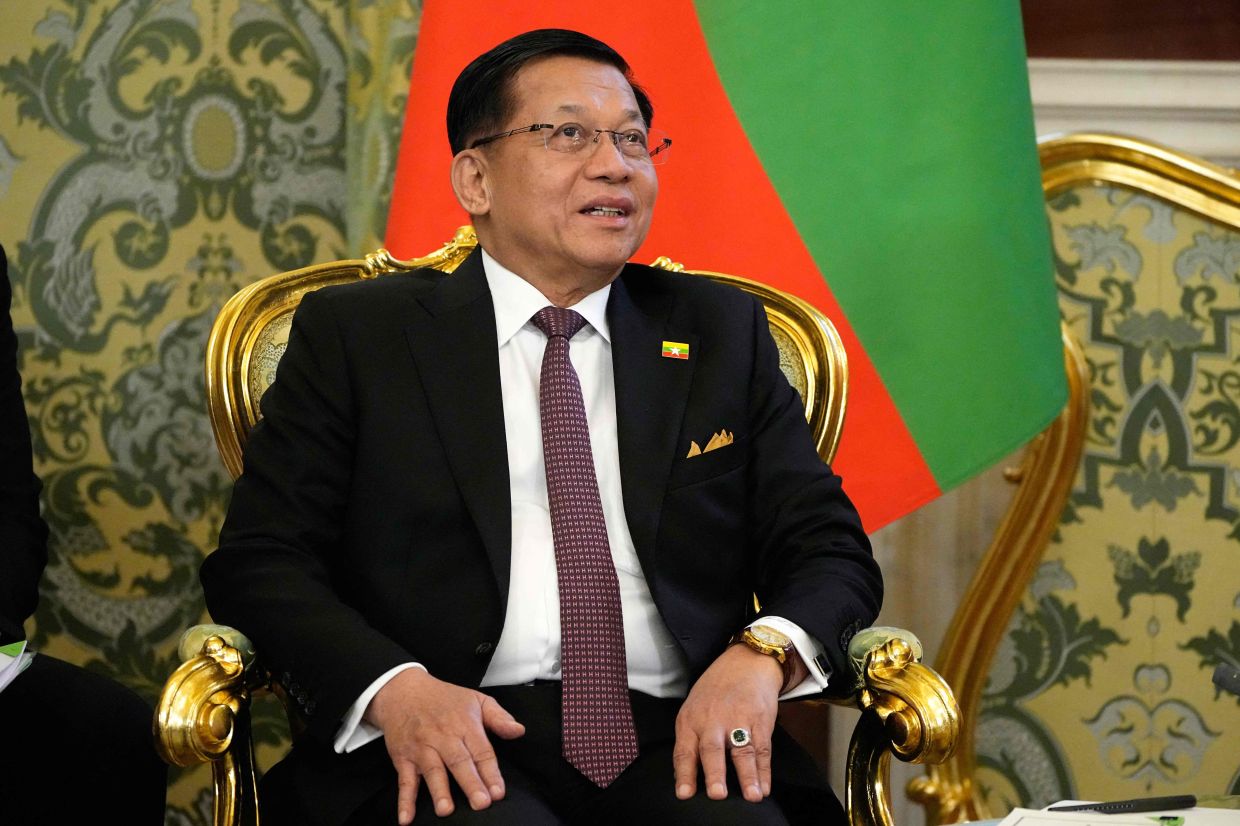
Myanmar's military leader Min Aung Hlaing will undertake an official visit to Cambodia in early September, according to confirmation from Cambodia's Senate. The Cambodian government has framed the engagement as a diplomatic initiative aimed at deepening bilateral cooperation between the two Southeast Asian neighbours. Kuy Sophal, the Minister of the Royal Palace, alongside Chin Ketna, permanent deputy chairman and secretary-general of the National Committee for Organising National and International Festivals, have begun inspecting venues to accommodate the visiting Myanmar leader.
Official statements from Cambodia's Senate emphasise the ceremonial and cooperative dimensions of the forthcoming visit. Chea Thyrith, spokesperson for the Senate president, characterised the engagement as an opportunity to "strengthen the friendship between Cambodia and Myanmar" and stressed that enhanced cooperation between the two nations serves mutual interests. Such diplomatic language reflects Cambodia's approach to regional affairs and its historical role as a bridge-builder within the Association of Southeast Asian Nations (Asean), though the timing and context of this particular visit carry broader geopolitical implications.
The Cambodia trip represents the latest in a series of international engagements undertaken by Min Aung Hlaing since his consolidation of power. Since becoming president following elections in April—widely dismissed by international observers and democracy advocates as lacking legitimacy—he has already completed official visits to India, China, Laos, Thailand, and Russia. Each of these journeys has been interpreted by critics and regional analysts as part of a calculated strategy to secure international diplomatic recognition and rehabilitate Myanmar's standing on the global stage following the military's controversial actions.
The context surrounding Min Aung Hlaing's rise to civilian office remains deeply contentious. His military orchestrated a coup in February 2021 that deposed the democratically elected government of Aung San Suu Kyi, who has remained detained under circumstances that have drawn condemnation from human rights organisations worldwide. The subsequent April election, in which Min Aung Hlaing secured the presidency, occurred in an environment widely regarded as neither free nor fair, with competing candidates and electoral processes operating under military oversight that fundamentally compromised democratic legitimacy.
Human rights violations documented since the coup have compounded international concern about Myanmar's trajectory. Thousands of activists, pro-democracy protesters, and political dissidents have reportedly been detained, facing allegations of torture and mistreatment. These documented abuses have formed the evidentiary foundation for criticism emanating from international human rights organisations, civil society groups, and democracy advocates across the region. Such concerns have translated into concrete diplomatic consequences, most notably Asean's decision to exclude Myanmar from its summit meetings until substantive progress occurs on the bloc's five-point consensus framework for addressing Myanmar's political crisis.
Cambodia itself occupies a particularly interesting position within this diplomatic dynamic. Under Prime Minister Hun Sen's leadership, Cambodia held the Asean chairmanship in 2022 and attempted to facilitate dialogue aimed at ameliorating Myanmar's political impasse. Kin Phea, president of the International Relations Institute of Cambodia, acknowledged that Cambodia's forthcoming engagement with Min Aung Hlaing reflects continuity with these earlier diplomatic efforts. He observed that the visit constitutes a two-pronged endeavour: simultaneously serving as a platform for Min Aung Hlaing to project an image of international acceptance whilst enabling Cambodia to leverage its accumulated experience in post-conflict reconciliation and peace-building processes.
Phea's analysis reveals the complexity of interpreting bilateral diplomatic engagement within the Myanmar context. He candidly acknowledged that Min Aung Hlaing's foreign travels, including the Cambodia visit, constitute components of a broader strategy to consolidate his legitimacy and political authority as Myanmar's president. This assessment aligns with interpretations offered by regional observers and western analysts, who view such diplomatic tours as attempts to gradually normalise Min Aung Hlaing's position and erode the international isolation to which Myanmar has been subjected since the 2021 coup.
Yet Phea also underscored an important caveat regarding Cambodia's own capacity to influence Myanmar's international standing. He emphasised that whether individual countries formally recognise engagements as state visits or grant diplomatic recognition represents a secondary consideration compared to the broader Asean consensus framework. The five-point consensus, established to guide the bloc's collective response to Myanmar's political crisis, ultimately determines whether Myanmar can rejoin Asean summits and whether individual bilateral visits translate into meaningful rehabilitation of the country's regional standing.
This distinction proves crucial for understanding the limitations of Cambodia's diplomatic role. Whilst Cambodia's willingness to host Min Aung Hlaing symbolically signals acceptance and normalisation, it does not automatically confer the legitimacy that Myanmar's military leader presumably seeks. Asean consensus mechanisms require broader agreement, and no single member state can unilaterally overturn the bloc's Myanmar policy through bilateral engagement. For Malaysian policymakers and observers monitoring Myanmar's evolution, this dynamic illustrates how even sympathetic regional partners operate within structural constraints imposed by collective Asean decision-making frameworks.
Phea's commentary also hinted at Cambodia's perspective regarding Myanmar's path forward. He suggested that whilst Cambodia possesses valuable experiential knowledge from its own reconciliation processes and peace-building initiatives, genuine progress in Myanmar ultimately depends upon domestic political developments rather than external diplomatic gestures or pressure from visiting dignitaries. This implicit acknowledgment reflects the growing recognition among some regional analysts that Myanmar's military leadership may resist fundamental political transformation, regardless of the international legitimacy it accumulates through diplomatic tours.
For Southeast Asia more broadly, Min Aung Hlaing's Cambodia visit epitomises the tension between engagement and accountability that has characterised regional diplomacy since 2021. Countries including Cambodia have attempted to balance maintaining diplomatic relationships with Myanmar whilst ostensibly adhering to Asean's consensus position on Myanmar's political crisis. The outcome remains uncertain, with the five-point consensus framework providing formal cover for Myanmar's continued isolation from summit-level participation even as bilateral relationships proceed at lower institutional levels.
The implications for Malaysia and other Asean members warrants consideration. As the regional bloc navigates Myanmar's ongoing political turmoil, individual member states face consistent pressure to normalise relations whilst maintaining collective positions on governance standards and human rights. Min Aung Hlaing's international tour strategy exploits precisely these tensions, seeking bilateral diplomatic wins that collectively contribute to normalisation even without achieving the bloc-wide consensus required for full readmission to Asean forums.

