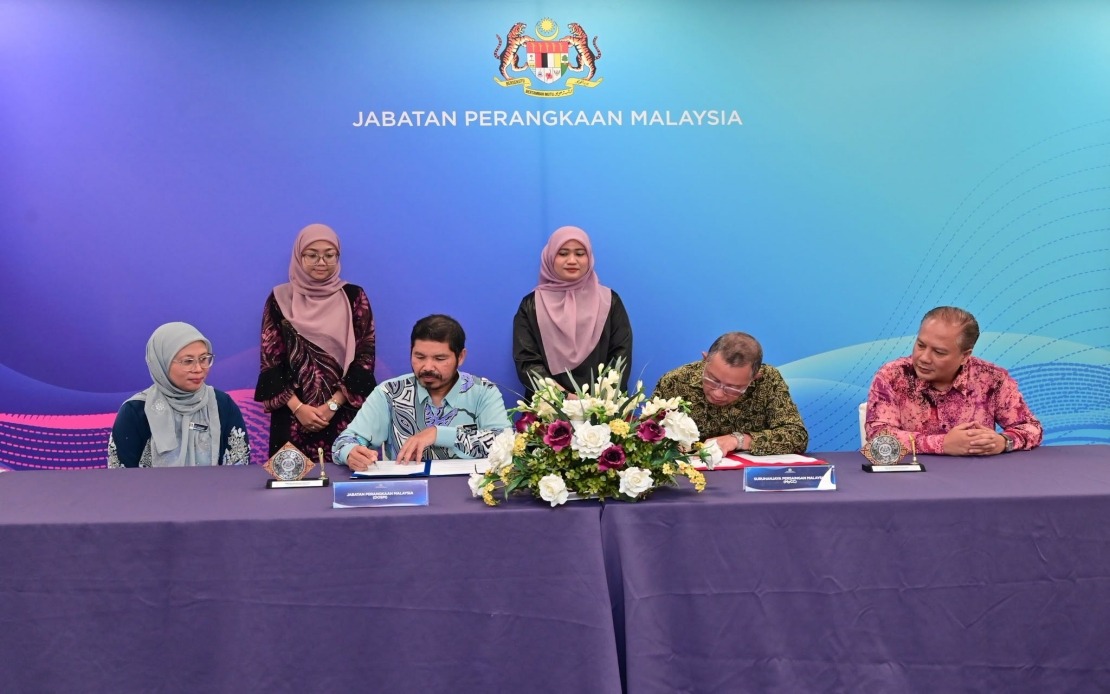
Malaysia's two premier economics-focused agencies have formalized a strategic alliance designed to harness the growing power of data analytics in competition policy and macroeconomic oversight. The Malaysia Competition Commission (MyCC) and the Department of Statistics Malaysia (DOSM) inked a memorandum of understanding at DOSM's Putrajaya headquarters on June 19, bringing together regulatory firepower in a bid to create a more transparent and competitive economic landscape.
The accord, executed by MyCC chairman Tan Sri Idrus Harun and Chief Statistician Datuk Seri Dr Mohd Uzir Mahidin, reflects an evolving recognition in Kuala Lumpur's policy circles that competition enforcement and statistical rigor must move in tandem. For Malaysian businesses and consumers alike, the partnership signals a government intent to deploy data more systematically when investigating market conduct, pricing anomalies, and potential anti-competitive behaviour across the economy.
The scope of the collaboration extends well beyond a simple exchange of figures. The two agencies commit to building each other's institutional capacity through tailored training programmes, specialist workshops, and knowledge-sharing initiatives that will deepen expertise on both sides. This capability-building dimension matters substantially: it allows MyCC investigators to better understand sectoral data patterns that might indicate cartels or abuse of dominance, while enabling DOSM analysts to incorporate competition insights into their economic modelling and forecasting.
At its core, the MoU establishes a framework for systematic data sharing, encompassing administrative records and economic datasets that have previously existed in separate silos. By combining DOSM's comprehensive statistical infrastructure with MyCC's sectoral oversight responsibilities, the two bodies can conduct more granular analyses of market structures, supply-chain vulnerabilities, and price-movement drivers. Such integrated analysis is particularly valuable in sectors prone to concentration, such as telecommunications, aviation, and fast-moving consumer goods, where consumer welfare and business efficiency hang on the presence of genuine competition.
The timing of this partnership underscores a global trend. Data has become the world's most valuable commodity, and regulators worldwide increasingly recognize that competition enforcement without real-time, granular data amounts to policing in the dark. MyCC's emphasis on this dimension signals an agency eager to shed any perception that it lacks analytical muscle when confronting sophisticated corporate actors. For DOSM, the partnership acknowledges that competition dynamics now merit statistical scrutiny equivalent to inflation, employment, and growth metrics.
A particular focus of the collaboration involves monitoring strategic economic sectors and evaluating how government policies translate into competitive outcomes. This could encompass reviews of industrial policy incentives, licensing regimes, or public procurement practices to ensure they do not inadvertently shield incumbent firms from competitive pressure. In Malaysia's context, where state-linked enterprises occupy commanding positions across utilities, finance, and defence contracting, such oversight carries genuine institutional weight.
The human-capital dimension warrants closer attention from observers of Malaysian institutional development. By establishing formal exchange mechanisms and joint training initiatives, the MoU creates pathways for younger economists and data scientists to circulate between the two organizations, cross-pollinating methodologies and perspectives. This circulation can be transformative: it fosters a shared professional culture around evidence-based policymaking and reduces the insularity that sometimes characterizes Malaysian government agencies.
For multinational corporations operating in Malaysia, the partnership carries operational implications. Retailers, manufacturers, and service providers should anticipate more sophisticated, data-informed scrutiny of merger proposals, pricing practices, and exclusionary conduct. Authorities armed with better statistical tools and cross-sectoral visibility will find it harder for businesses to claim that apparent anti-competitive outcomes resulted from innocent market forces rather than deliberate strategy.
The commitment to evaluating market structures and supply-chain dynamics also addresses vulnerabilities exposed during recent global disruptions. When semiconductors, shipping, and food supplies became scarce, Malaysian policymakers recognized that understanding competitive bottlenecks in supply networks is essential to national economic resilience. DOSM's statistical depth combined with MyCC's competition lens can identify chokepoints where concentration creates systemic risk, allowing intervention before crises strike.
Consumer protection emerges as an implicit beneficiary. When competition authorities can rapidly cross-reference price movements against production data, import volumes, and input costs, they develop stronger capacity to distinguish between justified price increases and collusive behaviour. This matters acutely in Malaysia, where inflation in essential goods has periodically triggered public anxiety and political pressure.
The partnership also positions both agencies as credible players in regional economic governance. As ASEAN deepens trade and investment integration, having robust domestic competition surveillance strengthens Malaysia's hand in regional dialogues on fair trade, investment protection, and market access. It signals to partners that Malaysia takes competitive discipline seriously, not merely as a regulatory compliance exercise but as a foundation for sustained productivity growth.
Looking forward, the MoU's sustainability will depend on adequate resourcing and genuine operational integration rather than ceremonial cooperation. Both agencies must move beyond periodic data exchanges to build shared analytical platforms, joint investigation teams, and coordinated public communications. Success will be visible in the quality and timeliness of competition cases, the sophistication of economic evidence, and measurable improvements in consumer welfare metrics.
For Malaysia's broader development trajectory, this collaboration embodies a shift toward technocratic, evidence-driven governance. It acknowledges that competition policy, statistics, and economic management are inseparable dimensions of prosperity. As the country navigates middle-income challenges and prepares for digital transformation, the integration of data and competition expertise offers a template for how siloed government agencies can multiply their institutional effectiveness.
%22%2F%3E%3C%2Fpattern%3E%3C%2Fdefs%3E%3Crect%20width%3D%22100%25%22%20height%3D%22100%25%22%20fill%3D%22url(%23ph1zpo7g)%22%2F%3E%3Crect%20width%3D%22100%25%22%20height%3D%22100%25%22%20fill%3D%22url(%23ph1zpo7p)%22%2F%3E%3Ctext%20x%3D%2250%25%22%20y%3D%2250%25%22%20text-anchor%3D%22middle%22%20dominant-baseline%3D%22central%22%20fill%3D%22rgba(255%2C255%2C255%2C0.95)%22%20font-family%3D%22Georgia%2C%20'Times%20New%20Roman'%2C%20serif%22%20font-weight%3D%22700%22%20font-size%3D%22151%22%20letter-spacing%3D%22-0.02em%22%3ESingapore%3C%2Ftext%3E%3C%2Fsvg%3E)