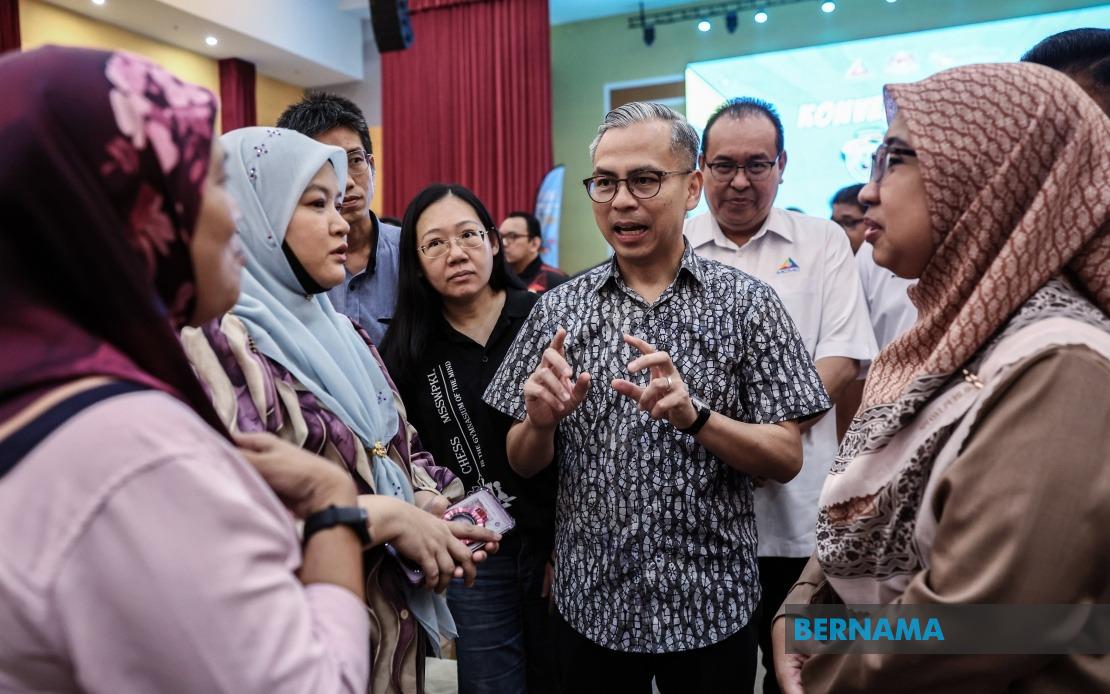
The Malaysian government has moved to dispel confusion over the MyKhas fund, with Communications Minister Datuk Seri Fahmi Fadzil emphasising that this special allocation exists to serve the people within parliamentary constituencies rather than function as a personal benefit for elected representatives. Speaking at a media gathering in Kuala Lumpur on August 8, Fahmi stressed that MyKhas operates under the purview of Prime Minister Datuk Seri Anwar Ibrahim and serves as a mechanism for distributing resources to improve public welfare across specific electoral divisions.
Fahmi's clarification comes as part of the MADANI government's broader commitment to ensuring that all state funding benefits ordinary Malaysians rather than enriching officials. He reiterated that the allocation mechanism has been formally codified within Malaysia Plan and Budget documents as a special provision reserved for the Prime Minister's office, with disbursement decisions resting entirely with the executive. This administrative structure reflects a deliberate choice to centralise control over constituency funds, moving them away from individual MP discretion and towards a nationally coordinated approach to resource distribution.
The Communications Minister's statement underscores Prime Minister Anwar Ibrahim's repeated messaging that government allocations are fundamentally public trusts. Anwar had emphasised the previous day that parliamentary constituency funds represent no MP's exclusive entitlement but instead constitute collective resources intended to enhance community infrastructure and living standards. The Prime Minister specifically cited schools, religious institutions, mosques, and drainage rehabilitation projects as priority areas for such spending, illustrating how these funds target tangible public goods rather than discretionary political patronage.
Fahmi used his own position as an example of the arrangement's impartiality. Even as a senior government minister, he noted, he cannot personally access MyKhas resources for his own constituency or purposes. This stance demonstrates the government's intent to prevent the blurring of lines between individual political advantage and public service. By positioning MyKhas as resource allocation beyond individual control, the administration seeks to reduce opportunities for the politicisation of government spending that has historically characterised Malaysian electoral politics.
The formalisation of MyKhas within official budget documents represents a significant institutional development. Rather than operating as an ad hoc or informal mechanism, the fund now possesses explicit legal and budgetary standing. This codification provides transparency regarding how such allocations function and creates a framework within which the Prime Minister's office can justify and track spending decisions. The move reflects international best practices in governance, where programmes of public significance undergo formal documentation and oversight rather than remaining shrouded in administrative ambiguity.
For opposition-held constituencies, the government has established a parallel mechanism ensuring that communities represented by non-ruling coalition MPs retain access to resources. Fahmi explained that applications for assistance in opposition-governed areas can be submitted through the Implementation Coordination Unit under the Prime Minister's Department. This arrangement theoretically prevents resource discrimination based on electoral outcome, though it does centralise the application and approval process, potentially introducing administrative delays or requirements that complicate access for non-aligned representatives.
The clarification carries particular significance given Malaysia's historical patterns of political funding and parliamentary resource distribution. For decades, Malaysian politics has witnessed intense scrutiny regarding whether development funds and government allocations favour ruling coalition MPs over opposition members. By explicitly stating that MyKhas belongs to constituents rather than individual representatives, the government attempts to reframe the conversation around resource justice and equitable access. However, the practical reality of centralised Prime Ministerial control means that implementation ultimately depends on bureaucratic impartiality and executive restraint.
Fahmi's media statement on August 8 occurred during his official duties overseeing the 2026 Safe Internet PIBG Convention, suggesting the government views this clarification as important enough to communicate across multiple policy contexts. The emphasis on governance integrity and anti-corruption resonates with the MADANI administration's founding principles, which included pledges to combat misconduct and restore public confidence in government institutions. Reiterating that senior officials themselves cannot manipulate these allocations reinforces those commitments, at least rhetorically.
The broader implications extend to Southeast Asian governance discourse. As Malaysian politics becomes increasingly scrutinised internationally, particularly regarding transparency and accountability, government efforts to demonstrate institutional safeguards against patronage carry symbolic weight. Neighbouring countries confronting similar challenges around electoral resource distribution and bureaucratic integrity may observe whether Malaysia's centralised fund approach proves effective or merely concentrates power differently.
For Malaysian voters and constituency residents, understanding MyKhas's true structure matters considerably. Rather than viewing funds as MP gifts requiring political deference, constituents can theoretically approach resource allocation as rightful public entitlements. This reframing potentially shifts power dynamics by making government spending answerable to broader public interest rather than individual political relationships. Yet sustained changes in actual practice require consistent enforcement and cultural shift within the bureaucracy, extending beyond ministerial announcements.

