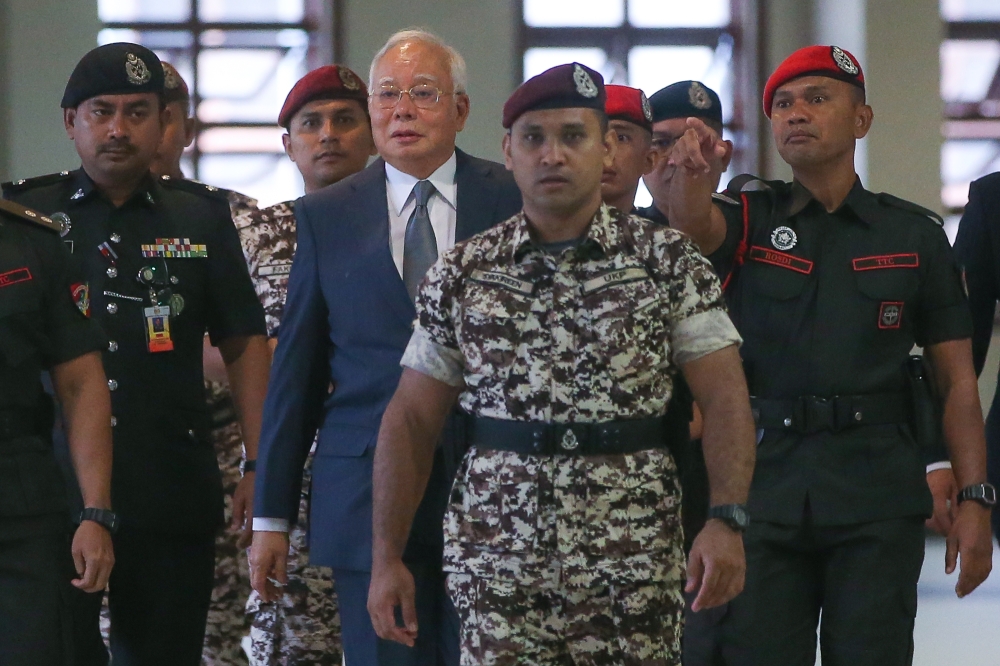
The High Court in Kuala Lumpur heard testimony that former Prime Minister Datuk Seri Najib Tun Razak returned US$620 million to its source after the 2013 general election because he experienced unease about keeping such a substantial sum, a claim central to his defence in a trial that has gripped Malaysian politics for years.
This explanation, presented during court proceedings, represents a critical moment in the long-running legal saga surrounding the 1Malaysia Development Berhad scandal. The assertion directly addresses questions about the movement of hundreds of millions of dollars through accounts connected to the former leader, a matter that has haunted Malaysian politics since allegations first surfaced in 2015. The timing of the purported return—following Najib's electoral victory in May 2013—has become a focal point for both prosecutors and the defence team seeking to establish the source and purpose of the funds.
Understanding the context of Najib's position during this period illuminates why the court's attention to these financial movements matters profoundly. As Prime Minister commanding a parliamentary majority, Najib wielded considerable executive authority. Yet the presence of hundreds of millions in dollar deposits, regardless of their claimed origins or purposes, raised immediate questions about governance and financial accountability that neither the government nor the banking system appeared equipped to address transparently at the time.
The defence narrative—that personal discomfort with the quantum of funds prompted their return—sits uncomfortably with conventional explanations for large international transfers. Typically, such movements reflect either strategic business decisions, debt repayment obligations, or responses to external pressures from creditors or investors. The notion that psychological unease drove a decision involving US$620 million presents a narrative that courts must evaluate against documentary evidence, communications records, and the testimony of financial intermediaries who would have processed such transactions.
For Malaysian observers, this testimony underscores the evolving nature of Najib's defence strategy throughout his trial. Rather than denying involvement with the funds altogether, the former Prime Minister's legal team has progressively shifted toward explanations emphasizing his subjective reasoning and decision-making processes. This approach requires the court to accept that Najib's discomfort—a matter of personal psychology—constitutes sufficient explanation for such extraordinary financial movements.
The 1MDB controversy has cast a long shadow over Malaysia's international reputation and domestic political landscape. Prosecutorial efforts across multiple jurisdictions have resulted in criminal charges, civil asset recovery actions, and international cooperation agreements. The United States Department of Justice, in particular, has pursued parallel cases alleging money laundering and fraud involving billions of dollars. Against this international backdrop, domestic Malaysian proceedings take on added significance as they determine how the country's own legal system addresses allegations of massive financial impropriety at the highest governmental level.
Court testimony regarding the US$620 million return also invites scrutiny of banking compliance and financial intermediation standards. Whether the institutions facilitating these transactions conducted adequate due diligence, questioned the legitimacy of such movements, or simply processed instructions without examination remains a matter of ongoing investigation. International banking standards have evolved considerably since 2013, particularly regarding large transfers and sanctions compliance, yet Malaysia's financial regulators faced considerable pressure to avoid disrupting relationships with politically connected figures.
The defence's reliance on explanations grounded in Najib's personal discomfort represents a notable departure from defences typically mounted in complex financial crime cases, where detailed documentation of legitimate commercial purposes or contractual obligations usually forms the foundation. This approach places considerable weight on the credibility assessments judges must make regarding witness testimony, including Najib's own potential testimony if he chooses to take the stand.
For Southeast Asian audiences, the Najib trial demonstrates how kleptocratic schemes operating at the highest governmental levels create ripple effects across entire nations. Malaysia's experience navigating the fallout from 1MDB—including capital flight concerns, damaged investor confidence, and prolonged political instability—offers sobering lessons about financial accountability and institutional safeguards. The case illustrates how democratic institutions, including independent judiciaries, face enormous pressure when confronting alleged crimes involving sitting or recently-departed leaders.
The High Court's evaluation of Najib's explanations will ultimately require judges to weigh competing narratives about intention, authority, and legitimacy. Prosecutors maintain that the former Prime Minister orchestrated diversions of 1MDB funds for personal enrichment and political purposes. The defence narrative, evolving through multiple trials and judicial proceedings, has progressively emphasised claims about Najib's limited understanding, reliance on advisors, and genuine discomfort with disputed funds. How Malaysian courts ultimately resolve this fundamental contradiction will have lasting implications for governance standards and accountability in the region.

