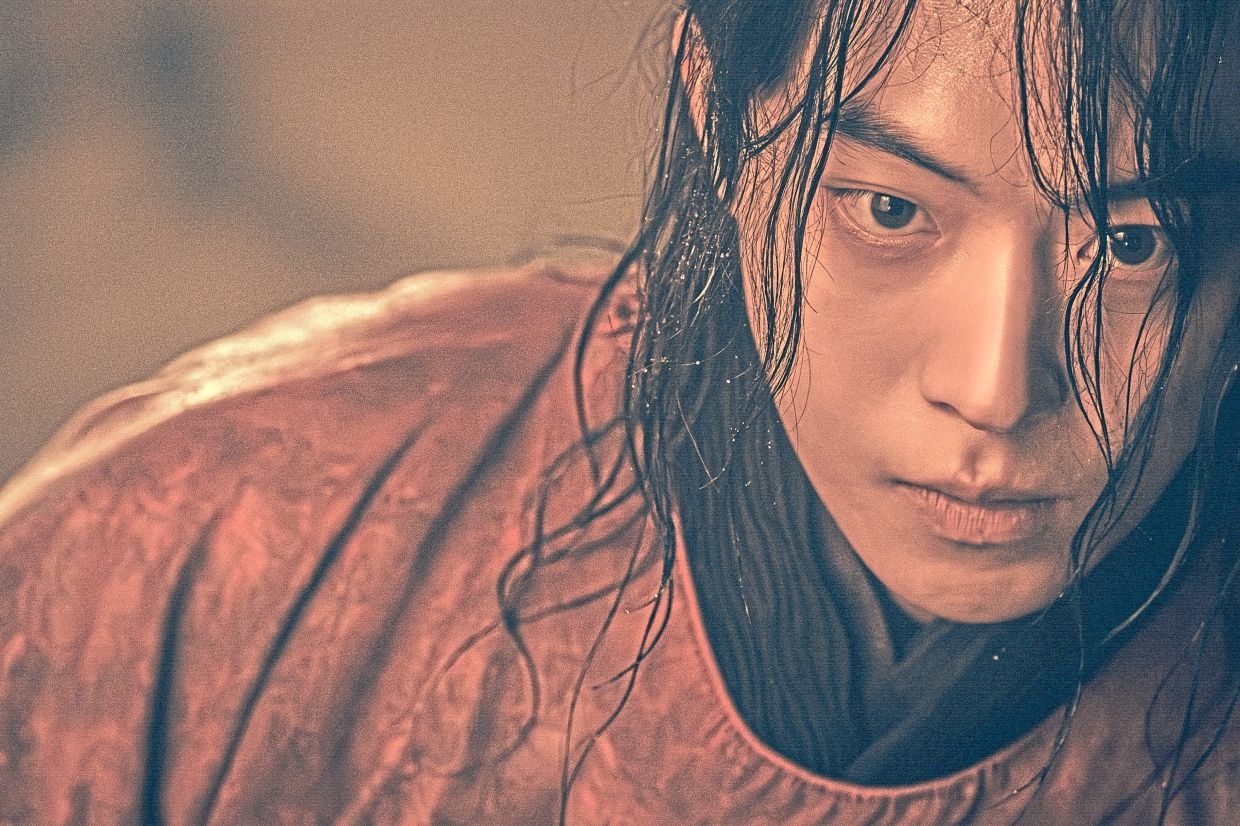
Netflix is positioning a period supernatural drama at the centre of its summer content offerings, simultaneously marking a significant career milestone for South Korean actor Nam Joo-hyuk. The East Palace represents his first major screen appearance following the completion of his mandatory military service in September 2024, and arrives at a moment when the entertainment industry remains acutely aware of the reputational challenges he faced in the years prior to his enlistment. The series, which unfolds within the confines of a royal palace haunted by mysterious supernatural forces, offers Nam an opportunity to recalibrate his public profile and demonstrate his continued appeal to audiences across the region.
The narrative framework places Nam in the role of Gu-cheon, a protagonist endowed with the rare ability to move fluidly between the material world inhabited by humans and the ethereal realm of spirits. This duality, both thematic and structural, becomes essential to the story's central conflict. He shares the spotlight with Roh Yoon-seo, whose character operates as a palace servant veiled in enigma, and the pair are drawn into service to the King—portrayed by Cho Seung-woo, an established industry figure whose previous works include Stranger and The King's Doctor. When a curse begins to consume the royal palace grounds, these three characters become locked in a struggle to decode its origins and reverse its effects.
Director Choi Jung-kyu has emphasised that The East Palace deliberately foregrounds the aesthetics and spiritual philosophy embedded within Korean cultural heritage. Rather than imposing Korean elements as decorative additions to a generic supernatural framework, Choi sought to allow traditional motifs and shamanistic concepts to emerge organically from the historical setting itself. This approach reflects a broader creative intention to maintain rhythmic pacing throughout the narrative while honouring the source material's cultural specificity. The production's visual language has been calibrated to emphasise both the architectural grandeur of classical Korean palaces and the meticulous detail of period costume design, creating an environment where supernatural occurrences feel neither incongruous nor forced.
The realisation of the series' supernatural dimensions required the production to invest substantially in post-production visual effects work. According to Choi, the actors frequently performed scenes opposite characters and otherworldly beings that existed solely as digital constructs during filming, demanding considerable imaginative commitment from the cast. The director credited his post-production team with the labour-intensive task of rendering these elements with sufficient visual clarity and aesthetic coherence to ensure that the folklore components would resonate meaningfully with viewers regardless of their prior familiarity with Korean spiritual traditions. Choi stressed that this technical effort extended beyond mere spectacle, aiming instead to preserve the thematic integrity of stories drawn from Korea's traditional cultural reservoir.
Cho Seung-woo offered insight into the series' symbolic architecture, identifying a recurring visual motif that functions as both literal setting and metaphorical core. A pond that appears throughout the narrative operates on dual registers—its surface presenting an illusion of serenity while its depths harbour concealed turmoil and layered narrative complexity. The actor suggested that viewers attuned to this imagery might discover additional dimensions of meaning embedded within the series' dramatic structure. This kind of visual symbolism reflects a sophisticated approach to adapting folklore materials for contemporary screen media, where traditional elements can operate simultaneously as plot devices and as vessels for thematic resonance.
For Nam Joo-hyuk personally, this production carries implications that extend well beyond conventional professional considerations. In June 2022, his career trajectory was significantly disrupted when anonymous allegations of school bullying emerged and circulated across social media platforms. The actor maintained his innocence throughout the period of public controversy, and subsequent legal proceedings vindicated his position—in 2024, two individuals identified as primary sources of the defamatory allegations were convicted of criminal defamation for disseminating false information. Nevertheless, the reputational consequences of that episode lingered, making his return to screen work a high-stakes moment for both his career rehabilitation and the broader question of how the South Korean entertainment industry processes allegations, redemption, and public forgiveness.
Nam's own reflections on the project suggest he approached his participation with considerable gravity. He disclosed that he received the script for The East Palace while stationed in the military, and that the months of service provided unusual psychological space for contemplating the material in depth. The actor described how the temporal suspension of military life afforded him opportunity to imaginatively engage with the narrative's supernatural dimensions and to develop conviction about accepting the role. His comments during promotional activities emphasised a sense of responsibility both to the production itself and to the ensemble cast and crew, framing his participation not as an entitlement but as a privilege requiring meticulous professional commitment. This tone of accountability has likely been calibrated with awareness of the scrutiny that will accompany his public reemergence.
The release of The East Palace on Netflix carries particular significance for regional audiences who have grown accustomed to premium South Korean drama content delivered through streaming platforms. The series arrives during a period of sustained international appetite for K-drama programming, though the market has become increasingly competitive and discerning. For Malaysian viewers and other Southeast Asian audiences, the appeal likely extends beyond narrative novelty to encompass the series' visual representation of Korean cultural and historical particulars, which offer a form of cultural engagement distinct from domestic entertainment offerings. The production's deliberate excavation of shamanistic and folkloric traditions may also resonate with audiences in the region who maintain their own syncretic spiritual traditions and therefore recognise the thematic territory the series inhabits.
The convergence of Nam Joo-hyuk's professional rehabilitation, director Choi Jung-kyu's aesthetically sophisticated approach to supernatural storytelling, and Netflix's commitment to anchoring its summer programming with prestige Korean content creates a project that operates on multiple registers of significance. The East Palace functions simultaneously as a narrative entertainment, a visual and cultural artifact, and a public statement about redemption and second chances. Whether the series succeeds in anchoring Netflix's summer slate and whether Nam's performance demonstrates his capacity to sustain audience investment following his period of professional absence will likely influence both his trajectory and the broader conversation surrounding how the South Korean entertainment industry negotiates questions of accountability, rehabilitation, and reintegration. The series is now available for viewing on the Netflix platform.

