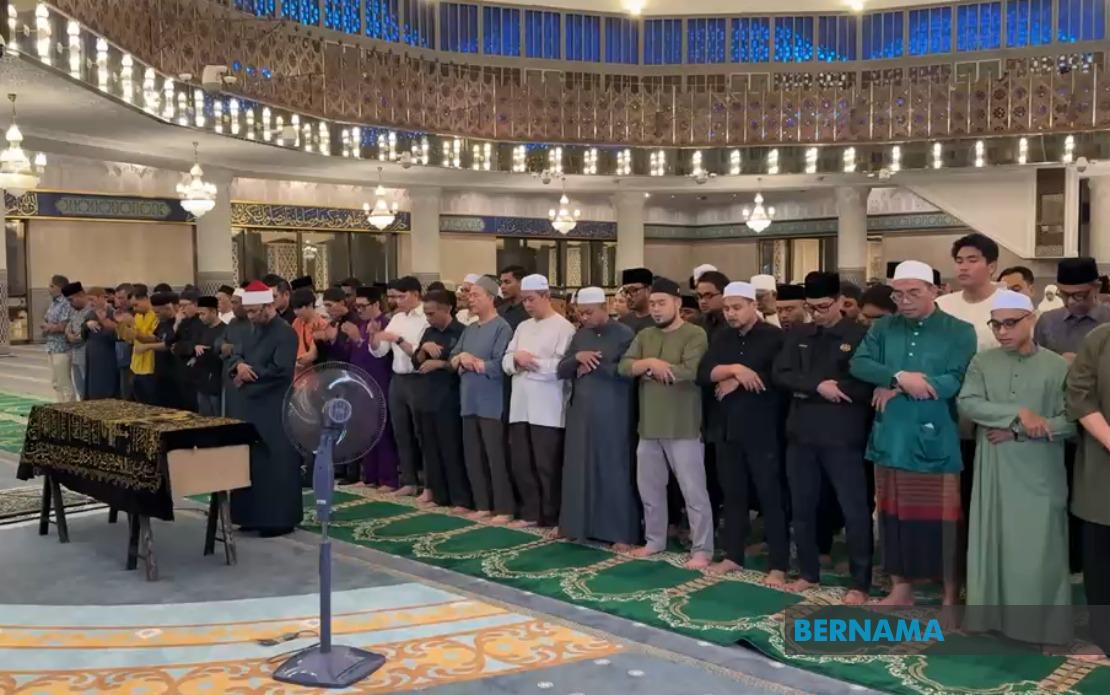
The remains of Datuk Kamil Misuari, spouse of Women, Family and Community Development Minister Datuk Seri Nancy Shukri, arrived at the National Mosque in Kuala Lumpur on Monday evening for formal funeral prayers, marking a solemn conclusion to his final hours in the capital before his body was transferred to Sarawak for burial. The transition between hospital and mosque followed prescribed Islamic protocols, with the deceased prepared for the journey ahead through a series of carefully coordinated movements throughout the evening.
According to a statement released by the minister's office, the formal preparation of Datuk Kamil's remains commenced at Ampang Hospital at 9 pm, where the customary bathing ritual was performed in accordance with Islamic tradition. This initial stage set the tone for the evening's observances, which would eventually culminate in prayers and departure from the capital.
By 10 pm, the remains had been conveyed to the National Mosque, one of Malaysia's most significant religious institutions and a venue frequently used for state funeral proceedings. The arrival allowed family members and close associates to gather for final moments of reflection and respect. The intimate setting enabled those closest to the deceased to observe the customs surrounding Islamic death rites without the constraints of a public funeral.
Education Minister Fadhlina Sidek was among the dignitaries present at Ampang Hospital, underscoring the deceased's connections within government circles. Beyond immediate family members, relatives who had travelled from Lahad Datu in Sabah were similarly present to pay their respects, indicating that Datuk Kamil maintained family ties across Malaysian Borneo.
The funeral prayers themselves were scheduled to commence at 10.50 pm, providing a structured moment for communal mourning and spiritual acknowledgement of the deceased's passing. Upon completion of this religious observance, immediate plans called for transferring the remains to Kuala Lumpur International Airport at 11.20 pm, allowing minimal delay between the conclusion of prayers and the commencement of the flight to Sarawak.
The decision to conduct funeral prayers at the National Mosque rather than at a neighbourhood surau or state mosque speaks to the prominence of the deceased within national circles. Though Datuk Kamil himself may not have held government office, his marriage to a sitting minister elevated his profile within the official machinery of state.
According to available information, Datuk Kamil had been hospitalised at Ampang Hospital since the previous Friday, suggesting a health issue of some duration and severity. His condition apparently remained manageable through the weekend and into the early part of the week, before deteriorating significantly during Monday afternoon. The rapid decline necessitated the swift mobilisation of funeral arrangements, explaining the compressed timeline between hospitalisation and evening prayers.
Sarawak's geographic distance from Kuala Lumpur required that transfer to his home state occur by air rather than through overland transport. The late hour of the flight departure—11.20 pm—would have positioned the aircraft's arrival in Sarawak for early morning hours, enabling funeral proceedings and burial to commence during daylight in accordance with Islamic custom, which generally prefers daytime burial when circumstances permit.
The involvement of ministerial colleagues and the coordination with the National Mosque demonstrated the organised response of government structures to the death of a minister's family member. Such protocols ensure that losses within the political establishment are acknowledged through formal channels and religious observance, blending state tradition with Islamic practice.
For Nancy Shukri, the loss represented a personal bereavement coinciding with her responsibilities as a senior cabinet minister. Malaysian political tradition generally provides space for ministers to step back briefly during family crises, though the extent of any ministerial leave would typically be determined in consultation with the Prime Minister's office.
The funeral proceedings, while solemn, followed a sequence familiar to many Malaysians accustomed to Islamic death rites conducted within the national framework. The National Mosque's role as custodian of state funerals and religious observances underlined once more its significance beyond purely spiritual functions—it serves as institutional space where the nation's governing structures intersect with religious obligation and family mourning.