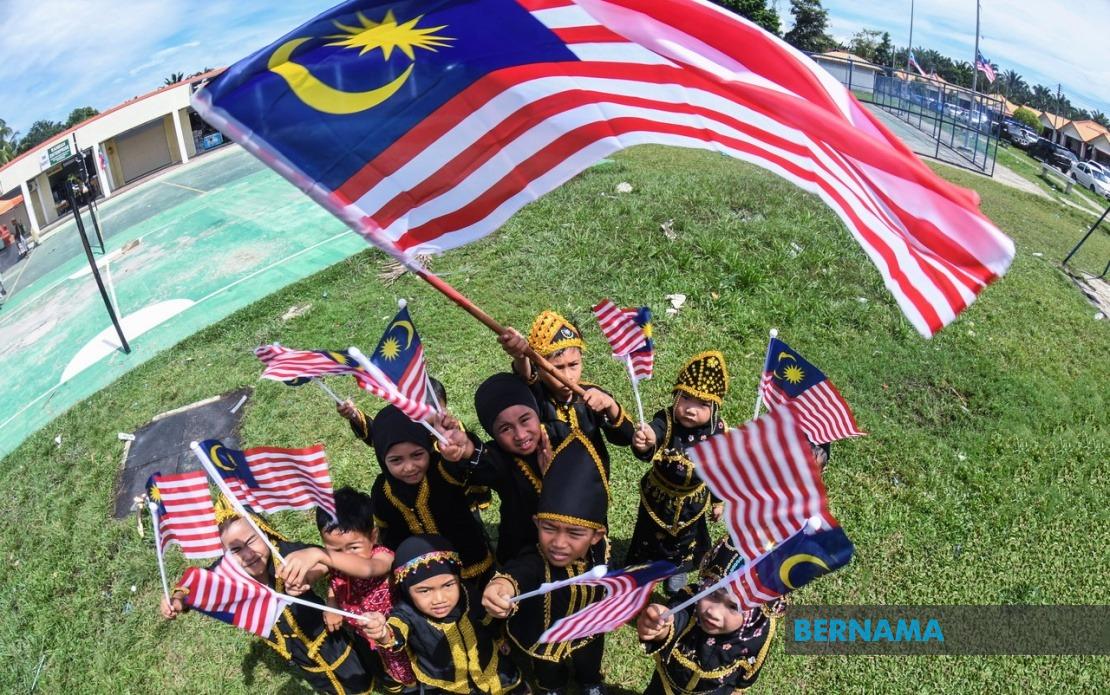
The government has signalled a deliberate shift in how Malaysia will mark its independence milestones next year, opting for restraint over grandeur. The launch of National Month and the Kibar Jalur Gemilang 2026 campaign—anchored to National Day and Malaysia Day celebrations—will be held on July 19 at the Ministry of Health Training Institute Sultan Azlan Shah in Tanjung Rambutan, Perak, departing markedly from the large-scale public spectacles of recent years. This recalibration reflects both prudent governance during uncertain times and a reframing of how the nation wishes to express its patriotic identity.
Muhammad Najmi Mustapha, director of the Information Department's Communications and Community Development Division, explained that the decision to move the launch into an indoor setting stems from pragmatic considerations rather than any reduction in celebratory intent. Previous iterations saw grand openings in Muar, Johor, and Cyberjaya, drawing substantial crowds and resources. This year's approach acknowledges the interconnected pressures facing Malaysia and the wider region—energy supply instability and geopolitical tensions in West Asia have created an environment where governments must balance public expression with fiscal responsibility. The pivot does not signal diminished commitment to national pride; instead, it represents a recalibration of how that pride is staged and transmitted to the public.
Prime Minister Datuk Seri Anwar Ibrahim will officially launch the ceremony at 10 am, lending the event the ceremonial weight of executive endorsement despite its more intimate scale. The broadcast reach remains expansive, with live coverage scheduled across Radio Televisyen Malaysia, Bernama, and simultaneous streaming on multiple Facebook platforms including the government's Merdeka360 portal. This distribution strategy ensures that while the physical gathering is constrained, the symbolic and informational reach extends nationwide. For Malaysian audiences, this represents a contemporary approach to civic engagement—acknowledging that patriotic sentiment is no longer confined to in-person attendance but propagates through digital channels.
Central to the 2026 campaign is the continuation and expansion of the '1 Rumah 1 Jalur Gemilang' initiative, a grassroots flag-flying programme designed to embed the national symbol into domestic and communal spaces. The campaign has grown beyond its original scope to encompass nine institutional clusters, reflecting an intention to integrate patriotic expression across diverse sectors of Malaysian society. The two newly added clusters—houses of worship and sports facilities—signal an inclusive vision that recognises patriotism transcends secular civic spaces. Alongside these are established clusters spanning education, higher education, health, security, community organisations, industry, and government agencies. This expansion broadens the social footprint of the flag campaign, making patriotic participation accessible across religious, recreational, and professional environments.
The thematic framework for 2026 centres on 'Malaysia MADANI: Kesejahteraan Dinikmati,' a slogan that Communications Minister Datuk Seri Fahmi Fadzil has previously unveiled. This positioning ties national celebration to the government's broader policy agenda around inclusive prosperity and citizen wellbeing. The theme moves beyond abstract nationalism to anchor patriotic sentiment in tangible concerns about security, economic opportunity, and quality of life. For Malaysian readers, this represents an attempt to make National Day celebrations relevant to everyday grievances and aspirations rather than purely ceremonial. The Malaysia MADANI branding and logo will persist through 2026, creating visual and rhetorical continuity across the extended celebration period.
The August 31 National Day ceremony itself, scheduled for Dataran Putrajaya, will maintain this calibrated approach—described as modest yet vibrant. This terminology suggests a deliberate middle ground: rejecting ostentatious displays while preserving ceremonial vibrancy and public participation. The venue's symbolic significance as the administrative heart of the federation ensures that the event retains presidential grandeur without requiring the logistical and financial commitments of previous mega-events. For Klang Valley residents and those travelling to the capital, the centralized location offers accessibility that distributed regional celebrations might not provide.
The government is actively encouraging digital patriotic participation through a coordinated social media campaign. Citizens are invited to adopt the Jalur Gemilang as profile pictures and share National Month content using specified hashtags: #HKHM2026, #MalaysiaMADANI, #KesejahteraanDinikmati, and #Merdeka360. This approach recognises that national identity expression has migrated substantially to digital platforms, particularly among younger Malaysians. By providing clear hashtag guidance, authorities are attempting to channel and amplify grassroots patriotic sentiment while maintaining thematic coherence. This represents a significant departure from traditional top-down celebration models, instead leveraging organic social media engagement as a multiplier for national messaging.
The reorientation towards modest celebration carries implications beyond mere optics. It signals to Malaysian society that the government is responsive to global economic headwinds and regional security concerns, demonstrating that fiscal prudence and strategic caution do not diminish national pride. This messaging proves particularly important given Malaysia's economic exposure to global energy markets and its strategic position adjacent to geopolitical tensions. By consciously choosing restraint, the administration can frame patriotism as compatible with pragmatism—a posture that may resonate with economically conscious Malaysians concerned about government spending during periods of energy uncertainty.
For Southeast Asian observers, Malaysia's recalibration offers instructive parallels regarding how middle-income nations balance democratic civic expression with fiscal constraints. The region has seen several governments navigate similar pressures—scaling back public events while maintaining symbolic participation channels. Malaysia's approach of pivoting to indoor venues and digital amplification reflects broader regional trends in how patriotic sentiment is expressed and managed across the digital-physical divide. The expansion of the flag-flying campaign into religious and sporting spaces also suggests an inclusive nationalism that acknowledges Malaysia's plural society, a model that may influence celebration strategies across ASEAN states with similar demographic diversity.
The Merdeka360 portal and JAPEN's social media platforms will serve as continuous information streams throughout the National Month period, providing periodic updates on related activities and programmes. This commitment to sustained communication reflects a recognition that celebration intensity must be maintained over extended periods rather than concentrated in single ceremonial moments. For Malaysian citizens and diaspora communities, these digital touchpoints offer ongoing engagement opportunities regardless of geographic location or physical attendance capacity. The distributed, continuous approach to celebration thus accommodates the realities of modern Malaysian life—geographically dispersed communities, digitally mediated social participation, and varied capacity for in-person engagement.

