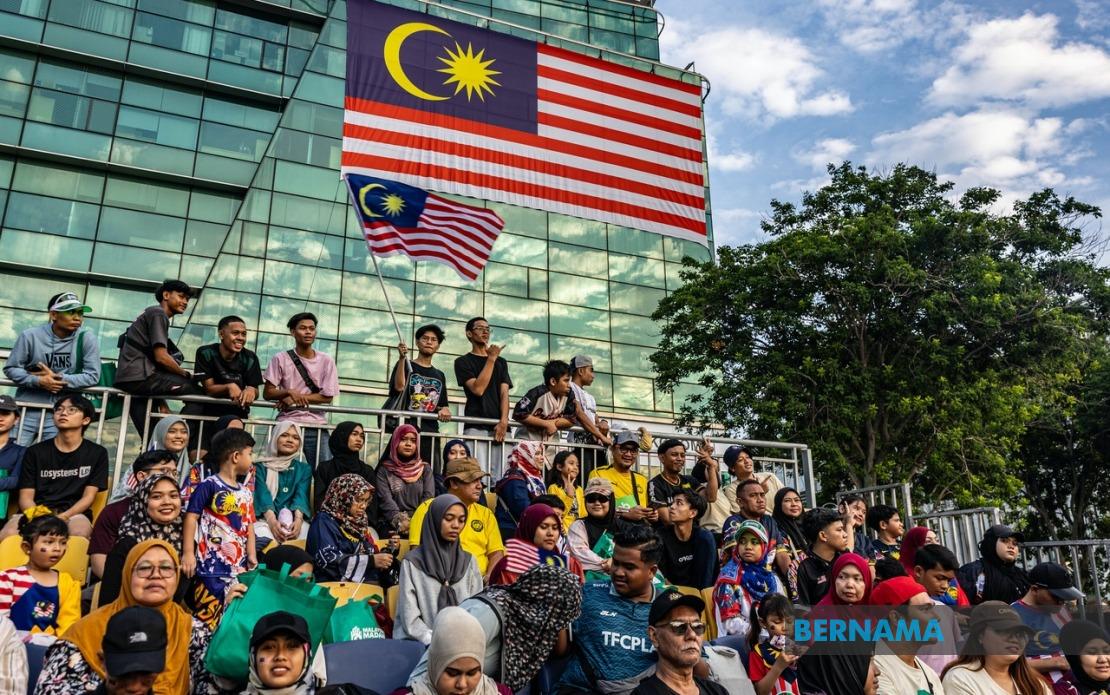
The 69th National Day celebration held in Putrajaya on August 31 proved a resounding success, drawing a crowd exceeding 100,000 people and comfortably surpassing the original attendance forecast of 80,000 participants. Communications Minister Datuk Seri Fahmi Fadzil, who chairs the 2026 National Day and Malaysia Day Main Committee, attributed the strong turnout to meticulous advance planning and unexpectedly favourable weather conditions that allowed festivities to proceed without disruption throughout the day.
The impressive attendance reflects growing public enthusiasm for commemorating national milestones, with visitors travelling from across Malaysia to participate in the festivities. Notable among them were groups from Sandakan, Johor Bahru and Jeli, demonstrating the geographically dispersed nature of the celebration's appeal and the willingness of Malaysians to journey considerable distances to mark this significant occasion. Fahmi emphasised that the atmosphere throughout remained vibrant and orderly, with no security incidents or public safety concerns marring the event.
Behind the scenes, seamless coordination among multiple government agencies proved instrumental in delivering the smooth execution. The Department of Environment, Malaysian Meteorological Department and National Disaster Management Agency worked in concert to monitor conditions and prepare contingency measures including cloud seeding operations. This inter-agency collaboration ensured that potential weather disruptions were either mitigated or prevented entirely, allowing the full programme to unfold as scheduled. Such operational excellence underscores the importance of integrated planning in large-scale public events.
Beyond the main parade, the celebration provided diverse recreational and entertainment opportunities that extended well into the afternoon and evening. Attendees explored national defence assets displayed at Anjung Floria, participated in the Riuh Merdeka festivities at Monumen Alaf Baru, and savoured food offerings from numerous food trucks scattered throughout the venue. These ancillary attractions transformed the event from a ceremonial spectacle into a comprehensive family experience, broadening its appeal beyond those primarily interested in the parade itself.
The procession itself represented a substantial logistical undertaking, mobilising 76 contingents, 22 marching bands and 11 decorated vehicles. These units comprised approximately 10,819 participants drawn from government agencies, security and uniformed services, government-linked companies, educational institutions ranging from secondary schools to universities, and civil society organisations. This wide-ranging participation reflected the inclusive nature of national day observances, bringing together disparate segments of Malaysian society united in celebrating shared nationhood.
Several elements marked the 2026 celebration as particularly distinctive. The Royal Johor Military Force made its inaugural appearance in the parade, while the SEA Games 2027 contingent and Orange Economy Sustainability cluster contingent participated for the first time, signalling Malaysia's forward-looking engagement with regional sporting commitments and emerging economic priorities. These new participants injected freshness into what might otherwise have been a repetitive ceremonial format.
Cultural performances formed the emotional core of the celebration, demonstrating Malaysia's rich artistic inheritance and creative vitality. The centrepiece was the "Gema Inovasi MADANI" percussion performance, which ingeniously fused traditional instruments including Rebana Inovasi and Kompang Inovasi with contemporary arrangements. This performance involved 150 percussionists and 1,500 human graphic performers, creating visually and sonically compelling tableaux that celebrated the nation's cultural pluralism and aesthetic sophistication. The finale, "Rentak MADANI, Paluan Tradisi," assembled 2,350 participants in a grand closing sequence that brought together tradition and contemporary expression.
The aerial finale, executed by Royal Malaysian Air Force fighter, transport and helicopter squadrons, provided a stirring conclusion that underscored national military capability and sovereignty. Such displays resonate powerfully with Malaysian audiences and reinforce themes of national security and institutional strength that feature prominently in public consciousness.
The 2026 celebration operated under the theme "Malaysia MADANI: Kesejahteraan Dinikmati," emphasising the government's commitment to equitable development and broad-based prosperity. This thematic framing sought to position the national day not merely as historical commemoration but as an affirmation of contemporary policy objectives aimed at delivering tangible improvements in citizen wellbeing irrespective of communal or socioeconomic background. By linking historical commemoration to present-day governance priorities, the celebration attempted to create meaningful continuity between past sacrifice and future aspiration.
Fahmi expressed hope that the successful observance would deepen emotional and psychological bonds between citizens and nation, fostering enhanced commitment to national unity and collective stewardship. His appeal for Malaysians to work collaboratively in safeguarding national integrity acknowledged the ongoing necessity for sustained civic engagement and social cohesion in an increasingly complex geopolitical and demographic environment. The celebration, viewed through this lens, functioned as both retrospective acknowledgement of nationhood and prospective investment in its preservation and enhancement.
The substantial attendance and incident-free execution represented a notable validation of event management protocols and public engagement strategies. For observers monitoring Malaysia's capacity to organise large-scale public gatherings, the successful 2026 National Day celebration offered reassuring evidence of institutional competence and public participation levels. This becomes particularly relevant as Malaysia prepares to host the SEA Games in 2027, an undertaking requiring comparable or greater organisational sophistication across extended timeframes and multiple venues throughout the nation.

