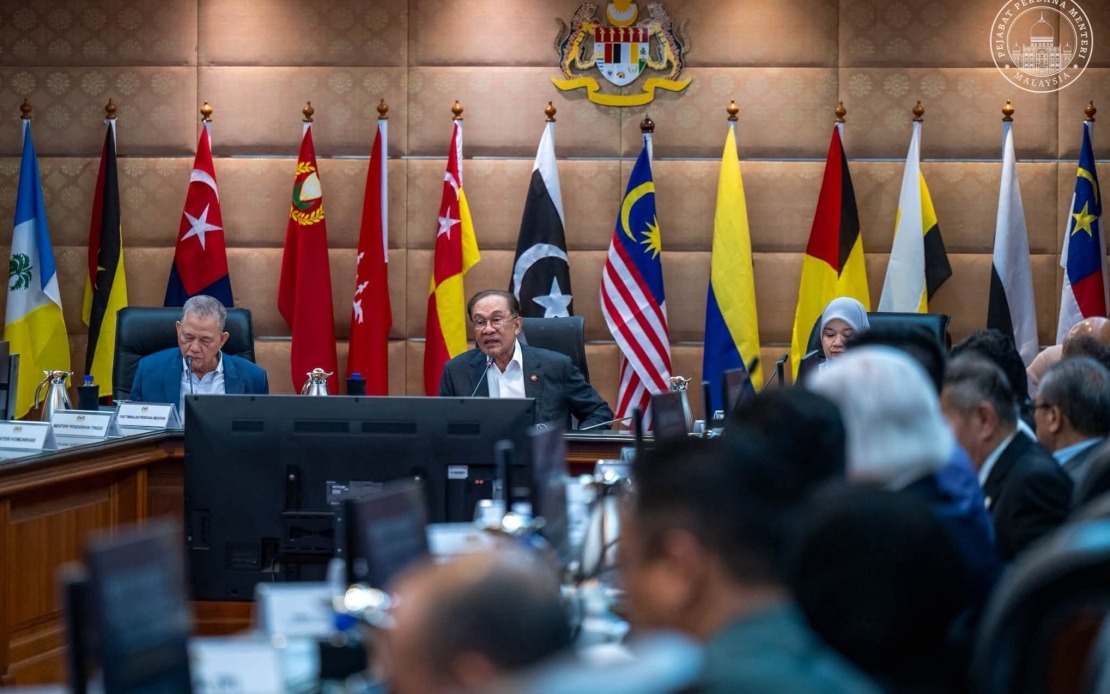
Prime Minister Datuk Seri Anwar Ibrahim has unveiled a newly established National Education Council aimed at fundamentally reshaping Malaysia's education landscape to align with contemporary needs and challenges. The announcement came after the inaugural National Education Council Meeting of 2026, which surveyed the strategic direction of national education spanning both secondary schools and tertiary institutions across the country.
The council represents a formal institutional commitment to overhaul how Malaysia approaches teaching and learning at all levels. Rather than incremental tinkering, Anwar signalled through his public statement that the initiative intends to tackle education holistically, examining everything from curriculum design to pedagogical methods. This centralised approach seeks to create coherence across Malaysia's fractured education bureaucracy, where multiple agencies have historically pursued disparate agendas.
English language proficiency emerged as a key priority within the council's deliberations. The administration recognises that competence in English as a second language has become instrumental for Malaysia's workforce integration into global markets and knowledge economies. However, this focus on international communication standards does not come at the expense of Malaysia's linguistic and cultural identity. The council explicitly commits to preserving the primacy of the national language, Bahasa Malaysia, alongside the inculcation of Islamic values and ethical principles that underpin the Malaysia MADANI framework—the government's overarching vision for national development.
This balancing act reflects a persistent tension in Malaysian education policy. Globalisation demands that students master English to access international scholarship, conduct business across borders, and participate in transnational research communities. Yet policymakers remain acutely conscious that wholesale adoption of Western educational models risks diluting national cohesion and cultural continuity. The council's mandate attempts to straddle this divide by integrating language modernisation with value-driven pedagogy.
A particular emphasis within the council's scope centres on elevating educational quality at the district level, effectively decentralising improvement efforts beyond major urban centres. Malaysia's education system has historically concentrated resources and expertise in cities like Kuala Lumpur and Penang, leaving rural and semi-urban districts with inferior infrastructure, less qualified teachers, and outdated materials. By targeting district-level enhancement, the council acknowledges geographical inequities that have long disadvantaged students in peripheral regions and compromised overall national achievement.
The agenda also prioritises advancing the Bumiputera education agenda, a longstanding pillar of Malaysian education policy designed to ensure equitable access and opportunity for indigenous Malays and other indigenous peoples. How the council approaches this objective will signal whether the government views it as static preservation of quotas or dynamic expansion of capabilities and pathways for Bumiputera students to compete effectively in contemporary labour markets.
Building a sustainable STEM talent pipeline constitutes another fundamental pillar of the council's work. Malaysia faces growing competition from regional neighbours in technology-driven sectors and innovation-based industries. Thailand, Vietnam, and Indonesia are aggressively investing in science and engineering education. Without robust domestic capacity in STEM subjects, Malaysia risks ceding competitive advantage and forcing reliance on expatriate expertise for critical sectors. The council's focus here acknowledges that long-term prosperity depends on cultivating homegrown scientific and technical talent.
Anwar stressed the necessity for objective evaluation of the education system, drawing on diverse expertise and perspectives rather than relying on entrenched bureaucratic wisdom. This call for evidence-based assessment signals frustration with the tendency of education ministries to defend existing structures through inertia. He explicitly warned against allowing complacency with the status quo to obstruct progress, framing educational reform as an imperative rather than an optional enhancement.
The establishment of this council carries broader implications for Malaysian governance. It represents an attempt to move education beyond partisan political contestation—a perennial problem given that states control some education matters while the federal government manages others. A centralised council risks amplifying political interference, but it also potentially creates institutional machinery to drive systematic change across fragmented administrative boundaries. The council's effectiveness will ultimately depend on whether it commands sufficient political backing and resources to overcome entrenched resistance from education bureaucracies and teaching unions defending established practices.
For Southeast Asian observers, Malaysia's push for comprehensive education reform reflects regional recognition that demographic advantages—younger populations entering the workforce—will evaporate unless education systems improve dramatically. Countries across Southeast Asia confront similar pressures: ageing populations in developed nations, rising global competition for skilled workers, and the disruptive impact of artificial intelligence on traditional employment. Malaysia's council-based approach mirrors institutional strategies adopted by Singapore, which maintains a nimble education governance structure, and represents a divergence from Indonesia's more decentralised model.
The council's work will test whether Malaysian policymakers can simultaneously modernise curriculum content, enhance teaching quality, and embed national values without creating internal contradictions. Educational reform rarely unfolds smoothly; implementation gaps between policy aspirations and classroom reality typically emerge. The council's ability to monitor implementation, adjust course when necessary, and maintain political support across shifting governments will determine whether this initiative becomes a transformative intervention or another well-intentioned bureaucratic initiative that fades into irrelevance.

