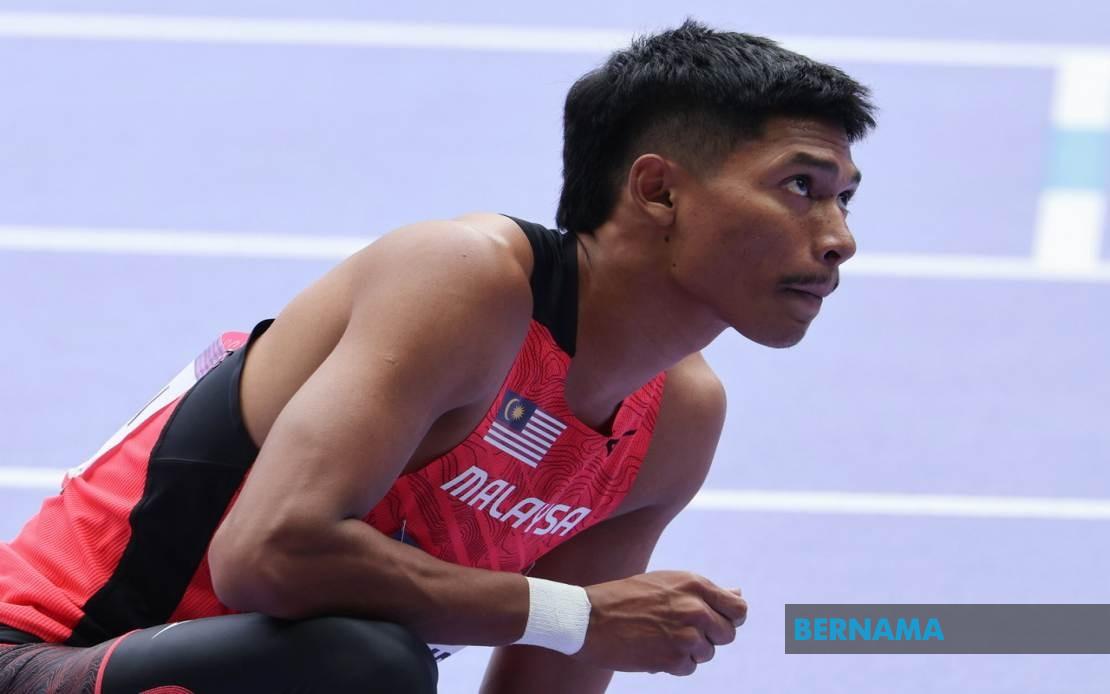
Muhammad Azeem Mohd Fahmi, Malaysia's fastest sprinter and holder of the national 100-metre record at 10.09 seconds, has signalled his intention to establish his long-term athletic base in Malaysia rather than pursue opportunities abroad following the completion of his studies at Auburn University in the United States. The 22-year-old's decision represents a significant commitment to the domestic athletics programme and reflects a growing trend among Malaysian athletes who are choosing to build their careers at home after gaining international exposure and education.
Having spent the past four years pursuing his university education in Alabama, Azeem expressed a strong desire to reconnect with his immediate support network, particularly his family members whom he has been separated from during his extended time away. This personal reconnection forms a crucial foundation for what he envisions as the next phase of his athletic development, one that will be rooted firmly within Malaysia's athletics ecosystem rather than overseas training centres.
The sprinter articulated his reasoning with particular emphasis on the role that his immediate circle has played in shaping his athletic trajectory. Beyond his nuclear family, Azeem acknowledged the indispensable contributions of his coaching staff, mentors, and friends who have invested time and energy in his development. This recognition underscores a philosophy increasingly common among elite athletes who view their support systems as integral to sustained performance rather than treating them as peripheral to their careers.
Regarding his training programme moving forward, Azeem has arranged a hybrid coaching structure that leverages both his international expertise and local infrastructure. His American coach Ken Harnden will continue designing his training regimen remotely, ensuring continuity with the methodology and periodisation that has brought him to elite national levels. However, the day-to-day implementation and supervision will be entrusted to Muhammad Amir Izwan Tan Abdullah, a local coach positioned to oversee training sessions, monitor progress in real time, and make tactical adjustments based on Azeem's performance data and response to stimulus.
This dual-coach approach reflects a pragmatic understanding that international training protocols remain valuable for Malaysian athletics, but that their successful application requires local expertise and cultural knowledge. The arrangement also demonstrates confidence in Malaysia's coaching infrastructure, challenging any perception that world-class sprinting development can only occur overseas. For Malaysia's athletics development programme, Azeem's decision to remain and train domestically provides a potential template for other young athletes who have gained international experience to channel their talent toward strengthening the local competitive environment.
Looking beyond his immediate athletic objectives, Azeem indicated plans to pursue postgraduate education, specifically a master's degree programme. However, he has made the calculated decision to defer this commitment in favour of dedicating the next several months exclusively to athletics. This prioritisation reflects the critical window that elite sprinters face in their careers—the period between university completion and the onset of physical decline is when peak performances typically emerge. By postponing academic advancement, Azeem is acknowledging that athletics cannot be compartmentalised as a secondary pursuit if he wishes to achieve his maximum potential and compete effectively on the international stage.
The timing of Azeem's decision carries significance for Malaysian athletics at a broader level. With the national 100-metre record now in the hands of a young athlete committed to remaining domestically based, there exists an opportunity for him to become a focal point around which the national sprinting programme can develop. His presence and training activities could raise the competitive standard within Malaysia's athletics associations and provide inspiration and benchmarking opportunities for younger sprinters currently developing their skills.
International context matters here as well. Southeast Asian sprinting remains competitive but has historically struggled to produce athletes capable of consistently breaking into the sub-10-second barrier that defines elite global sprinting. Azeem's achievement of 10.09 seconds places him among a small cohort of regional performers, and his commitment to training in Malaysia rather than relocating to traditional sprinting powerhouses suggests growing confidence that world-class development is possible within Southeast Asia.
The coaching structure Azeem has established also reflects evolving patterns in how developing nations approach elite sport development. Rather than attempting to retain full control domestically or surrendering completely to overseas specialists, Malaysia is creating integrated arrangements where international expertise flows into local implementation. This hybrid model has proven successful in other sports and countries, allowing nations to benefit from global knowledge networks while building sustainable domestic capacity.
For Malaysian athletics stakeholders, Azeem's commitment to remaining domestically represents both an achievement and a responsibility. The athletics federation and associated bodies now have the opportunity to provide infrastructure, competition opportunities, and support systems that enable him to progress beyond his current national record. Conversely, Azeem's presence and visibility in Malaysia could stimulate greater public interest in track and field, a sport that has sometimes struggled for prominence compared to football and other pursuits in the Malaysian sporting landscape.
%22%2F%3E%3C%2Fpattern%3E%3C%2Fdefs%3E%3Crect%20width%3D%22100%25%22%20height%3D%22100%25%22%20fill%3D%22url(%23ph24rdpg)%22%2F%3E%3Crect%20width%3D%22100%25%22%20height%3D%22100%25%22%20fill%3D%22url(%23ph24rdpp)%22%2F%3E%3Ctext%20x%3D%2250%25%22%20y%3D%2250%25%22%20text-anchor%3D%22middle%22%20dominant-baseline%3D%22central%22%20fill%3D%22rgba(255%2C255%2C255%2C0.95)%22%20font-family%3D%22Georgia%2C%20'Times%20New%20Roman'%2C%20serif%22%20font-weight%3D%22700%22%20font-size%3D%22170%22%20letter-spacing%3D%22-0.02em%22%3EMalaysia%3C%2Ftext%3E%3C%2Fsvg%3E)
%22%2F%3E%3C%2Fpattern%3E%3C%2Fdefs%3E%3Crect%20width%3D%22100%25%22%20height%3D%22100%25%22%20fill%3D%22url(%23ph16szhg)%22%2F%3E%3Crect%20width%3D%22100%25%22%20height%3D%22100%25%22%20fill%3D%22url(%23ph16szhp)%22%2F%3E%3Ctext%20x%3D%2250%25%22%20y%3D%2250%25%22%20text-anchor%3D%22middle%22%20dominant-baseline%3D%22central%22%20fill%3D%22rgba(255%2C255%2C255%2C0.95)%22%20font-family%3D%22Georgia%2C%20'Times%20New%20Roman'%2C%20serif%22%20font-weight%3D%22700%22%20font-size%3D%22136%22%20letter-spacing%3D%22-0.02em%22%3ECourt-Ord%E2%80%A6%3C%2Ftext%3E%3C%2Fsvg%3E)