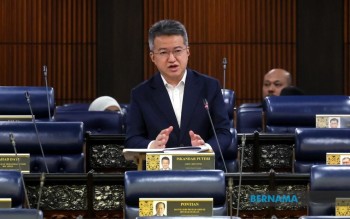
Malaysia moved forward with establishing a long-term sovereign wealth mechanism on July 14 when Deputy Finance Minister Liew Chin Tong tabled the National Trust Fund Bill 2026 in the Dewan Rakyat. The legislation, now in its first reading phase with a second reading scheduled for the current parliamentary session, represents a significant shift towards formalizing intergenerational financial stewardship. The bill establishes the National Trust Fund, commonly referred to as KWAN, alongside a dedicated governing corporation to administer, manage and invest the accumulated reserves on behalf of current and future Malaysian citizens.
The underlying philosophy behind this legislation reflects growing recognition among policymakers that sustained economic prosperity requires building buffers beyond annual budget cycles. By institutionalizing a national trust fund, Malaysia joins other resource-rich nations in creating structural mechanisms to preserve wealth for periods when conventional revenue sources may decline or become insufficient. The framework recognizes that prudent financial governance demands setting aside resources during prosperous years, ensuring stability across economic cycles and cushioning the nation against unforeseen fiscal pressures.
The mandatory funding mechanism represents the cornerstone of the bill's effectiveness. The Federal Government must contribute annually at least 0.1 percent of its projected revenue, establishing a baseline commitment that automatically scales with economic growth. Additionally, the government will allocate no less than two percent of all dividend income received from Petroliam Nasional Bhd, the national petroleum corporation, to the fund each financial year. This revenue stream directly links fund growth to Malaysia's oil and gas wealth, recognizing Petronas as a critical economic pillar while ensuring energy revenues contribute to long-term prosperity rather than being entirely consumed in annual spending.
The third funding pillar addresses Malaysia's depleting natural resources through a two percent allocation from export duties levied on non-renewable resource extraction, after accounting for constitutionally mandated state assignments. This provision acknowledges the finite nature of mineral and hydrocarbon reserves, ensuring that revenue generated from liquidating these national assets contributes to building permanent financial capital. For resource-producing states, the bill contemplates parallel contributions from state governments that derive royalties from petroleum or other diminishing resources, potentially creating additional funding channels dependent on state-level engagement and profitability.
Transparence and accountability mechanisms embedded within the legislation establish clear reporting requirements that connect the fund to democratic oversight. All contributions must appear explicitly in the Federal Government's annual financial statements presented to the Dewan Rakyat, preventing the fund from operating as a hidden mechanism beyond parliamentary scrutiny. Furthermore, the government commits to transferring allocated amounts by fiscal year-end, ensuring contributions flow reliably rather than becoming subject to discretionary delays or redirection toward other priorities. This structural certainty provides the fund's administrators with predictable capital streams essential for long-term investment planning.
The National Trust Fund (Incorporated) board assumes responsibility for formulating strategic asset allocation frameworks that define comprehensive long-term investment strategies. This governance structure positions professional investment managers and board members to make decisions based on risk-adjusted returns rather than short-term political considerations, a crucial distinction separating sovereign wealth funds from general government accounts. The board must maintain detailed reporting on fund assets, investment performance and activities, furnishing the Finance Minister with comprehensive returns and accounts as required. This dual accountability—to markets through investment discipline and to government through formal reporting—creates checks ensuring neither purely commercial nor purely political interests dominate fund management.
The operational scope extends beyond simple capital preservation. The legislation explicitly permits fund resources to cover remuneration for board members and officers, reimbursement of their legitimate expenses, and all administrative, management and investment costs associated with the fund's operations. This provision recognizes that sophisticated investment management demands skilled professionals compensated at market rates, distinguishing the fund from volunteer-run organizations. By authorizing operational expenses from fund resources rather than general government budgets, the framework ensures the fund operates as a self-sustaining entity while preventing its capital base from subsidizing government costs.
For Malaysian investors and businesses, the establishment of this sovereign wealth fund creates potential implications for both domestic capital markets and international economic positioning. Large-scale, professionally managed domestic investment vehicles historically demonstrate countercyclical purchasing power, acquiring assets when prices decline and supporting market stability during downturns. The fund's existence provides another significant institutional investor alongside the Employees Provident Fund and Permodalan Nasional Bhd, potentially diversifying Malaysia's investment landscape. Internationally, countries with established sovereign wealth funds often enjoy enhanced credibility and risk profiles among foreign investors, who perceive institutional reserve creation as evidence of macroeconomic prudence.
The timing of the bill's introduction carries significance within Malaysia's broader fiscal context. Declining oil prices and maturing petroleum reserves have prompted heightened awareness of revenue vulnerability among policymakers. By formalizing a mechanism to build reserves during periods of adequate resource revenue, the government acknowledges that Malaysia cannot indefinitely depend on hydrocarbon exports to fund public services and infrastructure. The National Trust Fund framework transforms this recognition into legislative reality, establishing institutional structures that will persist regardless of which political coalition holds power, reducing the likelihood of dismantling the mechanism for short-term budgetary expediency.
Comparative international experience demonstrates both opportunities and pitfalls in sovereign wealth fund management. Norway's Government Pension Fund Global exemplifies successful long-term stewardship through independent governance and transparent investment mandates, while other resource-based funds have suffered from political interference or inadequate governance. Malaysia's bill attempts to navigate these challenges through multiple accountability layers—parliamentary oversight via financial statements, ministerial reporting requirements, and professional board governance insulated from annual political pressures. The actual effectiveness of these safeguards will depend substantially on implementation rigor and the quality of board member appointments in coming years.
The parliamentary timeline for advancing the legislation suggests government commitment to establishing the fund relatively quickly. With second reading scheduled during the current session, the bill appears positioned for potential passage before year-end, though the ultimate implementation date remains subject to a ministerial declaration in the Gazette. This procedural flexibility allows the Finance Minister to sequence the fund's operational launch strategically, potentially coordinating establishment with fiscal year transitions or market conditions favorable for initial capital deployment. Once operational, the National Trust Fund will begin accumulating Malaysia's first formally designated intergenerational reserve, marking a watershed moment in the nation's approach to long-term financial stewardship and resource management.

