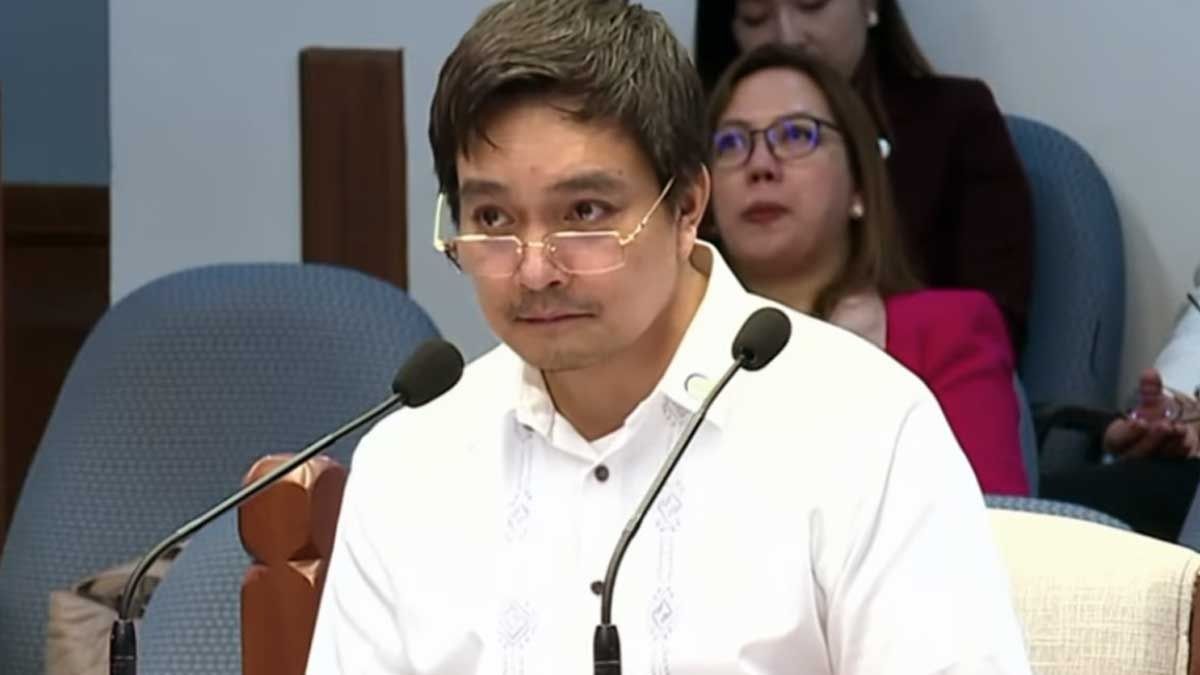
The Philippine National Bureau of Investigation's Regional Director Jeremy Lotoc has maintained that investigative evidence collected by his team supports the conclusion that Vice President Sara Duterte contracted someone to kill President Ferdinand Marcos Jr., even as he conceded during her impeachment trial that he possesses no direct personal knowledge of such an arrangement. Lotoc's testimony, delivered during cross-examination on July 14, represents a critical evidentiary moment in the unprecedented impeachment proceedings against the sitting vice president, highlighting the complex distinctions between circumstantial evidence and firsthand knowledge that characterise the prosecution's case.
The NBI's investigation centred on assassination threats Duterte made publicly during an online media briefing on November 23, 2024, when she explicitly stated she had contracted an assassin to kill Marcos, First Lady Liza Araneta-Marcos, and former House Speaker Martin Romualdez. These remarks formed the basis of the fourth article of impeachment filed against the vice president, elevating what might have been dismissed as political rhetoric into a formal constitutional challenge. As head of the NBI's Crime Division at the time, Lotoc oversaw the investigative response to these statements, positioning him as a central witness in establishing whether Duterte's words reflected serious intent or inflammatory campaign language.
During defence counsel Mark Vinluan's aggressive cross-examination, the distinction between evidentiary inference and personal witness knowledge became the pivotal contested terrain. Vinluan repeatedly pressed Lotoc to acknowledge that he had not personally observed Duterte hiring an assassin, attempting to undermine the investigator's interpretive conclusions about what the gathered evidence demonstrated. This line of questioning reflects a fundamental legal challenge facing the prosecution: converting circumstantial evidence into proof of criminal conspiracy requires establishing not merely suspicious activity but demonstrable causation between Duterte's words and concrete preparatory actions.
Lotoc's response—that while he lacked direct knowledge, the accumulated evidence supported the belief that Duterte had contracted someone—represents the investigator's attempt to articulate how professional investigators reach conclusions through pattern analysis, financial trails, communications intercepts, and contextual factors rather than eyewitness testimony. This methodology is standard in complex criminal investigations, yet it becomes more contentious when applied to sitting officials and questions involving national security. The tension between what investigators believe their evidence suggests and what constitutes proof beyond reasonable doubt animated much of the courtroom exchange.
The proceedings themselves illustrated the high stakes and constitutional sensitivity surrounding the case. Presiding Officer Senator Francis "Chiz" Escudero intervened multiple times to moderate increasingly acrimonious exchanges between the defence and prosecution teams, at one point explicitly rebuking both sides for conducting themselves as though in a "college debate" rather than a formal impeachment trial. These interventions underscore how the case's unprecedented nature—testing the outer boundaries of presidential accountability—has strained normal trial decorum and forced judges to actively manage competing legal and political pressures.
A particularly contentious moment arose when Vinluan challenged Lotoc's assertions about corruption allegations Duterte had made against certain legislators in the same video. When Lotoc confirmed the "existence of Duterte's utterances," Vinluan interpreted this as an admission that the legislators were corrupt—a rhetorical manoeuvre designed to demonstrate how Lotoc's methodology could generate unfounded conclusions from mere statements. The exchange revealed deeper questions about evidentiary standards and whether political rhetoric, even threatening rhetoric, can form the foundation for prosecution of sitting officials without additional corroborating evidence of actual criminal preparation.
Senate President Sherwin Gatchalian's subsequent line of questioning shifted focus to whether the evidence demonstrated Duterte possessed actual capability to execute such threats. When Gatchalian suggested that merely holding the office of vice president did not automatically confer capacity for assassination, Lotoc pivoted to contextual factors, notably Duterte's family history. He emphasised that her father, former President Rodrigo Duterte, currently faces International Criminal Court charges related to alleged extrajudicial killings during his administration's drug war, arguing this history demonstrated the family's demonstrated capability and willingness to carry out violent acts against perceived enemies.
This invocation of Rodrigo Duterte's ICC case represents the prosecution's attempt to establish pattern and precedent—the argument that Sara Duterte exists within a familial and political context where extrajudicial violence has previously occurred, therefore making her threats more credible and her capacity more evident. However, this reasoning also raised significant concerns among observers about whether the trial risks becoming a referendum on the Duterte family's political record rather than a narrowly focused examination of whether Sara Duterte specifically violated her constitutional duties through assassination threats. The distinction matters considerably in a functioning democracy where impeachment procedures carry enormous weight.
For Malaysian and regional observers, the trial illuminates broader Southeast Asian challenges regarding presidential accountability, the boundaries between political speech and criminal conspiracy, and how institutions manage crises involving sitting heads of state or their designated successors. The case occurs within the Philippines' complex political landscape, where the Marcos and Duterte families represent competing power centres, raising inevitable questions about whether the impeachment represents constitutional enforcement or political vendetta. That uncertainty characterises impeachment proceedings everywhere, but it becomes particularly acute in democracies still consolidating institutional strength and public confidence.
The testimony also demonstrates how investigative agencies must translate preliminary findings into legal proof. Lotoc's repeated iterations—that investigators believe the evidence supports certain conclusions without personally witnessing the alleged conspiracy—reflects the genuine investigative challenge of proving intention and criminal agreement. Building such cases typically requires either direct evidence of communications authorising violence, financial transactions evidencing payment, or witness testimony from individuals directly involved. The reliance on contextual factors and public statements, while investigatively suggestive, faces the defence argument that it conflates political bombast with criminal preparation.
The impeachment trial continues to evolve as additional witnesses testify and documentary evidence is presented. Lotoc's testimony establishes the investigative foundation but may not prove decisive in determining whether the Senate votes to remove Duterte from office. The constitutional threshold for conviction requires a two-thirds majority of sitting senators, representing a significant barrier that reflects the constitution-drafters' intention to make removal of a sitting vice president extraordinarily difficult. This high bar reflects recognition that impeachment carries profound systemic risks, particularly when deployed against designated successors to high office.
As the trial unfolds, it will ultimately test whether the Philippine Senate views Duterte's statements as serious threats warranting removal or as political hyperbole unbecoming but not constitutionally disqualifying. The answer will shape not merely Duterte's political future but also presidential accountability standards throughout the region, establishing precedent for how democracies address violent rhetoric from high-ranking officials and whether personal or family history can substitute for direct evidence of conspiracy. That determination will resonate far beyond Manila.

