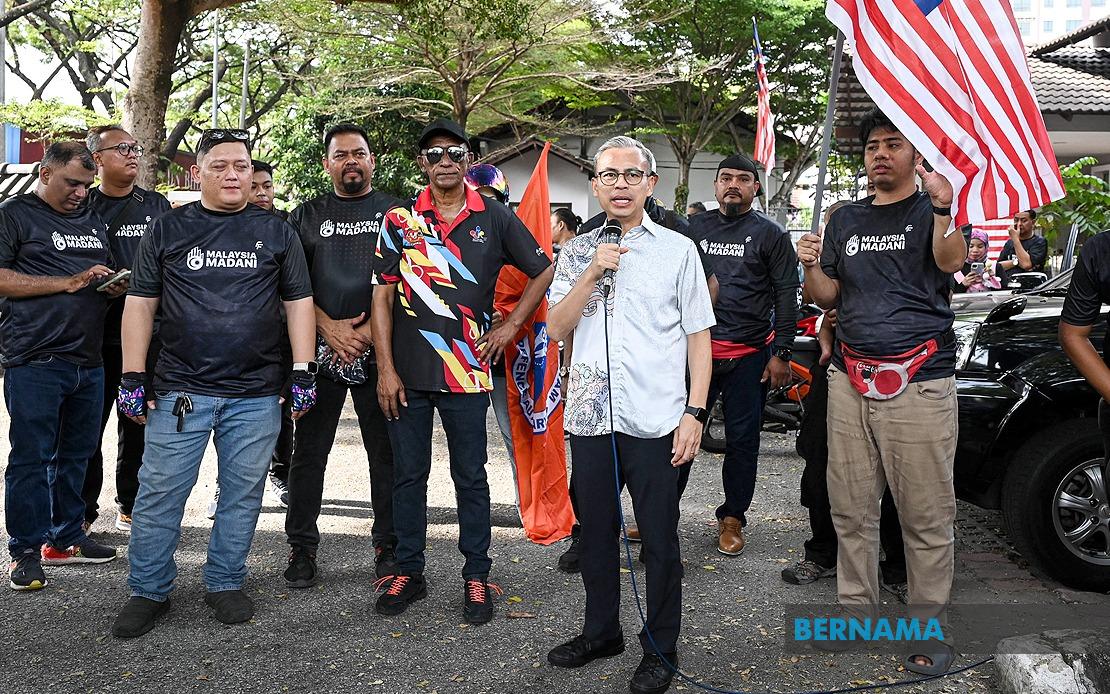
Nearly 300 motorcyclists rode through Kuala Lumpur's Lembah Pantai constituency on the eve of Malaysia's independence celebrations, participating in a grassroots convoy designed to showcase the nation's cultural diversity and collective spirit. The Lembah Pantai Kembara Merdeka Convoy brought together residents from the diverse neighbourhood in a symbolic display of unity, with organisers emphasising the event's role in strengthening bonds across ethnic and social divides.
Communications Minister Datuk Seri Fahmi Fadzil, who represents Lembah Pantai as its Member of Parliament, framed the initiative as a practical demonstration of Malaysian identity rooted in pluralism. In remarks delivered at the event, Fahmi stressed that the convoy transcended ceremonial significance by assembling neighbours of different backgrounds in a shared commitment to the nation's ideals. His emphasis on the constituency's inherent multiculturalism reflected a broader political narrative about Malaysia's founding principles and the importance of maintaining intercommunal harmony during national observances.
The route itself was carefully choreographed to maximise community participation and visibility. Beginning at Taman Seri Sentosa, the motorcade proceeded through five designated stops across Lembah Pantai, including Kampung Pasir, IWK Eco Park, and Vista Angkasa in Kampung Kerinchi, before concluding at Bangsar LRT station. This geographical spread ensured that residents throughout the constituency could witness and engage with the convoy, creating multiple touchpoints for community involvement rather than limiting the event to a single location.
A symbolic dimension underscored the convoy's messaging. At each pit stop, organisers distributed Jalur Gemilang flags to representatives from the Resident Representative Council and neighbourhood associations. This deliberate handover of the national flag served as a visual metaphor for distributing patriotic responsibility among community members and local institutions, positioning ordinary citizens and grassroots organisations as custodians of national pride rather than reserving that role for government officials.
Fahmi's subsequent remarks revealed ambitions extending beyond the single event. He expressed hope that the camaraderie and goodwill demonstrated during the convoy would catalyse ongoing community initiatives and collective action. The minister framed future involvement in terms that encompassed both civic and social dimensions, explicitly referencing assistance programmes, welfare initiatives, and sustained participation in festive celebrations. This language suggested a vision of the community as an organising unit capable of self-directed activity across multiple domains rather than merely passive recipients of government projects.
The timing of the convoy carried particular resonance within Malaysia's political calendar. Merdeka eve celebrations occupy a privileged position in national identity-building, drawing unprecedented media attention and official participation. By organising a grassroots convoy rather than relying solely on formal state ceremonies, Fahmi's office demonstrated that meaningful patriotic expression could originate from neighbourhood initiatives rather than requiring top-down orchestration. For local communities in Klang Valley constituencies, such events model alternative approaches to celebrating independence that emphasise resident agency and inter-neighbourhood solidarity.
The choice of motorcycles as the primary mode of participation warrants consideration within Malaysia's social context. Motorcycle ownership remains widespread across income levels, and riding clubs represent informal but robust community networks in urban and suburban areas. By channelling participation through motorcyclists, organisers tapped into existing social structures and cultural practices, making the event more accessible to participants who might lack formal invitations to official ceremonies. The convoy thus functioned simultaneously as patriotic demonstration and celebration of a widespread recreational practice.
For Malaysian readers observing political developments in the capital's parliamentary constituencies, the Lembah Pantai convoy illustrates how elected representatives navigate the dual challenge of maintaining constituent engagement while advancing national narratives. The event demonstrated that community mobilisation around independence celebrations need not follow standardised templates; instead, locally rooted approaches can simultaneously honour national traditions and reinforce neighbourhood bonds. This adaptive strategy may prove relevant for political organisers elsewhere seeking to revitalise traditional observances through participatory rather than purely commemorative formats.
The broader context of Merdeka celebrations across Malaysia in 2024 positions such initiatives within a landscape of intensifying national pride and identity consciousness. As communities nationwide organise their own independence eve activities, the scale and character of participation at various events signals public investment in these observances. The nearly 300-strong motorcyclist turnout in Lembah Pantai, though not extraordinary in absolute terms, reflected sustained interest among residents in publicly affirming their Malaysian identity alongside neighbours. For a single parliamentary constituency to mobilise that level of participation underscores the continuing resonance of independence themes despite the nation's passage into its seventh decade of sovereignty.
Looking forward, the success of the Lembah Pantai convoy may encourage similar initiatives elsewhere. The model is replicable across different constituencies with modest resource requirements, relying primarily on grassroots enthusiasm rather than elaborate infrastructure. For opposition-controlled constituencies, such events offer opportunities to demonstrate community leadership; for government-held seats, they reinforce incumbent visibility and constituent connections. As Malaysian political competition intensifies in the years ahead, anticipate further experimentation with community-based national observances that blend patriotic messaging with neighbourhood engagement.

