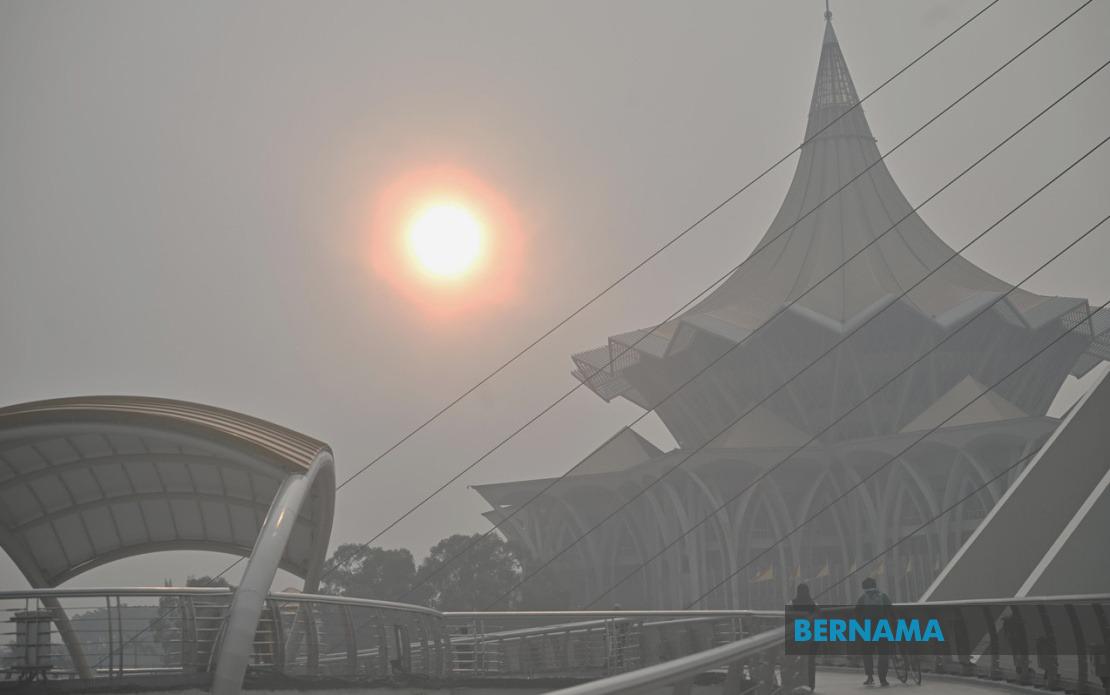
The Sarawak Education Department has ordered the temporary closure of 591 schools across the state, reflecting escalating concerns about environmental conditions that pose risks to student safety and community wellbeing. The shutdown, which began on August 20 and extends through the following day, represents a significant disruption to the education calendar and underscores the severity of the meteorological crisis unfolding across large swathes of Malaysian Borneo.
The affected institutions comprise 509 primary schools educating 107,590 pupils alongside 82 secondary schools with an enrolment of 89,733 students. These figures encompass facilities operating under the jurisdiction of ten District Education Offices spread across distinct geographic zones. The schools fall under the administration of the Kuching, Padawan, Bau, Lundu, Samarahan, Simunjan, Serian, Sri Aman, Lubok Antu and Betong district offices, a distribution that illustrates how the problematic weather patterns affect both riverine and interior regions of Sarawak.
The decision to suspend classes reflects heightened official anxiety about the compound effects of sustained hot temperatures and insufficient precipitation. Beyond immediate student welfare considerations, state authorities recognise that prolonged drought conditions create cascading hazards affecting multiple sectors simultaneously. The Sarawak State Disaster Management Committee has mobilised intensified surveillance protocols, directing attention toward atmospheric quality measurements, fire danger assessments, vegetation moisture levels, and the status of municipal and agricultural water reservoirs throughout Sarawak.
Forest and peatland combustion represents perhaps the most alarming consequence of the existing climatic circumstances. When rainfall diminishes and ambient temperatures remain elevated, organic matter in forests and peat deposits becomes increasingly susceptible to ignition. Such fires are particularly destructive in peatland ecosystems, which store vast quantities of carbon and release substantial smoke plumes that degrade air quality across borders. The economic losses, ecological damage, and public health impacts of uncontrolled vegetation fires can persist for years following the initial incident.
Water supply vulnerabilities constitute another critical dimension of the crisis. Sarawak's population and industrial base depend on consistent water availability from reservoirs, rivers, and groundwater sources. Sustained drought conditions lower water tables and reservoir levels, threatening domestic consumption, hydroelectric generation, and agricultural production. For a state where certain interior areas already face seasonal water stress, prolonged dry spells can create genuine hardship and force restrictions on usage.
Air quality deterioration has already manifested across multiple locations. Monitoring data recorded at two o'clock in the afternoon on the closure day revealed unhealthy Air Pollutant Index readings across nine communities: Kuching registered 191, Samarahan 175, Serian 195, Sri Aman 178, Sarikei 154, Sibu 108, Lundu 180, Tebedu 169, and Lubok Antu 191. These measurements suggest that smoke from fires, whether occurring within Sarawak or in neighbouring Indonesian territories, has already begun affecting atmospheric conditions and public respiratory health. Children represent a vulnerable demographic particularly susceptible to air quality degradation, rendering the school closure decision both justifiable and precautionary.
The disaster management framework activated by state authorities demonstrates institutional recognition that environmental hazards demand coordinated, multi-agency responses. Rather than treating the dry weather as an isolated meteorological footnote, officials have adopted comprehensive monitoring protocols encompassing fire risk hotspot identification, water system assessments, and atmospheric surveillance. This integrated approach reflects international best practice in climate risk management and suggests that Sarawak's administrative structures possess capacity for adaptive governance when environmental pressures materialise.
The economic and social ramifications of school closures extend beyond the immediate inconvenience to families. Disrupted educational continuity affects learning outcomes, particularly for disadvantaged pupils who lack alternative tutoring arrangements. Working parents face childcare dilemmas, and the cumulative effect of multiple closure days throughout a drought season can materially impact academic achievement and examination performance. Yet these costs must be weighed against the health hazards posed by exposing children to hazardous air and heat stress.
For Malaysian observers beyond Sarawak, this situation offers instructive lessons about climate resilience. Southeast Asia faces increasing frequency of extreme weather phenomena, including prolonged dry spells interspersed with severe precipitation events. Sarawak's current experience previews challenges that may intensify across the region in coming decades. The state's capacity to execute rapid institutional responses—such as coordinated school closures—reflects adaptive governance capabilities that other Malaysian states might study and emulate.
The incident also highlights interdependencies within transnational environmental systems. Peatland fires in Indonesian Kalimantan routinely affect Sarawak's air quality, demonstrating that air pollution transcends borders regardless of regulatory frameworks. Regional cooperation mechanisms for fire prevention, early warning systems, and transboundary haze mitigation become increasingly essential as climate variability intensifies. Sarawak's current predicament reflects broader Southeast Asian vulnerabilities requiring collective attention and coordinated policy responses.

