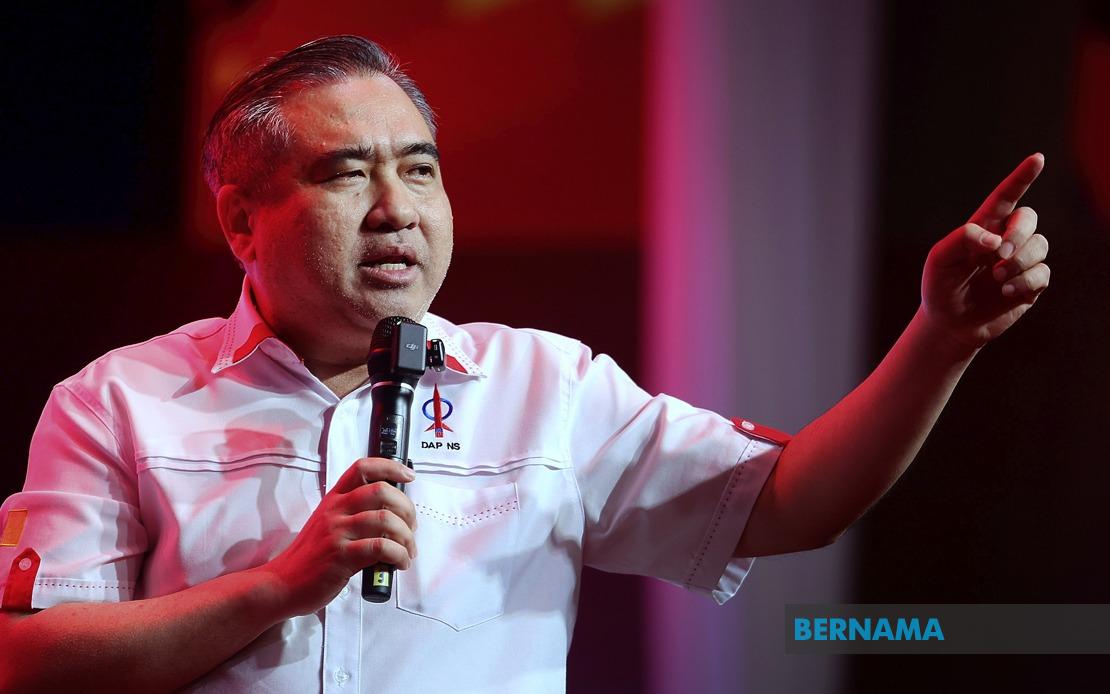
Anthony Loke, the DAP secretary-general and Transport Minister, has articulated a principled approach to the ongoing 16th Negeri Sembilan state election campaign, one that deliberately sidesteps personal attacks in favour of discussing concrete policy offerings. Speaking after a Pakatan Harapan dinner in Seremban on July 19, Loke emphasised that electoral contests must ultimately turn on the substance of what political parties intend to deliver to constituents, rather than devolving into character assassination or partisan mudslinging against individuals.
The decision to eschew personal attacks against Cabinet colleagues reflects both practical governance realities and strategic political calculation. Loke noted that members of the Cabinet meet regularly each week to discharge collective responsibilities, a reality that makes vitriolic campaign language between coalition partners functionally awkward and operationally counterproductive. By maintaining decorum during campaign periods, government ministers preserve the working relationships essential for administering public policy and steering the nation through complex policy challenges. This stance aligns with broader expectations that those holding executive office should model the restraint and professionalism voters deserve from their leaders.
The Transport Minister's commitment also responds directly to explicit guidance from Prime Minister Datuk Seri Anwar Ibrahim, who has advised government office-holders to exercise discipline during election campaigns and refrain from launching attacks on the Federal Government itself. This directive reflects the delicate balance required within Malaysia's current Unity Government arrangement, where coalition partners from different political traditions must cooperate on shared governance while competing in state-level contests. Anwar's guidance underscores that partisan competition, while legitimate, must operate within boundaries that preserve institutional stability and governmental effectiveness.
Loke's personal campaign strategy in Negeri Sembilan demonstrates how these principles translate into concrete electoral conduct. Rather than targeting Foreign Minister Datuk Seri Mohamad Hasan—who represents Barisan Nasional and serves as the coalition's deputy chairman—in the contested Rantau constituency, Loke has deliberately stepped back from that particular battleground. This self-imposed restraint represents a deliberate sacrifice of potential campaign advantages in service of preserving harmony within the broader Unity Government framework. Instead, Loke has concentrated his energies on the Chennah state seat, which he himself contests, and on supporting DAP candidates across the state. Additionally, he has channelled his ministerial platform toward assisting Menteri Besar Datuk Seri Aminuddin Harun's campaign in the Linggi seat.
The Chennah campaign itself illustrates how ministerial office can be leveraged constructively within the bounds of ethical conduct. Loke has rejected criticism suggesting his Cabinet responsibilities have left the constituency neglected, arguing instead that his Transport Ministry position enables him to secure tangible benefits for Chennah residents. These include allocations for implementing Kampung MADANI projects, initiatives designed to enhance living standards across the nation. By channelling government resources and ministerial influence toward constituent welfare, Loke models an approach whereby elected representatives use their formal positions to advance local interests, a practice that distinguishes service-oriented campaigning from mere political opportunism.
Beyond the minister's personal constituency management, Loke has assembled a dedicated full-time team focused specifically on Chennah, ensuring that his ministerial obligations do not translate into reduced constituent service. This organisational structure allows him to maintain responsiveness to local concerns even while shouldering national administrative responsibilities. For Malaysian voters and Southeast Asian observers, this arrangement demonstrates how contemporary politics can accommodate dual roles—executive and legislative—without systematically disadvantaging one at the expense of the other.
The broader context of the Negeri Sembilan election reflects wider trends in Malaysian political competition. With early voting scheduled for July 28 and polling day set for August 1, the state faces a genuine contest between established coalitions. Yet the manner in which this competition is conducted reveals something significant about Malaysia's evolving political culture. Unlike some electoral environments where campaigns devolve into personal attacks and institutional erosion, the emphasis here on policy substance and collegial restraint suggests a maturing political discourse, one where competitive spirit can coexist with institutional respect.
Loke's position carries particular weight given his prominence within DAP and his role as Transport Minister, positions that make his campaign conduct visible and influential across the broader political ecosystem. When a figure of his stature consciously refrains from personal attacks and encourages policy-focused discourse, the message reverberates through party structures and sets expectations for candidate behaviour throughout the state. This leadership-by-example approach can shape campaign tone more effectively than formal directives or written guidelines.
The Unity Government arrangement itself remains a subject of intense scrutiny across Malaysian politics and the broader Southeast Asian region, where coalition governments face similar pressures between maintaining unity and preserving distinct political identities. How effectively parties can compete in electoral contests while maintaining coalition governance demonstrates whether such arrangements possess genuine durability or constitute fragile temporary expedients. Loke's approach suggests that conscious efforts to preserve institutional relationships during campaign periods represent one mechanism through which such coalitions can sustain themselves.
For constituencies like Chennah and across Negeri Sembilan more broadly, the emphasis on policy-driven competition offers potential benefits to voters. When campaigns focus on what parties propose to accomplish rather than on personality-based attacks, constituents gain clearer information about competing visions for development, economic management, and social provision. This transparency serves democratic purposes by enabling more substantive electoral choice based on platform differences rather than character judgments.
The Negeri Sembilan campaign thus presents a case study in how competitive democracy can function within coalition governance frameworks. Loke's deliberate choice to prioritise policy discourse over personal attacks, to preserve cabinet relationships even during electoral competition, and to leverage ministerial office toward constituent benefit rather than campaign advantage, collectively suggests a vision of political competition that respects both democratic contestation and institutional stability. Whether this approach proves decisive in the August 1 voting remains to be seen, but the commitment itself signals important values about how Malaysian politics can evolve.

