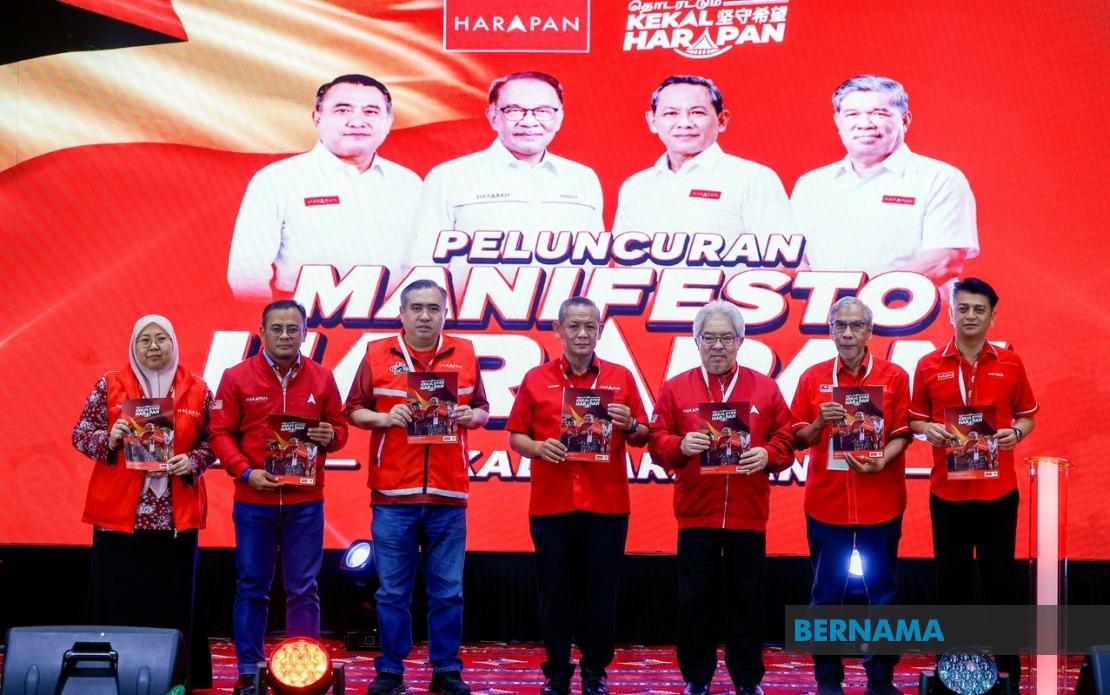
Pakatan Harapan has presented its vision for the next chapter of governance in Negeri Sembilan, with state coalition chairman Datuk Seri Aminuddin Harun drawing a deliberate distinction between the coalition's practical approach and what he characterised as empty political posturing. Speaking at the manifesto launch in Seremban, Aminuddin rejected the notion that PH's promises represent merely aspirational campaign talk, instead framing them as concrete commitments grounded in the party's track record governing the state.
The timing of this rhetorical pivot carries significance for Malaysian politics, where voter cynicism about unfulfilled election promises runs deep. By explicitly separating deliverable commitments from political rhetoric, Aminuddin appears to be responding to widespread public fatigue with overpromising. This distinction matters particularly in Negeri Sembilan, a swing state where voters have demonstrated willingness to shift allegiances based on perceived performance rather than party loyalty.
Aminuddin, who serves simultaneously as Menteri Besar and Linggi state assemblyman, grounded PH's manifesto in the coalition's eight-year tenure in the state. Rather than presenting an entirely new vision, the approach emphasises continuity and incremental improvement. This strategy suggests PH's assessment that its existing track record provides a stronger electoral foundation than bold new promises, a calculation that reflects lessons learned from previous election cycles where ambitious pledges proved difficult to execute.
The manifesto, branded "Negeri Sembilan Kekal Harapan" (Negeri Sembilan Stays With Harapan), consolidates the coalition's priorities into ten key commitments. The numbered structure provides clarity and measurability, implicitly inviting scrutiny of whether each pledge is subsequently fulfilled. This represents a departure from more rhetorical campaign messaging and suggests confidence that existing initiatives resonate sufficiently with voters without embellishment.
For Malaysian voters accustomed to grand campaign pronouncements followed by disappointment, this framing offers a more modest contract. The emphasis on strengthening and enhancing existing programmes rather than launching entirely new initiatives reflects mature governance thinking, yet it also carries political risk. Opponents could characterise such an approach as lacking ambition or suggesting the incumbent coalition has exhausted its ideas.
The five-year timeframe referenced by Aminuddin aligns with Malaysia's standard state assembly term, providing a realistic window for implementation. By explicitly dedicating this period to ensuring existing plans become reality rather than chasing new initiatives, PH acknowledges resource constraints and the complexity of state administration. This pragmatism, though less exciting than transformative pledges, may appeal to voters seeking stability and competent management.
Aminuddin's emphasis on building "a strong foundation for Negeri Sembilan that can benefit future generations" extends the political timeframe beyond the immediate electoral cycle. This framing attempts to elevate the discussion from short-term political advantage to longer-term state development, positioning PH as thinking systemically about intergenerational impact. However, it also raises expectations about whether promised improvements will demonstrably enhance living standards for citizens in measurable ways.
The manifesto launch represents a calculated response to evolving voter expectations across Malaysia. As the country becomes increasingly politically mature, campaign strategies emphasising concrete delivery have begun outperforming those built entirely on vision and rhetoric. Negeri Sembilan voters, having experienced PH governance directly, can evaluate promises against demonstrated performance in ways voters in states lacking this experience cannot.
This approach also carries implications for how Pakatan Harapan positions itself nationally. If the Negeri Sembilan manifesto's emphasis on deliverables and existing achievements resonates positively with voters, it could influence the coalition's messaging in future electoral contests at state and federal levels. Conversely, if voters perceive the strategy as unambitious or if PH fails to deliver on even its modest commitments, the approach could backfire by suggesting the coalition lacks vision and dynamism.
The distinction Aminuddin draws between deliverable commitments and political rhetoric ultimately reflects contemporary Malaysian political dynamics. Voters increasingly scrutinise whether promises materialise, particularly regarding essential services, infrastructure, and economic opportunity. By anchoring its campaign in existing achievements and incremental improvements rather than transformative new programmes, PH attempts to thread a needle between demonstrating competence and addressing public aspirations.
For observers tracking Malaysia's political evolution, the Negeri Sembilan manifesto serves as a bellwether of shifting campaign strategies. The move away from purely aspirational messaging toward accountability-focused platforms suggests political culture maturation, though genuine assessment of whether this approach succeeds in Negeri Sembilan will depend on voter reception and PH's ability to execute promised improvements over the coming term.

