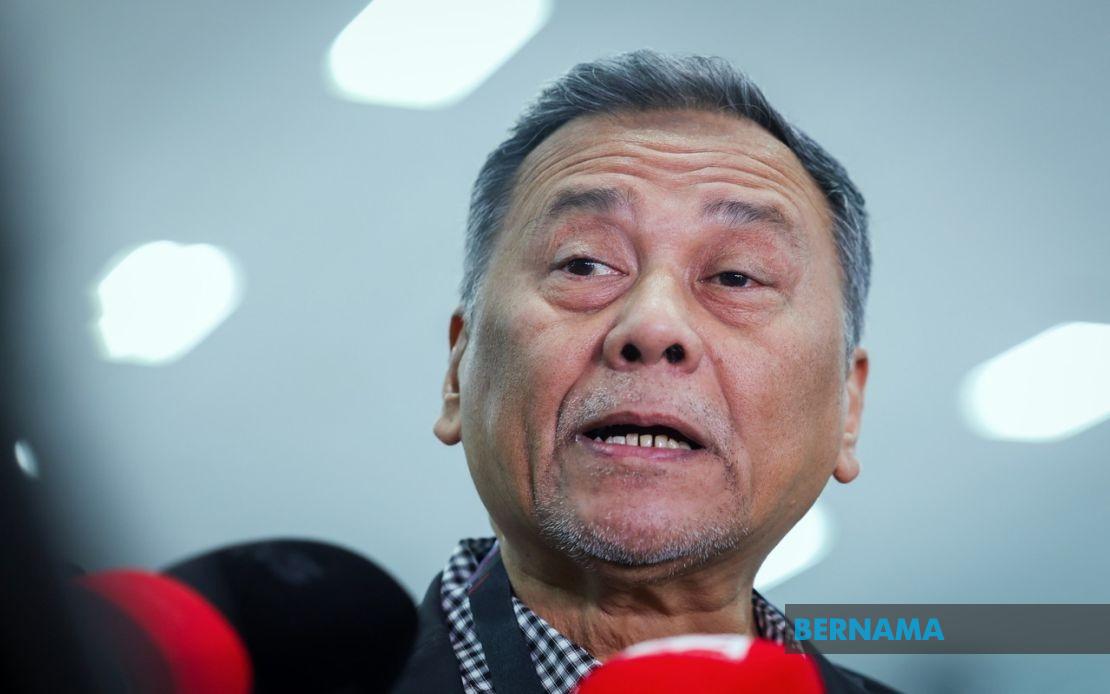
The Election Commission has given the Negeri Sembilan state election a clean bill of health on corruption matters, reporting that it has not received any official complaints concerning vote-buying or bribery during the campaign period so far. Election Commission chairman Datuk Seri Ramlan Harun made this statement during an inspection of voting preparations in Tampin, offering reassurance ahead of tomorrow's polls that the electoral process has proceeded without serious misconduct allegations from any quarter.
However, the commission's clarification came with an important caveat about institutional responsibility. Ramlan explained that the Election Commission's remit does not extend to investigating corruption allegations, which remain the purview of the Malaysian Anti-Corruption Commission and the Royal Malaysian Police. He urged any party with credible information about money politics to lodge formal complaints directly with these agencies rather than with the commission itself, effectively establishing clear jurisdictional boundaries between electoral administration and anti-corruption enforcement.
While the absence of major corruption complaints represents a positive indicator for electoral integrity, the commission has nonetheless documented a significant volume of minor violations. Throughout the campaign period, which began on July 18, the Election Commission has recorded 267 election offences and taken action against those responsible. These breaches likely include technical violations of campaign rules and administrative oversights rather than serious misconduct, but their frequency suggests that maintaining clean elections requires constant vigilance and enforcement.
The Negeri Sembilan polls represent an important test of electoral management in Malaysia's states. With 36 State Legislative Assembly seats at stake and nearly 860,000 registered voters participating, the election draws considerable attention from observers monitoring democratic standards. The scale of the operation underscores the logistical complexity of managing elections and the coordination required among multiple agencies to ensure procedural integrity throughout the voting process.
The commission has mobilised substantial resources to oversee tomorrow's voting. A total of 15,344 election officers have been deployed across the state to ensure smooth operations at polling stations. This deployment reflects the commission's commitment to maintaining order and facilitating voter participation, with officers positioned to manage queue flows, verify voter eligibility, and assist in the administration of ballots. The voter cohort includes 859,760 registered voters on the standard rolls, plus an additional 7,391 postal voters who will cast ballots through alternative arrangements.
Operational readiness has been thoroughly assessed, with Ramlan expressing confidence that polling stations throughout Negeri Sembilan are prepared to receive voters from 8 am tomorrow. The commission has already conducted inspections of ballot box security procedures at the Tampin Perdana Hall and similar checks are underway at vote counting centres statewide. These precautions aim to prevent ballot tampering and ensure that every vote cast is accurately recorded and counted.
The commission has established a timeline for results release that balances timeliness with accuracy. Preliminary results are expected to emerge as early as 10 pm tomorrow evening, with the final consolidated results anticipated before midnight. This schedule allows time for proper counting procedures without compromising the transparency voters expect from democratic elections. The speed of results reporting has become an important measure of electoral efficiency in Malaysia, signalling to the public and international observers that the process remains controlled and accountable.
For Malaysian voters and political stakeholders, the Election Commission's preparedness statement carries broader significance beyond Negeri Sembilan's immediate context. State elections often serve as indicators of electoral health and party performance ahead of federal contests. A smoothly executed election in Negeri Sembilan, free from major corruption allegations, would reinforce confidence in Malaysia's electoral machinery at a time when maintaining democratic legitimacy remains crucial for national stability and regional standing.
The commission's explicit guidance directing corruption complaints to law enforcement agencies reflects evolving best practices in electoral administration. By clearly separating the roles of electoral managers and anti-corruption investigators, Malaysia's system acknowledges that detecting sophisticated money politics often requires investigative capabilities that electoral commissions do not typically possess. This institutional clarity also helps prevent accusations that election administrators are themselves compromised or complicit in violations they would theoretically investigate.
Despite the absence of major corruption complaints so far, vigilance must continue throughout tomorrow's voting and tallying processes. The 267 minor offences recorded during the campaign period remind stakeholders that violations occur regularly and require consistent enforcement. Election observers, party representatives, and concerned citizens maintain important monitoring roles that complement official oversight mechanisms, particularly in identifying irregularities that might not otherwise come to official attention.
The Negeri Sembilan election ultimately tests whether Malaysia's electoral framework can deliver clean, orderly, and legitimate results. The Election Commission's preparedness across logistical, security, and administrative dimensions provides grounds for confidence that tomorrow's voting will proceed as planned. However, the true measure of success lies not merely in the absence of alleged wrongdoing but in the public's perception that the results genuinely reflect the democratic choices of voters, a perception that depends on both institutional performance and transparent communication of how the election was managed.

