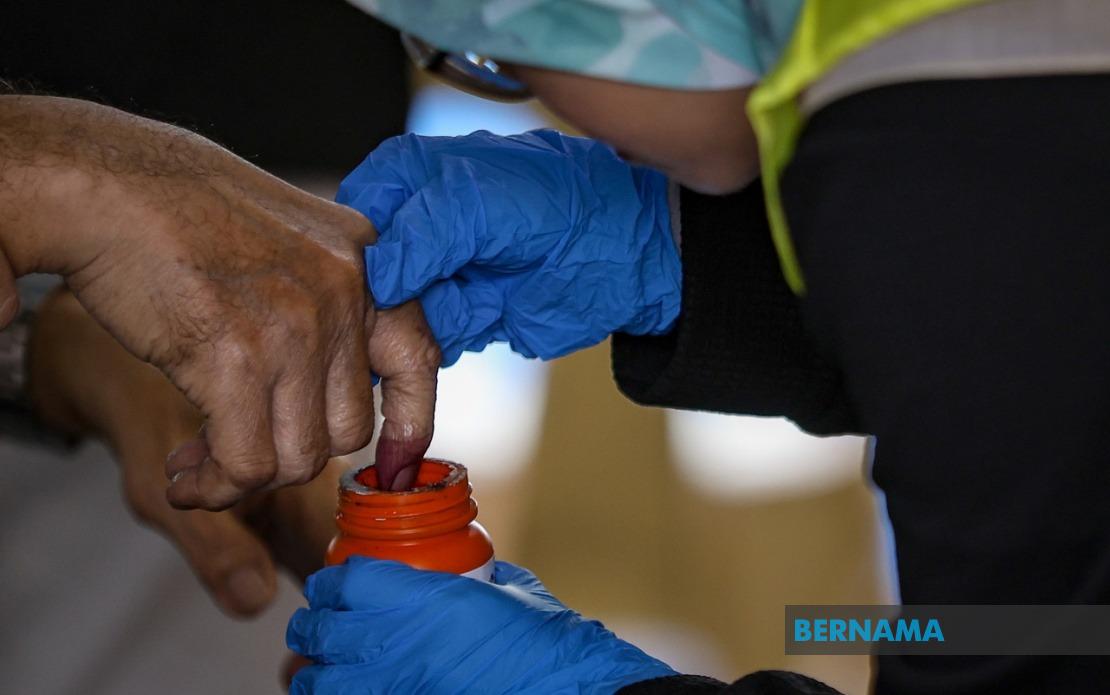
Ahead of Negeri Sembilan's 16th state election tomorrow, the Election Commission has issued a comprehensive set of voting guidelines designed to streamline the electoral process while maintaining the integrity of the ballot. Speaking in Seremban on July 31, EC secretary Datuk Khairul Shahril Idris underscored the importance of voters adhering to several key protocols, particularly regarding the use of technology and campaign materials within and around polling stations.
The EC has encouraged voters to consult the MySPR Semak application to identify their personalised voting times, a move intended to distribute voter traffic more evenly across the polling day and reduce bottlenecks at individual centres. While voters retain the flexibility to cast their ballots at any point during the extended eight-hour window—from 8 am to 6 pm—following the suggested appointment slots represents a practical means of ensuring smoother operations. The advisory reflects the Commission's ongoing effort to balance accessibility with operational efficiency, a challenge that has become increasingly relevant as Malaysia's electoral infrastructure adapts to digital-era demands.
A critical restriction announced concerns the prohibition of mobile devices within polling channels themselves. Voters are required to deposit their phones and other electronic gadgets in designated storage areas before entering the voting booth, with retrieval permitted only after they have completed their vote. This measure aims to prevent clandestine photography of ballots or voting procedures, thereby protecting the confidentiality of the ballot and guarding against potential vote-buying schemes or voter intimidation. The EC emphasised that this new procedure, while adding an extra step to the voting workflow, serves a protective function essential to democratic integrity.
Voters attending tomorrow's election must bring valid identification documents, which election officials will verify before allowing them to proceed. Datuk Khairul Shahril cautioned voters against relinquishing their identity cards to anyone other than properly authorised election personnel, a reminder that underscores the potential for identity fraud or irregularities if documentation is mishandled. This guidance reflects broader concerns across Southeast Asia about electoral security and the importance of maintaining rigorous authentication protocols.
Dress codes and campaign material restrictions represent another significant dimension of the EC's voting-day regulations. Any individual entering a polling centre—whether a voter, candidate, or election worker—is prohibited from wearing clothing, badges, or face coverings bearing the names, logos, symbols, or images of political parties or candidates. Similarly, the transportation or display of campaign literature, slogans, or promotional materials inside or immediately around polling centres constitutes a violation. The EC has made clear that non-compliance with these rules may result in voters being denied entry to polling stations, a deterrent intended to ensure that campaign messaging does not influence voters at the precise moment of decision-making.
The restrictions on campaigning extend beyond the polling venue itself. All campaign activities, encompassing traditional canvassing and digital outreach via social media platforms, must cease at precisely 11.59 pm today, according to Electoral Commission guidance. Political parties and candidates are furthermore barred from operating booth structures on polling day, with violations constituting offences under the Election Offences Act 1954. These limitations reflect the legal framework's underlying principle that election day itself must be insulated from partisan messaging, preserving what voting authorities view as a sacred democratic moment free from external pressure or persuasion.
Logistically, the election tomorrow will involve 15,344 trained polling officials stationed across 401 polling centres throughout Negeri Sembilan. This substantial deployment of human resources reflects the Commission's commitment to maintaining high standards of conduct and ensuring that every voter receives consistent, professional service regardless of location. The sheer scale of this operation—requiring coordination across a geographically dispersed state—speaks to the administrative complexity underlying seemingly straightforward electoral processes.
The eligible voter roll for tomorrow's contest encompasses 859,760 ordinary voters across Negeri Sembilan's 36 state constituencies. This figure represents the total pool of citizens entitled to participate in the state election, though notably, an earlier group has already voted. Some 16,467 security personnel and their spouses participated in early voting on Tuesday, a provision that recognises the operational demands placed on uniformed services during election periods. The inclusion of security staff in early voting mechanisms is a common practice across democratic systems, acknowledging that those tasked with maintaining order during elections themselves require accommodation to exercise their voting rights.
For Malaysian and Southeast Asian observers, this election in Negeri Sembilan carries broader significance beyond the state itself. The regulatory framework and operational procedures being implemented tomorrow reflect evolving regional standards for conducting transparent, secure elections in an era of technological change and heightened scrutiny. The emphasis on digital tools like MySPR Semak, combined with analogue safeguards such as physical phone storage, illustrates how electoral authorities are attempting to harness technology's efficiencies while mitigating risks to ballot secrecy. As regional democracies grapple with balancing participation, security, and electoral integrity, the operational lessons from Negeri Sembilan's election may prove instructive for policymakers across Southeast Asia navigating similar challenges.

