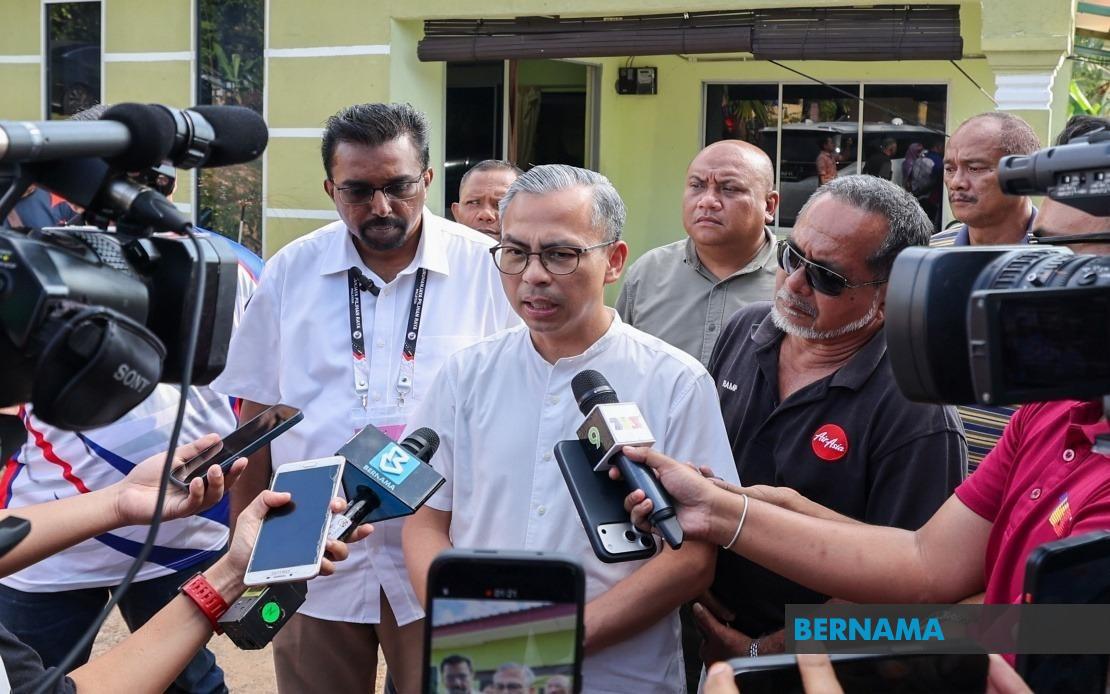
Social media has remained largely orderly during the Negeri Sembilan state election campaign, according to Communications Minister Datuk Seri Fahmi Fadzil, who reported that the Malaysian Communications and Multimedia Commission (MCMC) has received just 16 complaints since campaigning commenced on July 17. Speaking at the Ziarah Kasih MADANI programme in Jempol on Wednesday, Fahmi indicated the situation appears manageable at this midpoint of the campaign cycle, though he acknowledged the volatile period ahead as polling day approaches on August 1.
Of the 16 complaints lodged with the communications regulator, the majority stemmed from telecommunications infrastructure shortcomings rather than deliberate election-related violations. Fourteen complaints addressed network connectivity issues affecting residents in campaign areas, while only two involved fraudulent social media accounts impersonating legitimate users or entities. This breakdown suggests that technical deficiencies in Malaysia's digital infrastructure remain a more pressing concern than coordinated disinformation efforts during this electoral cycle, at least in the early campaign phase.
Fahmi issued a pointed reminder to voters about their role in maintaining election integrity online. The public should actively report any content suspected of breaching election regulations or violating platform community standards directly to the social media companies hosting the material, he instructed. Only if operators fail to respond appropriately should complainants escalate matters to the MCMC, creating a tiered enforcement mechanism that distributes accountability across multiple stakeholders rather than burdening the government regulator alone.
With six days of campaigning already concluded and approximately one week remaining before voting, Fahmi noted the statistical trend that typically emerges in Malaysia's electoral contests. The final 72 to 96 hours before polls consistently witness a dramatic multiplication of online content volume, he explained, as candidates, party machinery, and grassroots supporters mobilise their digital presence in a final push for votes. This compressed timeline concentrates months of campaign messaging into days, creating optimal conditions for misinformation to spread rapidly through networks before fact-checkers can intervene.
The minister's expressed concern about false information during the closing phase reflects broader anxieties within Malaysian governance circles about election-related disinformation. Previous electoral cycles, particularly the 2022 general election and subsequent state contests, have demonstrated how misleading narratives—from false vote tallies to fabricated candidate statements—can propagate at scale through social platforms before authentic corrections gain traction. Fahmi's advance warning signals the MCMC's preparedness to intensify monitoring and rapid-response capabilities during the critical final days.
Beyond campaign-related concerns, Fahmi used his visit to Felda Palong 1 to highlight another digital equity challenge affecting rural Malaysia: inconsistent internet connectivity along major access roads. His observation that connectivity gaps existed primarily along main thoroughfares serving the settlement, rather than within residential areas themselves, suggests that infrastructure planners have prioritised internal community networks over transport corridors. This creates a peculiar inversion where residents driving to health clinics or markets may lose connectivity precisely when they most need it for emergencies or navigation.
Fahmi characterised reliable internet access as a fundamental entitlement equivalent to road infrastructure itself, declaring that wherever a road exists, digital connectivity should follow. This principle-based framing elevates broadband from a convenience to a basic service comparable to electricity or water supply, reflecting global standards where developed nations treat broadband as essential infrastructure. Malaysia's aspiration toward high-income status requires closing these rural access gaps, particularly as government services increasingly migrate online and remote education depends on stable connectivity.
Telecommunications companies signed a network-sharing memorandum of understanding in the previous year, theoretically enabling operators to coordinate infrastructure deployment and eliminate redundant tower construction. However, implementation has lagged substantially, Fahmi acknowledged, indicating that contractual agreements alone cannot overcome competitive incentives and coordination challenges in Malaysia's telecom sector. The slow progress suggests that regulatory pressure or financial incentives may be necessary to accelerate deployment timelines beyond current trajectories.
Three complementary solutions have emerged as viable pathways forward. New telecommunications tower construction remains essential but expensive and time-consuming, involving land acquisition, environmental approvals, and technical installation. Optimising existing infrastructure through technology upgrades can improve capacity and coverage with lower capital requirements but faces diminishing returns. Satellite services such as Starlink represent a potentially transformative interim solution, particularly for remote areas where ground infrastructure deployment remains economically unviable, though regulatory frameworks governing satellite broadband in Malaysia remain nascent.
Fahmi separately directed telecommunications operators to strengthen their customer complaint handling systems, incorporating artificial intelligence tools that enable users to independently track their service issues through the resolution process. This technological intervention acknowledges that frustration among customers often stems less from problems themselves than from information opacity—customers left uncertain whether their issue has been logged, prioritised, or resolved. AI-powered transparency systems could convert complaint processes from opaque black boxes into trackable workflows, potentially reducing escalations to regulatory authorities.
The Negeri Sembilan campaign provides a controlled environment for testing improved election communication standards and digital infrastructure monitoring ahead of the next general election anticipated in 2024. The relatively low complaint volume, heavily weighted toward technical rather than malicious issues, suggests that Malaysia's online election environment has matured somewhat since previous contests marked by more pronounced misinformation campaigns. Nevertheless, the final week remains unpredictable, and Fahmi's preparatory warnings indicate authorities recognise vulnerabilities that could emerge as campaign intensity peaks.
Early voting scheduled for July 28 will provide the MCMC with preliminary data on whether observed campaign patterns hold stable or whether the predicted surge materialises as the final countdown begins. Simultaneously, progress on telecommunications infrastructure improvements will determine whether rural voters entering August have resolved their connectivity frustrations or remain dependent on patchy networks that undermine their ability to access campaign information and civic resources online.

