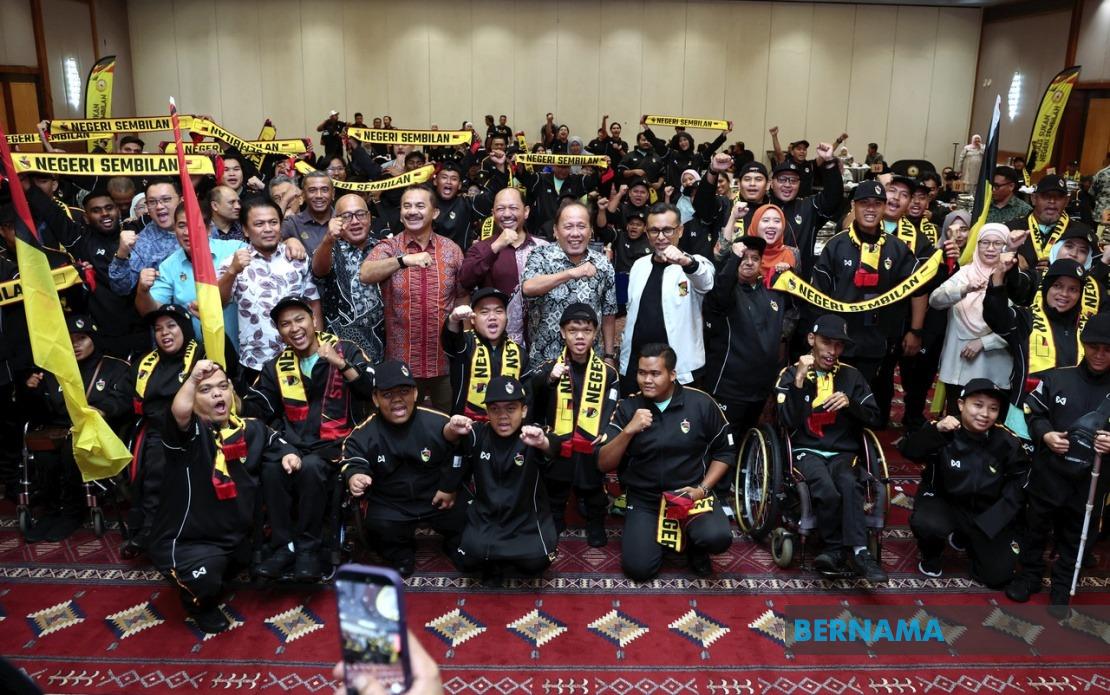
Negeri Sembilan has unveiled an ambitious target of 12 gold medals as it prepares to field 80 para-athletes at the 2026 Para Malaysia Games in Selangor, which commences on September 5. The goal represents a deliberate strategy to bounce back from disappointing results recorded at the recently concluded SUKMA 2026, which wrapped up on Monday. Menteri Besar Datuk Ismail Lasim articulated the significance of this objective during remarks made at a flag handover ceremony for the Chef de Mission and Team Managers, framing the medal target not merely as a numerical aspiration but as a reflection of the rigorous training regimen and disciplined preparation undertaken by the state's athletes over recent months.
The context surrounding this announcement reveals a notable decline in Negeri Sembilan's performance at the mainstream SUKMA Games held this year. At SUKMA 2026, the state contingent secured only seven gold medals from a total haul of 48 medals, a significant regression compared to their achievement two years prior when they garnered 19 gold medals alongside 56 total medals. This comparative slump has understandably intensified focus on the upcoming para-sports competition as an opportunity for the state to reassert its competitive standing within Malaysia's sporting landscape.
Ismail Lasim's remarks conveyed confidence in the capability of Negeri Sembilan's para-athletes to realise the 12-gold-medal target, emphasising that the objective represents an attainable milestone grounded in realistic assessment rather than speculative ambition. He stressed that individual competitors must demonstrate maximum effort and commitment to showcase their genuine abilities, with success benefiting both personal achievement and collective state pride. The Menteri Besar characterised para-athletes as individuals possessing exceptional determination and resilience, suggesting that outstanding performances at Para SUKMA 2026 could restore the reputation of the state contingent following the recent setback at the regular Games.
Negeri Sembilan's historical performance at para-sports competitions provides a measured baseline for evaluating the feasibility of the current gold-medal target. At the 2024 Para SUKMA Games held in Sarawak, the state's para-athletes delivered a strong showing, accumulating 14 gold medals alongside 19 silver and 20 bronze medals. The transition from a 14-gold-medal outcome in 2024 to a target of 12 golds in 2026 represents a modest adjustment, though the reduction may reflect realistic appraisal of competitive dynamics or resource constraints rather than diminished ambition.
To incentivise performance and recognise achievement, Negeri Sembilan has committed to distributing rewards to medal-winning athletes at Para SUKMA 2026. Such financial incentive schemes have become standard practice across Malaysian state governments and serve multiple functions: they acknowledge athlete contributions, encourage peak performance, and signal governmental commitment to para-sports development. The provision of monetary rewards demonstrates that the state views the upcoming Games not simply as a sporting event but as a meaningful platform for advancing inclusive athletic competition and recognising talent among persons with disabilities.
The presence of key stakeholders at the flag handover ceremony underscored institutional commitment to the para-sports initiative. Datuk Mustapha Nagoor, chairman of the State Youth and Sports Development Action Committee, and Marhizah Abdul Razak, director of Negeri Sembilan Sports Council, attended the proceedings, their presence affirming that para-sports development commands attention at multiple governance levels within the state administration. This multi-institutional engagement suggests that preparation for Para SUKMA 2026 has received substantive planning and resource allocation.
From a broader Malaysian perspective, the 2026 Para SUKMA Games in Selangor represent a significant occasion for showcasing para-sports excellence across the nation. As one of Malaysia's more developed states with established sports infrastructure, Selangor's hosting of this event carries implications for the visibility and profile of competitive para-sports throughout the country. Negeri Sembilan's involvement and stated ambitions contribute to the overall competitive narrative of the Games, with each state's performance collectively demonstrating the depth of talent and commitment to inclusive athletics within Malaysia's sporting ecosystem.
The scheduling of Para SUKMA 2026 for early September 2025 provides competitors with several months of preparation time from the current period. This temporal spacing allows athletes to recover from exertions at the regular SUKMA Games while simultaneously conditioning themselves specifically for para-sports competition. The interval between the two major Games events—with SUKMA concluding in late August and Para SUKMA commencing in early September—creates a compressed competitive schedule that demands careful management of athlete welfare and training cycles.
Negeri Sembilan's articulated strategy reflects evolving recognition within Malaysian governance circles of para-sports' significance as both a competitive domain and a vehicle for advancing social inclusion. By establishing measurable targets, committing resources, and engaging high-level political leadership, the state administration demonstrates institutional normalisation of para-athletic competition as a legitimate and valued component of the broader sports ecosystem. This institutionalisation contrasts with historical periods when para-sports received peripheral attention and limited investment, signalling a substantive shift in policy priorities and societal values regarding persons with disabilities' participation in organised sporting competition.

