Negeri Sembilan FC is setting an ambitious target of securing a top-five berth in the Malaysian Super League this season, representing a meaningful step up from their seventh-place finish in the previous campaign. The announcement comes as the club unveiled its revamped squad at Negeri Sembilan Football Day in Seremban, signalling a fresh chapter for the Menteri Besar's Cup-winning club in pursuit of sustained competitive success in the domestic league.
Datuk Ismail Lasim, the club's chairman, attributed the heightened expectations to the fresh energy and resolve injected by the management and coaching structure now in place. The leadership team believes the appointment of new personnel and strategic changes to the playing staff can translate into measurable improvements across the season. Nevertheless, Lasim cautioned that judging the team's true potential remains premature at this early stage, emphasizing instead the need for consistent, match-by-match reliability as the club navigates a crowded and competitive league environment where margins between success and failure remain razor-thin.
Financial stability has emerged as a cornerstone of the club's strategy moving forward. During his remarks to media representatives, Lasim underscored the importance of maintaining robust financial health within the organization, arguing that sound fiscal management enables the club to retain quality players and prevent disruption caused by the loss of key personnel to rival sides. Beyond fiscal matters, he stressed the critical importance of squad cohesion, warning against internal tensions that could undermine performance and emphasizing that genuine unity and cooperative spirit must permeate all levels of the team structure.
The centerpiece of NSFC's recruitment drive is Spanish head coach Daniel Gimenez Alcaniz, whose appointment represents a significant continental influence on the club's tactical direction and training philosophy. Complementing this managerial appointment is a carefully assembled contingent of international players designed to elevate the squad's technical and competitive standards. South Korean midfielder Park Yi-Young joins the club alongside four Japanese players: Takumi Sasaki, Kei Oshiro, Yuichi Hirano, and Mio Tsuneyasu, reflecting a strategic focus on Asian markets where scouting networks and player familiarity have proved fruitful. Bosnian-Herzegovinian defender Jovan Motika rounds out the foreign contingent, bringing European defensive experience to what the club hopes will be a more competitive backline.
The Menправить Besar of Negeri Sembilan echoed the chairman's sentiments regarding supporter engagement, appealing for continued fan backing and stadium attendance throughout the season. The Negeri Sembilan faithful have historically provided strong support, and club officials recognize that a vocal, energetic home environment can serve as a tangible tactical advantage, particularly in tightly contested matches where psychological momentum shifts frequently.
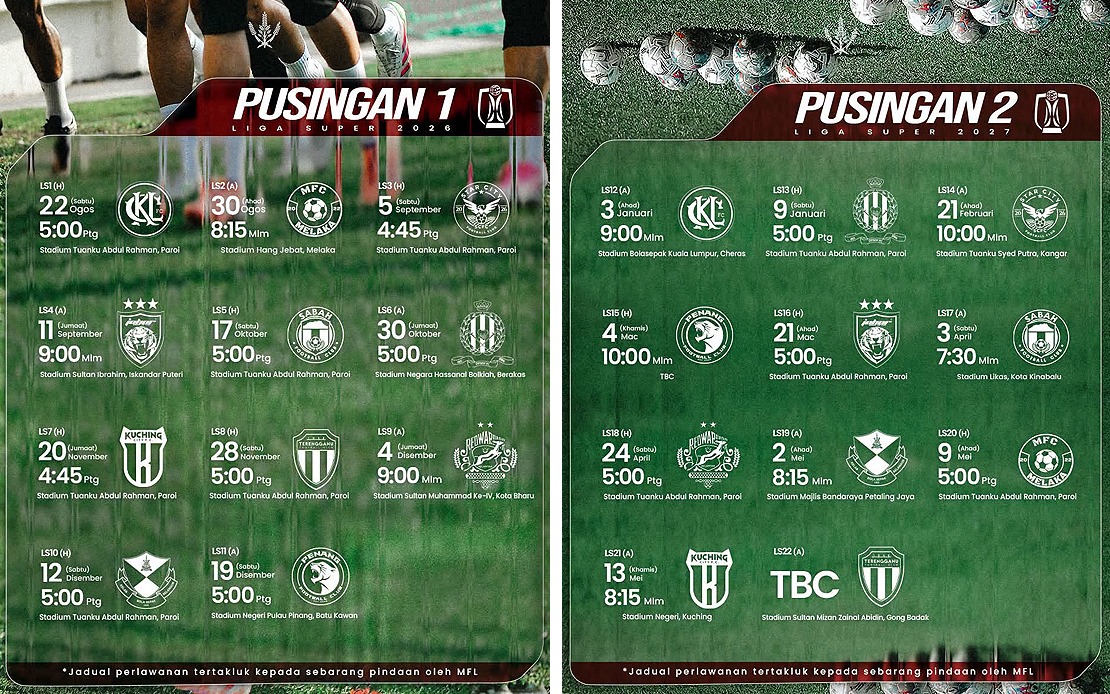
However, logistical and environmental challenges pose unexpected complications for the team's preparation and performance management this season. The Super League schedule includes a notable allocation of afternoon kick-offs, a scheduling reality that Lasim identified as a significant concern requiring careful navigation. The combination of Malaysian heat during daytime hours, player fatigue management when matches fall during peak afternoon temperatures, and the practical difficulties posed by fixture scheduling that forces afternoon slots create a unique set of pressures distinct from evening or night matches where climatic conditions favour more conventional footballing rhythms.
The afternoon fixture phenomenon carries implications beyond simple comfort considerations. Player conditioning protocols must account for the additional cardiovascular stress imposed by competing in elevated temperatures during the hottest parts of the day. Recovery windows between matches may be compressed if afternoon fixtures dominate the schedule, potentially increasing injury risk across the season. Furthermore, tactical flexibility may be constrained by the need to manage hydration, energy expenditure, and substitution patterns differently than in cooler evening environments, requiring coaching staff to develop match-management strategies specifically calibrated for these conditions.
For Malaysian football observers, NSFC's ambitions reflect the broader competitive intensity of the Super League, where multiple clubs harbour similar aspirations of consolidating positions in the upper reaches of the standings. The league's quality has demonstrably improved in recent seasons, with sustained investment in foreign coaching expertise and international player recruitment becoming increasingly commonplace among serious contenders. Negeri Sembilan's approach mirrors strategies deployed successfully by other Super League aspirants, suggesting that the formula of experienced foreign management combined with carefully selected international players has become almost mandatory for clubs targeting sustained competitiveness.
The path to a top-five finish will demand flawless execution across multiple dimensions: tactical coherence under Gimenez Alcaniz's direction, rapid integration of foreign players into the club's playing culture, injury avoidance throughout a congested fixture list, and sustained motivation through inevitable phases of the season where results plateau or momentum stalls. Historical precedent suggests that clubs achieving rapid turnarounds typically possess exceptional depth across the squad, ensuring that unavoidable absences through injury or suspension do not derail overall seasonal trajectories.
For regional observers across Southeast Asia, Negeri Sembilan's competitive repositioning demonstrates the increasing sophistication of Malaysian football's talent acquisition strategies. The deliberate recruitment of Japanese players, in particular, reflects broader regional trends where technical players from developed East Asian football systems attract interest from aspiring Malaysian clubs. The appointment of European coaching expertise signals confidence in the value of continental tactical frameworks, even as clubs simultaneously integrate Asian player profiles known for technical precision and work ethic.
The upcoming months will reveal whether the club's investment in fresh personnel and strategic direction translates into tangible league improvement. The top-five target, while ambitious given the field's competitive depth, represents a realistic aspiration if key personnel settle quickly and the coaching staff successfully synthesizes the diverse playing styles and backgrounds represented in the expanded squad. For Negeri Sembilan supporters and the broader Malaysian football community, this season offers a genuine test of whether carefully executed recruitment and managerial change can consistently deliver improved performance in a league where financial resources, foreign expertise, and domestic talent increasingly determine which clubs ascend and which stagnate.

