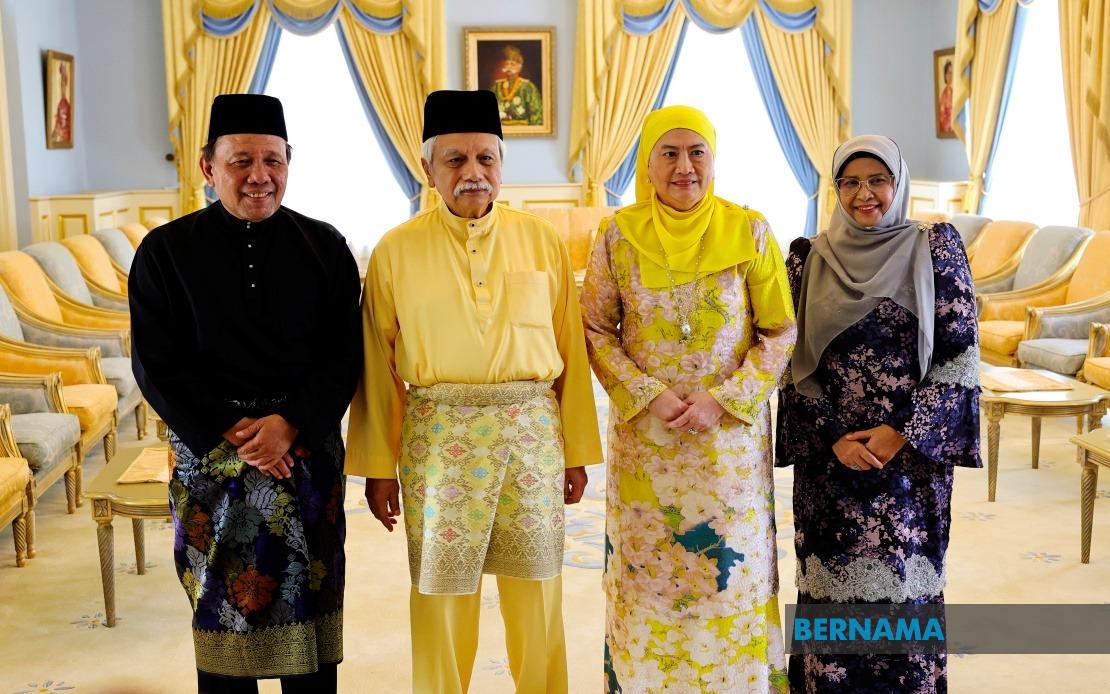
Datuk Ismail Lasim took the oath of office as Negeri Sembilan's new Menteri Besar in a ceremony held at Istana Besar Seri Menanti before Yang Dipertuan Besar Tuanku Muhriz Tuanku Munawir, formally establishing his administration's governance mandate in the state. The Juasseh assemblyman's appointment marks a fresh chapter for the state administration, which will now operate under his leadership following the monarch's consent and formal investiture.
In his first major public statement following the swearing-in, Lasim outlined a vision centred on deepening the relationship between civil governance and the state's traditional institutions. He emphasised that protecting and promoting the royal institution represents not merely a political obligation but a shared responsibility that extends to every citizen within Negeri Sembilan. This framing positions the monarchy as integral to the state's identity rather than as a ceremonial fixture, suggesting that institutional respect underpins the legitimacy of state administration itself.
The new Menteri Besar articulated a two-pronged approach to fulfilling this responsibility. Citizens must first develop genuine understanding of Negeri Sembilan's distinctive customs and traditions, which are rooted in the state's Minangkabau heritage and historical governance systems. Second, such understanding must translate into active honouring and upholding of the royal institution through official policies and public conduct. Lasim characterised this dual commitment as foundational to maintaining the harmony essential for effective governance.
Lasim highlighted conflict minimisation as a key operational principle, suggesting that the state administration will prioritise resolving disputes and addressing grievances through mechanisms that respect both modern administrative requirements and traditional protocols. This approach acknowledges ongoing tensions that sometimes arise between constitutional monarchy frameworks and contemporary governance demands, positioning the new administration as a potential mediator between institutional expectations and practical policy implementation. By framing conflict resolution as part of civic duty, Lasim signals an inclusive approach rather than dismissive attitudes toward complaints or concerns.
The Menteri Besar's commitment to the royal institution aligns closely with his broader administrative philosophy, which prioritises people's welfare and state stability. Rather than presenting these as competing priorities, Lasim suggests that institutional preservation and development-oriented governance are complementary. This integration appeals to diverse constituencies—those concerned with preserving Negeri Sembilan's cultural heritage alongside those focused on economic progress and social services.
A significant component of Lasim's inaugural address concerned his administration's relationship with Malaysia's federal government and the broader political coalition structure. He reaffirmed that Barisan Nasional, which holds power in Negeri Sembilan, remains a constituent member of the Unity Government at the federal level. This positioning is strategically important, as it ensures the state government operates within the broader national political framework rather than in isolation or opposition, potentially facilitating resource allocation and policy coordination.
Lasim explicitly stated that maintaining cooperation with Kuala Lumpur's federal administration is neither unusual nor problematic, despite ideological or tactical variations between state and federal levels. This pragmatism suggests his administration will prioritise functional governance relationships over partisan positioning, which could enhance Negeri Sembilan's capacity to implement federal programmes and secure funding for state-level initiatives. For Malaysian businesses and investors, this stability in federal-state relations typically reduces policy uncertainty and administrative friction.
Regarding inherited policies from the previous administration, Lasim adopted a continuity-focused stance rather than pursuing wholesale reform or reversal. He argued that successful programmes benefiting the population deserve preservation and further refinement, regardless of which administration introduced them. This approach provides policy stability for ongoing initiatives while allowing his administration space to introduce modifications and new directions where deemed necessary. Public sector workers and contractors involved in ongoing projects should find reassurance in this commitment to preventing disruptive policy discontinuity.
Lasim's assertion that good policies transcend partisan origin reflects mature governance thinking, particularly valuable in Negeri Sembilan where political transitions have occasionally prompted abrupt policy shifts. By anchoring decisions in outcomes for ordinary citizens rather than partisan credit, he positions the administration as people-centred rather than politics-centred. This framing builds credibility with the electorate and civil service alike, suggesting competence and pragmatism rather than ideological rigidity.
The confluence of these commitments—to institutional preservation, federal cooperation, and evidence-based policy continuity—sketches a conservative but functional administrative vision. Lasim presents himself as a stabilising force committed to managing Negeri Sembilan through existing frameworks and relationships rather than pursuing transformative change. For a state historically dependent on federal support and possessing significant cultural significance due to its unique Minangkabau governance traditions, such an approach offers predictability and reduces risks of destabilising conflict between traditional authorities and modern administration.

