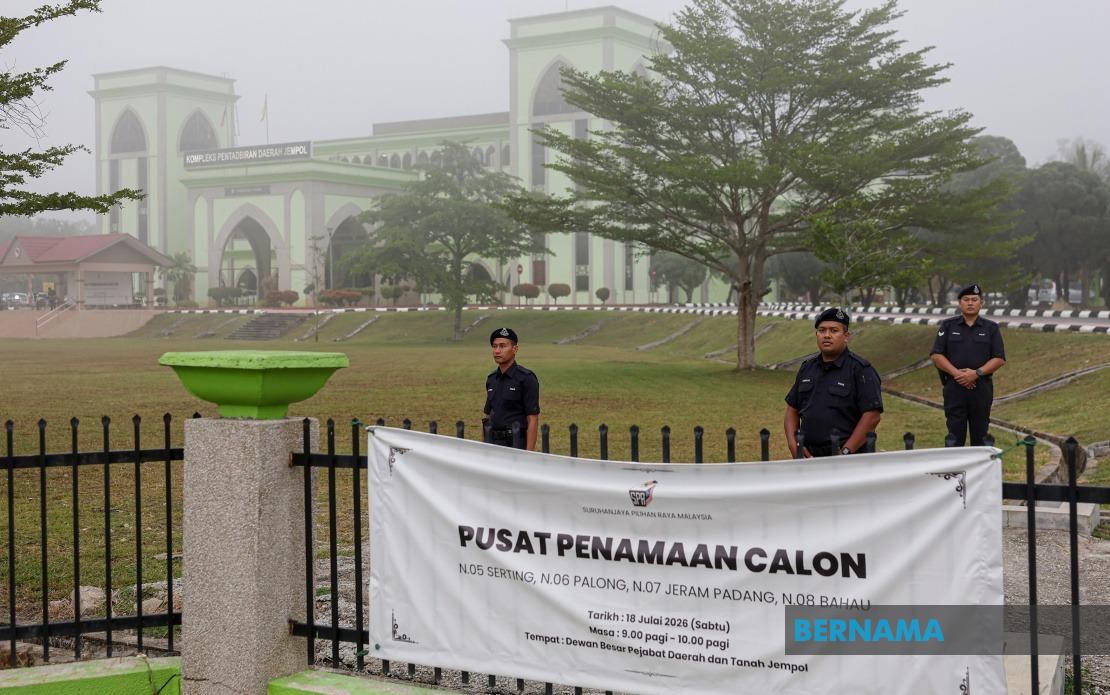
All eight nomination centres across Negeri Sembilan commenced operations at 9 am on July 18 to receive candidate submissions for the 16th state election, marking the formal beginning of a pivotal electoral contest that will determine the composition of the state legislature. The one-hour nomination window, concluding at 10 am, allowed returning officers to verify documentation and eligibility before announcing the final roster of contenders later that morning. The carefully orchestrated timing reflects the Election Commission's commitment to a transparent and orderly transition process.
The campaign period has been scheduled to run for 14 consecutive days, commencing immediately following the official declaration of eligible candidates and extending until 11:59 pm on July 31. This fortnight allows competing coalitions and independent candidates to mobilise support across the seven districts of Negeri Sembilan, though the compressed timeframe presents organisational challenges for ground-level campaigning. The tight calendar reflects efforts to complete the electoral cycle expeditiously while maintaining administrative standards.
Weather observations indicated predominantly favourable atmospheric conditions throughout Negeri Sembilan on nomination day, reducing potential disruptions to the nomination process. Clear skies and moderate temperatures across all districts facilitated voter movement and official proceedings at the eight centres, which had been strategically positioned to serve the state's dispersed population. Such meteorological cooperation, while routine, remains significant for ensuring smooth logistics in electoral operations.
The state police apparatus deployed substantial resources to safeguard the nomination process and broader electoral integrity. Datuk Alzafny Ahmad, the Negeri Sembilan police chief, confirmed that 2,393 personnel were stationed at the eight nomination centres to maintain peace, order, and security throughout proceedings. This deployment underscores law enforcement's preparedness for potential flashpoints, though Negeri Sembilan has generally maintained stable conditions during previous elections. The security posture reflects standard protocols adapted to the state's specific circumstances.
The current election materialised following the June 5 dissolution of the Negeri Sembilan State Legislative Assembly, a constitutional step executed after obtaining formal consent from Tuanku Muhriz Tuanku Munawir, the Yang Dipertuan Besar of Negeri Sembilan. This dissolution mechanism, grounded in constitutional monarchy conventions, initiates the formal election calendar. The timing effectively reset the political cycle, creating opportunities for shifting coalitional alignments and renewed contestation for the state's 36 legislative seats.
The preceding 2023 election established a political configuration that has now triggered reassessment among competing parties. Pakatan Harapan consolidated its position as the dominant force, securing 17 of 36 seats and establishing a clear governing mandate in Seremban. Barisan Nasional claimed 14 seats, maintaining a significant parliamentary presence despite national-level challenges. Perikatan Nasional garnered five seats, representing its foothold in the state's plural political landscape. These results created particular incentives for opposition regrouping and Pakatan Harapan consolidation ahead of the fresh contest.
The Election Commission designated July 28 for early voting, accommodating military personnel, police officers, and their spouses who require alternative balloting arrangements. This bifurcated voting schedule acknowledges the logistical realities of security force deployment and the principle of universal suffrage. Polling day itself is scheduled for August 1, concentrating the main electoral exercise into a single day of statewide participation. The compressed timeline between nomination conclusion and voting day reflects determined administrative planning.
Negeri Sembilan's registered voter base comprises 889,490 individuals as of the June 4, 2026 electoral roll, a substantial electorate that will determine competitive contests across the state. The voter composition reveals 867,151 ordinary citizens eligible for standard polling, alongside 16,884 military and police personnel and their spouses registered as early voters. This demographic diversity, spanning civilian and security force constituencies, creates distinct organisational imperatives for each competing coalition. The voter base's size and geographic distribution across seven districts impose logistical demands on campaign machinery.
For Malaysian readers tracking regional political developments, the Negeri Sembilan election represents an important data point in evaluating Pakatan Harapan's trajectory following its 2023 electoral breakthrough and Barisan Nasional's efforts to recalibrate its provincial standing. The contest's outcome will influence calculations regarding coalition viability for subsequent national-level developments. Southeast Asian observers often monitor such state-level contests as indicators of broader political momentum within Malaysia's federal framework. The Negeri Sembilan result, once concluded, will contribute to ongoing assessments of Malaysian political alignment and coalition stability in the post-2023 environment.
The staggered voting arrangements and extended campaign window provide competing coalitions with distinct strategic considerations. Earlier voting on July 28 requires targeted mobilisation of military and police constituencies, while the main August 1 polling encompasses broader civilian participation. Campaign messaging will necessarily adapt to reach diverse demographic segments across the state's varied districts. The 14-day campaign period offers sufficient time for substantive policy articulation, though modern electoral dynamics increasingly emphasise social media engagement alongside traditional ground operations.

