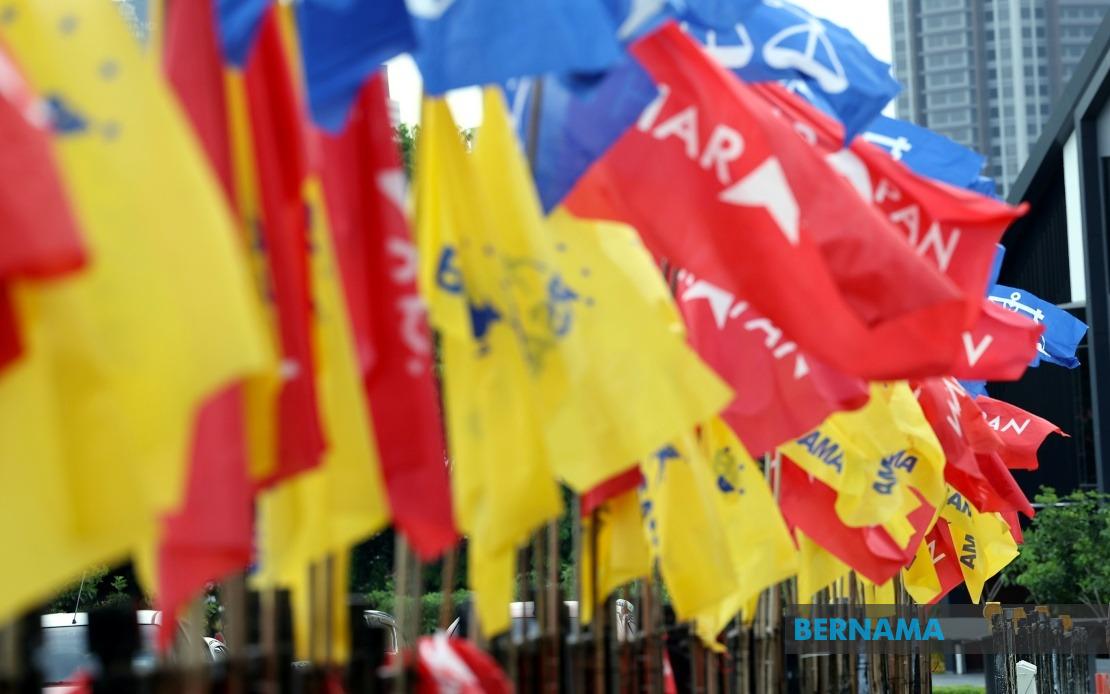
Police in Negeri Sembilan have granted approval for 19 campaign permits submitted by political parties and candidates preparing for the 16th State Election, signalling the administrative framework is functioning smoothly in the lead-up to polling day on August 1. Datuk Alzafny Ahmad, the state's police chief, confirmed that all applications met the required legal standards and were processed without issue, reflecting what appears to be cooperative engagement between election participants and security authorities during this critical electoral period.
The state's legislative assembly was dissolved on June 5, triggering the 36-seat contest that will reshape the political direction of one of Malaysia's smaller but historically significant states. With early voting scheduled for July 28 and the main polling on August 1, the Election Commission's timeline gives candidates and political machinery roughly a month to conduct their campaigns—a compressed window that makes efficient permit processing essential for smooth election operations.
Datuk Alzafny emphasised that while permits have been granted generously, all political gatherings will remain under police surveillance to ensure compliance with electoral laws and to prevent any incidents that could destabilise the community. The approval of 19 applications suggests significant campaign activity across the state, with multiple parties evidently mobilising resources to reach voters through traditional ceramah platforms—a proven method of direct political engagement in Malaysian electoral culture.
Security officials have reported minimal disruption so far, with only a single police report filed and no formal investigation papers opened regarding alleged election offences. This low-incident record indicates that participants in the Negeri Sembilan contest are broadly adhering to acceptable norms, though the police chief's warnings about firm enforcement suggest that authorities remain prepared to act decisively against any breaches. The relative calm contrasts with some other electoral episodes in Malaysian history, where campaign periods have occasionally witnessed clashes between rival supporters or violations of electoral regulations.
The police commitment to balanced oversight—described as fair, firm, and conducted with integrity—reflects contemporary Malaysian electoral management principles. Rather than selective enforcement favouring particular parties, security agencies are positioning themselves as neutral guardians of public order, a stance that builds legitimacy for the entire electoral process in the eyes of voters who might otherwise question the impartiality of state institutions during politically sensitive periods.
For the broader Malaysian context, the Negeri Sembilan election represents a test case for how state-level contests operate in the post-2022 restructuring of Malaysian politics. The state has experienced significant political volatility in recent years, and this election could signal shifts in voter sentiment or consolidation of existing alignments. The smooth administrative handling of campaign permits suggests institutional capacity to manage electoral processes, though the ultimate test will be whether the actual voting proceeds without irregularities and results are accepted by all contenders.
The police directive that all candidates and supporters respect democratic norms and cooperate with law enforcement carries particular weight in a federation where election-related tensions have occasionally escalated. By framing compliance as a civic responsibility rather than merely a legal obligation, authorities are appealing to electoral participants' role in maintaining social cohesion throughout the contest. This messaging approach acknowledges that elections, while competitive, are also moments when shared commitment to democratic rules must override partisan advantage-seeking.
Negeri Sembilan's 36 state seats will be contested across several parliamentary constituencies, and the outcome could influence broader peninsular politics. Some constituencies have traditionally been competitive, while others lean consistently toward particular parties, creating a mixed battlefield where incumbents cannot assume automatic victory. The permit approvals for 19 campaign events suggest that multiple parties believe they have realistic chances of winning or retaining seats, justifying substantial grassroots campaign investment.
The handling of campaign permits also reflects modernised Malaysian election administration. Rather than creating bureaucratic obstacles, authorities have facilitated campaign operations while maintaining regulatory oversight—a balance that enables vigorous political competition within a framework of rule-of-law enforcement. This professionalism in permit processing sends a reassuring signal to international observers and to Malaysian voters concerned about institutional neutrality during elections.
Looking ahead to polling day, the relatively peaceful campaign environment recorded so far and the orderly permit-approval process suggest that Negeri Sembilan's election administration is on track for successful implementation. However, the police chief's repeated emphasis on maintaining control and readiness to deploy enforcement powers indicates authorities are not complacent, recognising that electoral periods carry inherent risks of disorder if vigilance lapses. The final phase of campaigning, typically the most intense, will test whether this calm professionalism endures through to August 1.
The broader implications for Malaysian electoral governance are significant. Successful management of a state election through transparent, even-handed permit processing and balanced security oversight reinforces public confidence in institutional impartiality. For voters in Negeri Sembilan and observers across Malaysia and Southeast Asia, the visible professionalism of the security and administrative frameworks supporting this election demonstrates that democratic competition can be managed responsibly without sacrificing competitive intensity or marginalising any participating parties.

