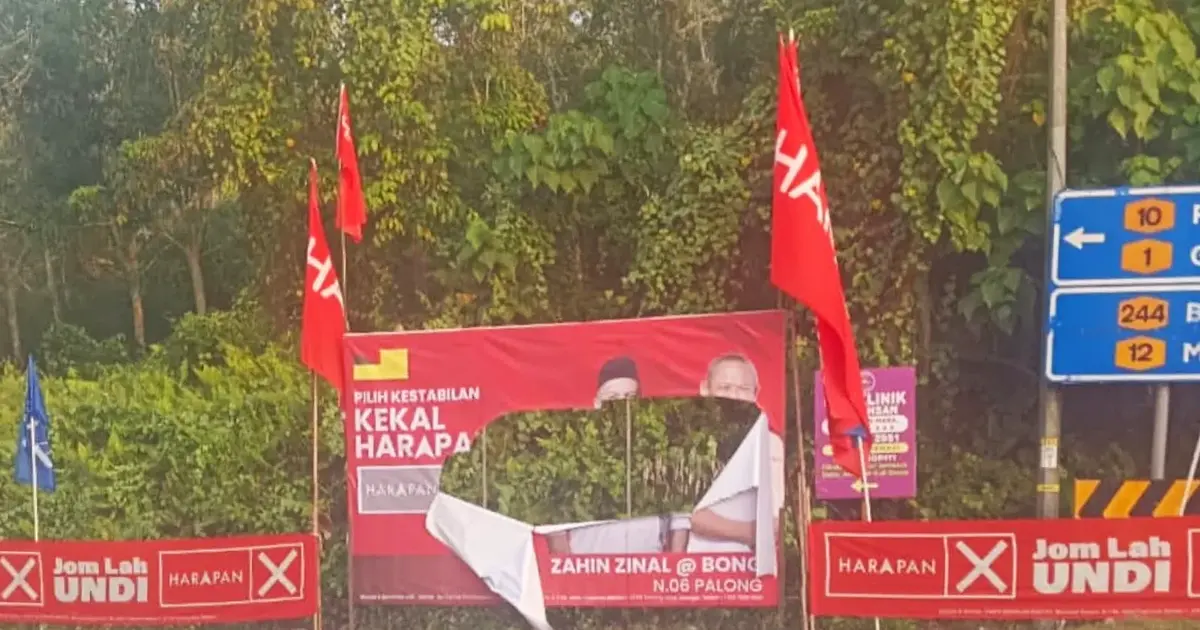
Law enforcement authorities in Negeri Sembilan have formally opened 14 investigation files addressing various offences tied to the election period, signalling increased scrutiny of campaign-related misconduct across the state. The cases span several categories of electoral violations, ranging from deliberate destruction of political symbols to defacement of promotional materials deployed by contesting parties.
Among the most serious incidents documented are instances where party flags have been intentionally set ablaze, an act that escalates beyond simple property damage to become a form of political intimidation and expression of hostility towards competing political organisations. Such incidents have become increasingly common during heated electoral contests, when emotions run high and supporters on different sides of the political divide engage in confrontational behaviour.
The investigation dossier also encompasses widespread vandalism targeting campaign infrastructure integral to the electoral process. Promotional billboards erected by candidates and their parties have been damaged or defaced, while campaign banners—typically hung in high-traffic areas to maximise visibility—have similarly fallen victim to wilful destruction. These materials represent significant financial investments by political entities seeking to communicate their message to voters, and their targeting suggests a coordinated or opportunistic effort to undermine rival campaigns.
The breadth of the 14 cases reflects the multifaceted nature of election-related misconduct that Malaysian electoral authorities must contend with during campaign periods. Beyond the headline categories of flag burning and poster vandalism, the files likely encompass related offences such as trespass, property damage, and potentially offences under electoral laws governing the conduct of campaigns and treatment of political materials.
Negeri Sembilan's approach to investigating these matters demonstrates the state police's commitment to maintaining electoral integrity and ensuring that the democratic process proceeds without undue intimidation or disruption. The formal opening of investigation files creates an official record that enables proper investigation, evidence gathering, and potential prosecution should sufficient grounds be established against suspects.
The incidents must be understood within the context of Malaysia's evolving electoral landscape, where competition between political parties has intensified considerably over recent years. State-level elections often serve as testing grounds for political strategies and represent crucial opportunities for parties to build momentum ahead of general elections. This heightened stakes environment can sometimes translate into more aggressive campaign tactics and, regrettably, into breaches of acceptable conduct.
From a voter perspective, such incidents may undermine confidence in the electoral environment and create an atmosphere of tension that detracts from the civic engagement and reasoned debate that democratic elections should foster. When voters witness destruction of campaign materials or hostile acts against political symbols, it sends a message that the electoral process is contestable through means beyond the ballot box—a concerning development for democratic health across the region.
The police investigations also highlight the importance of election management bodies and law enforcement working in tandem to preserve order during sensitive political periods. In Malaysia's context, where elections can occasionally become flashpoints for communal tension or partisan hostility, proactive investigation and enforcement of electoral conduct regulations serve as stabilising mechanisms that protect the integrity of the democratic process.
Looking ahead, these 14 cases will test the effectiveness of Malaysia's existing legal framework governing election-related offences. Charges could potentially be laid under various statutes, including those addressing criminal damage to property, unlawful assembly, or specific provisions within electoral legislation that circumscribe permissible campaign conduct. The outcomes of these investigations and any subsequent prosecutions will set precedents influencing how such offences are treated in future electoral cycles.
For political parties and campaign organisations operating in Negeri Sembilan and elsewhere across Malaysia, the police action serves as a reminder that election commissions and law enforcement take campaign conduct seriously and will investigate credible complaints. This should theoretically encourage campaigns to maintain higher standards of discipline among their supporters and workers, emphasising legal and peaceful methods of political competition.
The opening of these investigation files also reflects broader international norms surrounding electoral conduct. Democracies worldwide recognize that elections are vulnerable to disruption and that protecting the mechanics of voting—including the campaign environment that precedes it—requires active law enforcement. Malaysia's approach aligns with regional and global best practices in electoral management, even as challenges persist in ensuring consistent and equitable enforcement across all cases and all political parties.

