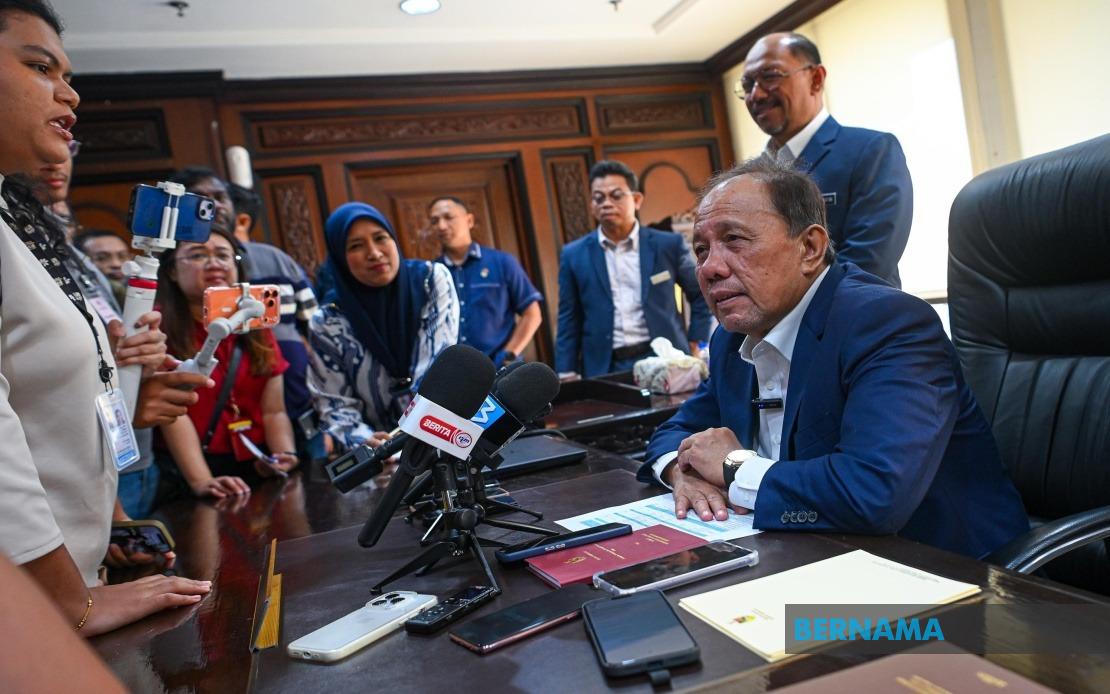
Negeri Sembilan's newly installed Menteri Besar Datuk Ismail Lasim has signalled that the state administration is exploring the introduction of Deputy Executive Council positions for critical government portfolios. Speaking at Wisma Negeri in Seremban, Lasim explained that this structural initiative forms part of a broader strategy to enhance administrative capacity across the state government. The proposal, he indicated, reflects recognition that existing Exco positions may be insufficient to accommodate all necessary responsibilities that require dedicated oversight.
The anticipated deputy appointments would be distributed among state assemblymen drawn from the three component parties now supporting the state government: Barisan Nasional, PAS, and Parti Wawasan Negara. This arrangement ensures that the administrative architecture extends across the coalition partners, potentially strengthening cohesion within the ruling alliance while providing career advancement opportunities for middle-tier politicians. The specific portfolios earmarked for deputy positions have not yet been publicly identified, though Lasim emphasised that only those he deems strategically important would receive such designations.
This announcement arrives at a pivotal moment for the state administration. Lasim, 67, assumed office on Sunday following his swearing-in ceremony before the Yang Dipertuan Besar of Negeri Sembilan, Tuanku Muhriz Tuanku Munawir, at Istana Besar Seri Menanti. The Juasseh state assemblyman began his first official day at the Menteri Besar's Office on Monday morning, where State Secretary Datuk Mohd Zafir Ibrahim and departmental heads received him. This initial period typically involves assessing institutional capacity and identifying structural gaps that may require remediation.
The proposal to create Deputy Exco posts represents what Lasim characterised as a novel administrative approach for Negeri Sembilan. Rather than operating within the traditional Exco framework, this innovation would introduce an intermediate tier of executive responsibility. However, Lasim was cautious about committing to specific numbers, emphasising that decisions remain fluid as the new administration determines its optimal structure. He also referenced the possibility of establishing Senior Exco positions, though such appointments have not yet been finalised despite existing constitutional provisions that would permit them.
The coalition forming Negeri Sembilan's government commands substantial parliamentary strength. In the recently concluded state election, Barisan Nasional secured 18 seats while Perikatan Nasional won seven, providing the combined coalition with a decisive two-thirds majority of the 36-member state assembly. Pakatan Harapan, the opposition, captured the remaining 11 seats. This electoral outcome has given the ruling alliance considerable room for administrative experimentation and coalition-building across its partner organisations.
For Malaysian political observers, this development reflects broader trends in state-level governance restructuring that have emerged across the country following recent electoral cycles. The introduction of intermediate executive positions allows governments to navigate coalition arithmetic while accommodating expectations among coalition partners without expanding the formal Exco to unwieldy proportions. In Negeri Sembilan's case, where three separate entities must be represented, such arrangements help distribute perceived influence and portfolio access more equitably among the partners.
The timeline for finalising these structural decisions remains relatively compressed. Lasim indicated that the complete Exco line-up would be announced by Friday, or at the latest by Monday of the following week. This expedited schedule reflects the administrative imperative to establish clarity regarding ministerial responsibilities as the new government settles into its operations. A prolonged period of uncertainty regarding portfolio allocations could create confusion regarding decision-making authority and slow the machinery of government.
For Southeast Asian federalism watchers, the Negeri Sembilan situation offers a case study in how state governments manage coalition governance. Unlike some neighbouring jurisdictions where single-party dominance simplifies executive structures, Malaysian states operating under multi-party coalitions frequently adopt creative institutional solutions. The deputy positions under consideration represent a pragmatic response to the reality that coalition partners demand meaningful representation without necessarily requiring traditional cabinet rank or the full prerogatives of formal Exco membership.
The implications for Malaysian administrative practice deserve consideration. Should the Negeri Sembilan experiment prove successful, other state governments operating under coalition arrangements may adopt similar models. This could gradually reshape how state administrations distribute executive responsibility, creating a secondary tier of senior officials with real authority but without the formal constitutional standing of traditional Exco members. The long-term sustainability of such arrangements would depend on whether the deputy positions command genuine influence and resources or remain largely ceremonial.
Lasim's emphasis on this being a "new approach" signals his administration's willingness to depart from established precedents. Given Negeri Sembilan's political composition and the need to manage coalition dynamics, such innovation becomes operationally necessary rather than merely tactical. The state's two-thirds majority, while commanding, still requires maintaining unity among three distinct political entities with potentially divergent interests and aspirations. Intermediate executive positions may help maintain that cohesion by providing tangible symbols of each partner's stake in governance.
The substantive portfolios chosen for deputy positions will reveal much about the Menteri Besar's administrative priorities. Selection of certain ministries over others signals both immediate policy emphases and the relative bargaining power of coalition partners in negotiating portfolio distribution. Should health, education, or infrastructure receive deputy oversight while other departments do not, such choices would indicate where the administration anticipates encountering implementation challenges or where coalition partners have pressed for greater involvement.
As Negeri Sembilan moves forward with these administrative decisions, attention will focus on whether deputy positions genuinely enhance governmental effectiveness or devolve into redundant structures creating confusion regarding accountability. The success of this initiative may well influence how other Malaysian state governments approach similar challenges, particularly those operating under coalition arrangements where traditional Exco configurations prove politically insufficient or administratively inadequate.

