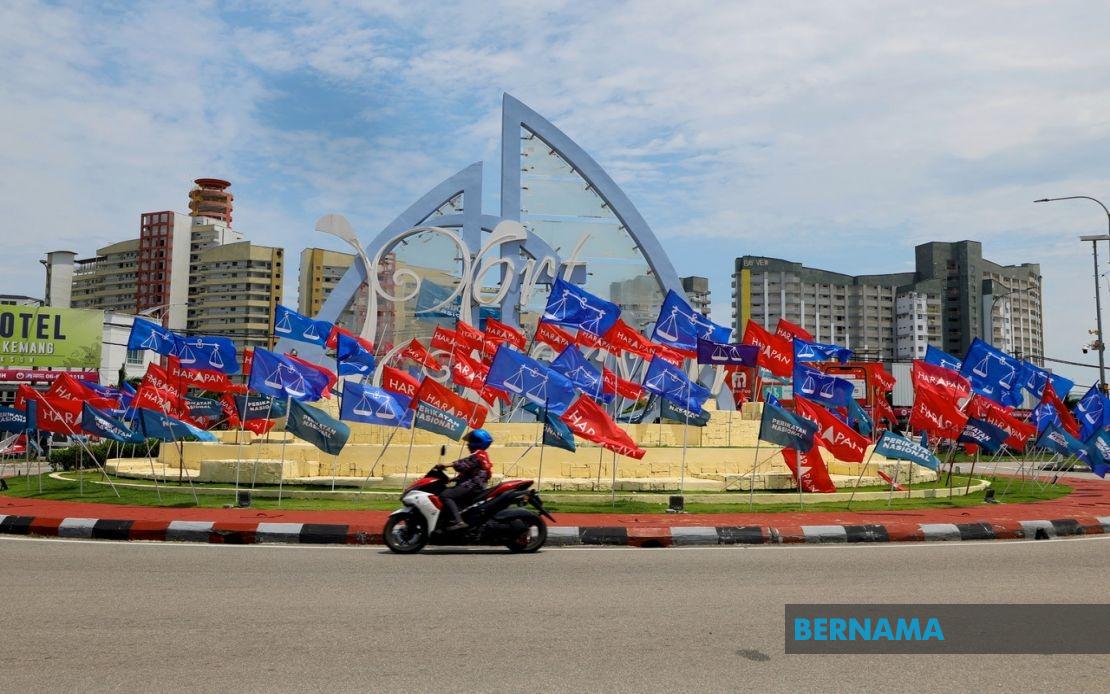
Negeri Sembilan residents will enjoy clear, sunny conditions during the morning hours of tomorrow's 16th state election, but should prepare for deteriorating weather as the day progresses, according to forecasts from the Malaysian Meteorological Department. The pleasant start to polling day across most of the state's seven districts—Seremban, Jempol, Jelebu, Kuala Pilah, Tampin, Port Dickson and Rembau—will give way to heavy rain and thunderstorms from afternoon onwards, potentially affecting the final hours of voting.
Election authorities have prepared 401 polling stations statewide to accommodate the expected influx of voters tomorrow. These stations, set up in schools, community halls and colleges, will operate for a ten-hour window from 8 am until 6 pm, giving voters ample opportunity to cast their ballots despite the expected weather shift. Election officials will need to ensure that infrastructure at these locations remains functional as afternoon storms intensify.
A substantial electoral exercise awaits Negeri Sembilan tomorrow, with 867,151 ordinary voters eligible to choose their representatives from among 103 candidates competing for 36 state seats. The turnout in such elections typically reflects broader political sentiment across the state, and weather conditions can sometimes influence voter participation, particularly in the later stages of polling day when storms are predicted to be at their heaviest.
The political landscape presents a competitive multi-cornered contest reflective of Malaysia's current fractionalised political alignment. Pakatan Harapan fields candidates in all 36 seats, demonstrating its commitment to contesting every available position, whilst Barisan Nasional has nominated 25 candidates. Parti Pribumi Bersatu Malaysia enters the race with 24 candidates, and Perikatan Nasional offers 11 contenders. Additionally, four independent candidates are seeking election, alongside single representatives each from Barisan Jemaah Islamiah Semalaysia, Parti Orang Asli Malaysia, and Parti Sosialis Malaysia.
This distribution of candidates reflects the deep political divisions characterising Malaysian electoral politics following the realignment that saw Bersatu's departure from Pakatan Harapan and its subsequent repositioning within Perikatan Nasional. The presence of multiple competing coalitions across Negeri Sembilan could fragment the vote significantly, potentially producing an unpredictable outcome dependent on how effectively each political grouping mobilises its support bases.
For Negeri Sembilan specifically, election results carry implications beyond the state level. The state has historically served as a microcosm of broader Malaysian political trends, and tomorrow's outcome will provide valuable signals about voting patterns in the post-2022 political environment. Performance in this election could reshape calculations for both Pakatan Harapan's governance standing and the consolidation efforts within Perikatan Nasional ahead of future federal contests.
Voter logistics present a particular concern given the weather forecast. The afternoon transition to heavy rain and thunderstorms could deter some voters from heading to polling stations during the final hours, potentially affecting final turnout figures. Election officials would need to ensure adequate shelter and organisation at polling stations to maintain voting accessibility as conditions deteriorate. The early morning fair weather advantage may encourage those who prefer to vote earlier in the day, possibly leading to concentration of voting traffic in morning and midday hours.
The widespread nature of the predicted storms across all seven districts suggests no area of the state will escape the weather disruption. Unlike localised thunderstorms that might affect only certain constituencies, tomorrow's system is expected to impact voting conditions uniformly across Seremban, Jempol, Jelebu, Kuala Pilah, Tampin, Port Dickson and Rembau, meaning all polling stations will face similar operational challenges by late afternoon.
For Malaysian observers monitoring electoral conduct and participation patterns, Negeri Sembilan's election offers a significant data point. The state's voter behaviour, demographic composition, and competitive dynamics between different political coalitions all contribute to understanding the broader trajectory of Malaysian politics. The weather conditions may ultimately prove inconsequential if early voting patterns are sufficiently strong, or they could become a decisive factor if turnout remains light entering the final hours of polling.
Election officials have had adequate notice of the meteorological forecast, allowing them time to implement any necessary contingency measures at polling stations. Whether these preparations prove sufficient will become apparent as afternoon conditions develop, potentially testing both the logistical capabilities of election administrators and the commitment of Negeri Sembilan voters to participating in democratic processes despite adverse circumstances.

