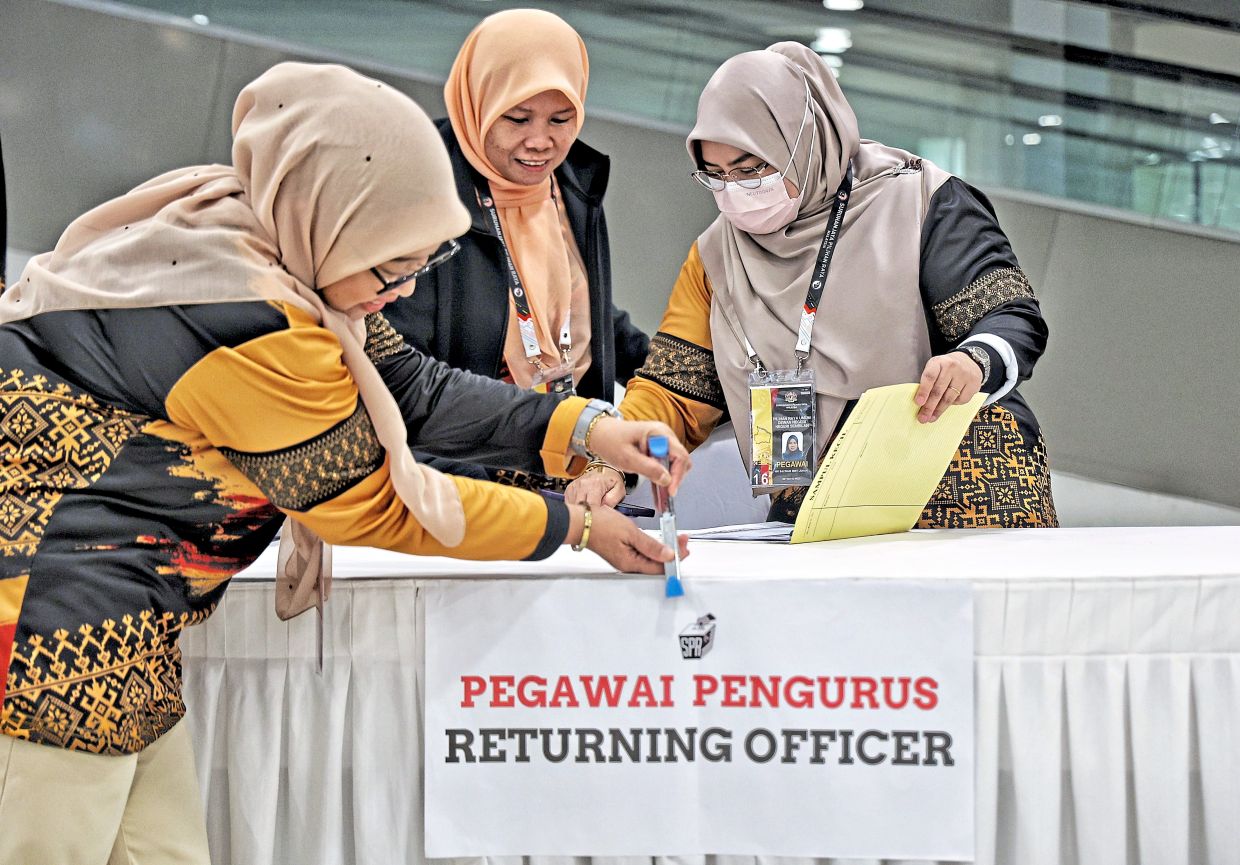
A critical moment approaches for Malaysia's federal government as voters in Negri Sembilan prepare for state elections on August 1. The election will serve as the definitive test of whether a freshly forged political alignment—particularly an emerging operational partnership between PAS and Barisan Nasional—can gain meaningful traction on the ground. While this tactical arrangement has been gestating for months, the Johor state polls offered the first real glimpse of its potential, and now Negri Sembilan will determine whether it represents a temporary tactical adjustment or the beginning of a seismic national realignment.
Signs of this coalition realignment crystallised during the Johor elections, when PAS strategically instructed its supporters to cast votes for Barisan candidates in constituencies where the Islamic party was not competing. Although PAS itself failed to secure any seats under the Perikatan Nasional banner in Johor, observers interpreted this as a calculated sacrifice—a near-term setback accepted in service of larger strategic objectives. What makes this coordination noteworthy is its explicit rejection of traditional opposition unity, suggesting a fundamental recalibration of Malaysia's political landscape that extends well beyond Johor's boundaries.
Negri Sembilan differs markedly from Johor in its political DNA and electoral characteristics. Johor represents historically consolidated Barisan territory where the ruling coalition has maintained dominance through successive election cycles and enjoys deep institutional roots. By contrast, Negri Sembilan presents a more contested terrain where different coalitions can realistically compete for power. Success in this more competitive environment would carry far greater symbolic weight and demonstrate that the new alignment possesses genuine organisational coherence rather than merely local opportunism. A decisive victory here would vindicate the entire strategic gambit and signal that voters are willing to embrace this reconfigured opposition force.
The immediate casualty of any major opposition breakthrough should be Democratic Action Party's political standing. For decades, DAP has functioned as Pakatan Harapan's guaranteed source of non-Malay electoral support, delivering stable votes from Chinese and Indian communities across multiple election cycles. However, the Johor experience already foreshadowed danger signs. The party lost four of ten seats it held from the 2022 general election, indicating that its traditional voter base is more malleable than previously assumed and susceptible to shifting sentiment. Should DAP experience similarly disappointing returns in Negri Sembilan, internal party pressure will intensify dramatically regarding whether participation in Prime Minister Datuk Seri Anwar Ibrahim's Cabinet justifies the electoral erosion.
This internal reckoning will crystallise when DAP's delegates convene for their rescheduled National Congress on August 16, mere weeks after the Negri Sembilan results. Party members will confront uncomfortable questions about the value proposition of holding ministerial portfolios if such positions come at the cost of shrinking parliamentary representation and diminishing electoral relevance. The party faces a genuine dilemma: maintain loyalty to federal coalitional arrangements while accepting continued voter defection, or recalibrate its strategic positioning in pursuit of electoral recovery. Either path carries significant risks to the stability of Anwar's government.
DAP's ideological inconsistency has already become apparent through recent decisions at the state level. The party announced its withdrawal from the Umno-led Melaka government, relocating its four state assemblymen to the opposition bloc and citing fierce opposition to newly enacted constitutional amendments permitting the appointment of unelected nominated state assemblymen as fundamentally undemocratic. Yet this principled stance becomes considerably more ambiguous when examined closely. In Pahang, DAP maintains its presence within an Umno-led administration despite the existence of nominated assemblymen, and historical precedent further complicates the narrative—Sabah DAP's treasurer-general previously accepted a nominated assemblyman position in 2018. This inconsistency suggests that state-level manoeuvring involves tactical considerations that may supersede coherent ideological commitment.
Beyond DAP's predicament lies a more profound structural threat targeting Pakatan Harapan's capacity to maintain legitimate authority in Malay-majority regions. If the tactical understanding between PAS and Umno continues to gain organisational momentum and demonstrates electoral viability, Anwar's coalition faces systematic marginalisation in the Malay heartland. Pakatan has struggled to establish authentic roots among Malay voters, and any strengthened PAS-Umno operational framework would further entrench this disadvantage. The mathematics of parliamentary representation become secondary to the politics of legitimacy—without commanding genuine support from the Malay electorate, no government can sustain authority regardless of its numerical parliamentary advantage. The unity government's legitimacy rests substantially on perceptions that it represents broad-based national consensus rather than narrow factional interests.
The second major destabilising factor concerns the reshaping of internal power dynamics within the ruling coalition itself. Should the new PAS-Barisan arrangement achieve convincing electoral success in Negri Sembilan and subsequent state contests, Umno emerges considerably empowered relative to its coalition partners. An emboldened Barisan Nasional, riding momentum from demonstrable electoral gains under this new configuration, would possess absolute leverage over Prime Minister Anwar's decision-making. This calculus fundamentally transforms the federal arithmetic from a stable equilibrium into a high-stakes bargaining scenario where Umno can dictate terms with near-total impunity.
The parliamentary mathematics of potential realignment merit careful examination. Currently, the government coalition commands 151 seats within the 220-seat Dewan Rakyat, comprising Pakatan Harapan's 77 seats, Barisan Nasional's 30, Gabungan Parti Sarawak's 23, Gabungan Rakyat Sabah's seven, former Bersatu rebels' six, Parti Warisan's three, Sabah independents' two, and individual seats held by Sabah STAR, Parti KDM, and Parti Bangsa Malaysia. The opposition currently musters 69 seats distributed among PAS (43), Parti Wawasan Negara (19, including Bersatu MPs aligned with Hamzah), Bersatu (six), and Muda (one). This arrangement provides the government with an 82-seat buffer above the 111-seat majority threshold, a comfortable though not insurmountable advantage.
Structural collapse becomes plausible should Barisan Nasional exercise the option of migrating its entire 30-seat contingent across to the opposition bloc. Such a move would reduce the government's count to 121 seats while simultaneously elevating opposition strength to 99, completely obliterating the ruling coalition's commanding advantage and leaving the Prime Minister with a razor-thin ten-seat safety margin. From this precipitous position, the departure of merely a handful of regional representatives or independent members would suffice to topple the entire governmental structure. What appears today as a fortress of stability could transform overnight into a coalition perpetually vulnerable to defection.
The architecture supporting this scenario assumes that smaller regional blocs might be tempted to switch sides following an initial Barisan departure, sensing shifting momentum and calculating that joining the ascending coalition offers superior positioning. However, alternative outcomes remain possible. Opposition-side components such as Bersatu, currently positioned with six parliamentary representatives, might paradoxically support continued government survival specifically in the name of maintaining coalition unity—an invocation that has become standard political rhetoric when convenient. Yet such appeals lack intrinsic durability; excuses cannot indefinitely sustain collapsing political structures.
The Negri Sembilan election therefore transcends its status as a routine state-level contest. Should the emerging PAS-Barisan alignment achieve decisive victory and subsequently demonstrate its capacity to deliver comparable results in upcoming Melaka polls, the repercussions will propagate rapidly throughout the national political system. Each successive success would accumulate pressure on Umno's leadership to formalise this alignment at the federal level, extracting maximum concessions from a progressively weakened Prime Minister. The unity government's carefully constructed equilibrium could unravel with startling speed, not through dramatic confrontation but through a succession of tactical manoeuvres and calculated departures that systematically hollow out Anwar's parliamentary foundation. Malaysia's political future hinges substantially on the results delivered by voters in this single state election.

