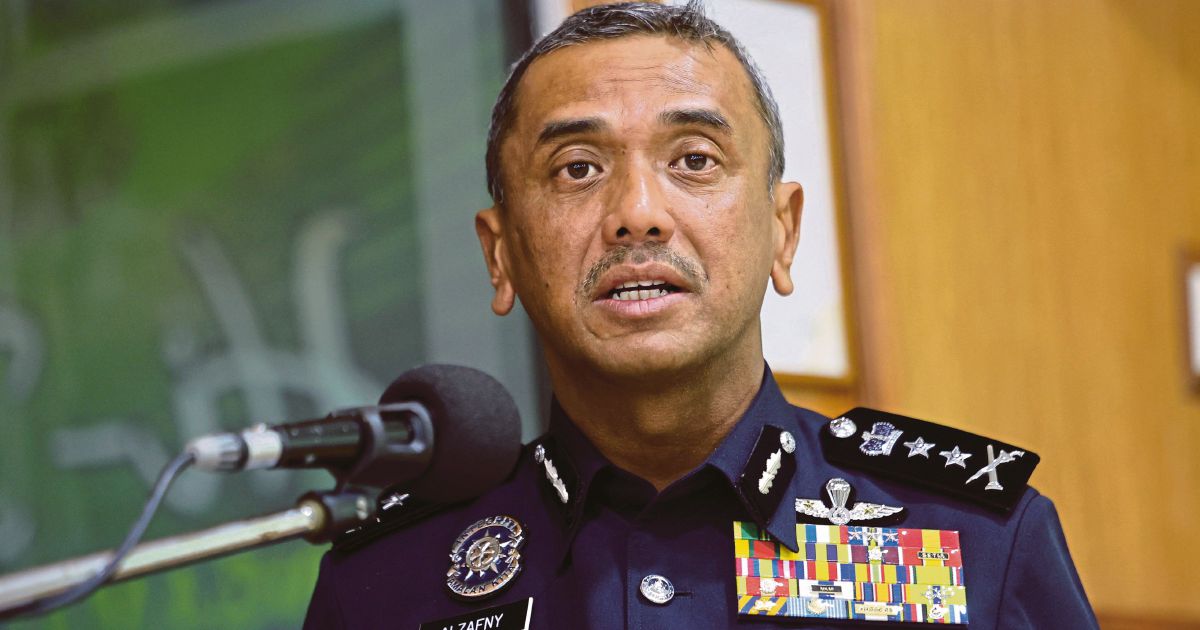
Election authorities in Negri Sembilan have issued a clear directive to all contesting political parties, cautioning them against broaching sensitive terrain during the upcoming state campaign. Law enforcement officials emphasised that parties must exercise restraint when discussing matters touching on religion, royalty, and race—collectively known as 3R issues—at any point throughout the election period. The warning underscores the police force's commitment to maintaining public order and social harmony during what traditionally represents a high-stakes political moment in the state.
The reminder comes as Malaysian electoral campaigns frequently face scrutiny over divisive rhetoric, particularly when candidates venture into territory touching on communal sensitivities. Historical elections across the nation have demonstrated how incendiary language around religious practices, the institution of monarchy, or racial matters can rapidly escalate tensions beyond the ballot box. The Negri Sembilan police force's proactive stance reflects a broader law enforcement philosophy that seeks to prevent tensions from materialising rather than responding to incidents after the fact.
Understanding why authorities specifically emphasise these three categories requires examining Malaysia's constitutional framework and social fabric. The constitution grants substantial protective provisions to Islam, the special position of indigenous Malays and Bumiputeras, and the institution of the monarchy. These three pillars form foundational elements of the social contract that underpins Malaysian governance and intercommunal relations. Any deliberate attempt to challenge or undermine these protections carries significant legal consequences under multiple statutes, including the Sedition Act and provisions within the Penal Code.
The police warning reflects mounting awareness that electoral campaigns increasingly serve as platforms for testing the boundaries of acceptable public discourse. Digital media has amplified candidate voices and enabled rapid dissemination of inflammatory content, making real-time monitoring of campaign messaging far more complex for authorities. What once circulated through small community gatherings now spreads instantaneously across social media platforms, potentially reaching far wider audiences and generating considerably more volatile reactions than traditional campaigning methods.
Negri Sembilan has historically experienced contentious state elections, with competition between Barisan Nasional and Pakatan Harapan proving particularly intense. The state's political volatility makes police intervention more justifiable from a preventative perspective. Authorities can point to instances where heated rhetoric has contributed to demonstrations, communal friction, and security challenges during previous election cycles. By issuing early warnings, the police signal their determination to establish clear ground rules that all participants must respect.
The implications for candidates and party machinery are substantial. Campaign strategists must carefully craft messaging that distinguishes their parties and policies without venturing into 3R territory. This constraint effectively narrows the rhetorical battlefield, forcing political discourse toward bread-and-butter issues such as economic development, infrastructure, healthcare provision, and employment opportunities. While potentially beneficial for elevating policy discussion, this restriction simultaneously raises questions about whether voters receive adequate information regarding candidates' worldviews on issues they consider fundamental.
Enforcement mechanisms become crucial when broad warnings are issued. The police must clearly articulate what constitutes a violation versus permitted political speech, a distinction that can prove murky in practice. Malaysian courts have repeatedly grappled with determining whether particular statements constitute legitimate political commentary or prohibited seditious intent. Candidates operating under ambiguity may exercise excessive self-censorship, while others might calculate that pushing boundaries carries acceptable risk.
Regional considerations add another dimension to Negri Sembilan's election dynamics. The state occupies a geographically central position within Peninsular Malaysia and maintains significant economic ties to Selangor and Kuala Lumpur. Destabilisation of Negri Sembilan through communal tensions could potentially ripple outward, affecting investor confidence and economic activity across a broader zone. National-level political competition often manifests acutely at the state level, particularly when governments at different levels represent opposing coalitions, amplifying stakes and temptation to deploy divisive messaging.
The police directive also acknowledges the particular vulnerability of younger voters and urban populations to polarising content. First-time voters encountering their initial electoral experience during a heated campaign characterised by inflammatory rhetoric may develop cynical attitudes toward democratic processes. Protecting the integrity of electoral systems requires ensuring that campaigns generate political energy around constructive policy alternatives rather than identity-based grievances.
Parties contesting the Negri Sembilan election must balance legitimate political competition with the legal and social constraints operating within Malaysian democracy. The police warning, while restrictive from certain perspectives, serves an important stabilising function in electoral contexts historically vulnerable to escalation. Candidates can still mobilise supporters effectively through discussing governance records, development vision, competency, and programmatic commitments—terrain sufficiently expansive for robust political competition without requiring forays into constitutionally protected domains.
Looking forward, the actual campaign period will reveal whether parties accept the police parameters or test their limits. Election observers and civil society organisations will closely monitor whether candidates adhere to guidelines, how authorities respond to potential violations, and whether voters ultimately receive sufficient substantive information to make informed choices. The balance between maintaining social harmony and permitting unfettered political expression remains one of Malaysian democracy's most persistent tensions, with Negri Sembilan's upcoming election offering another instructive test case.

